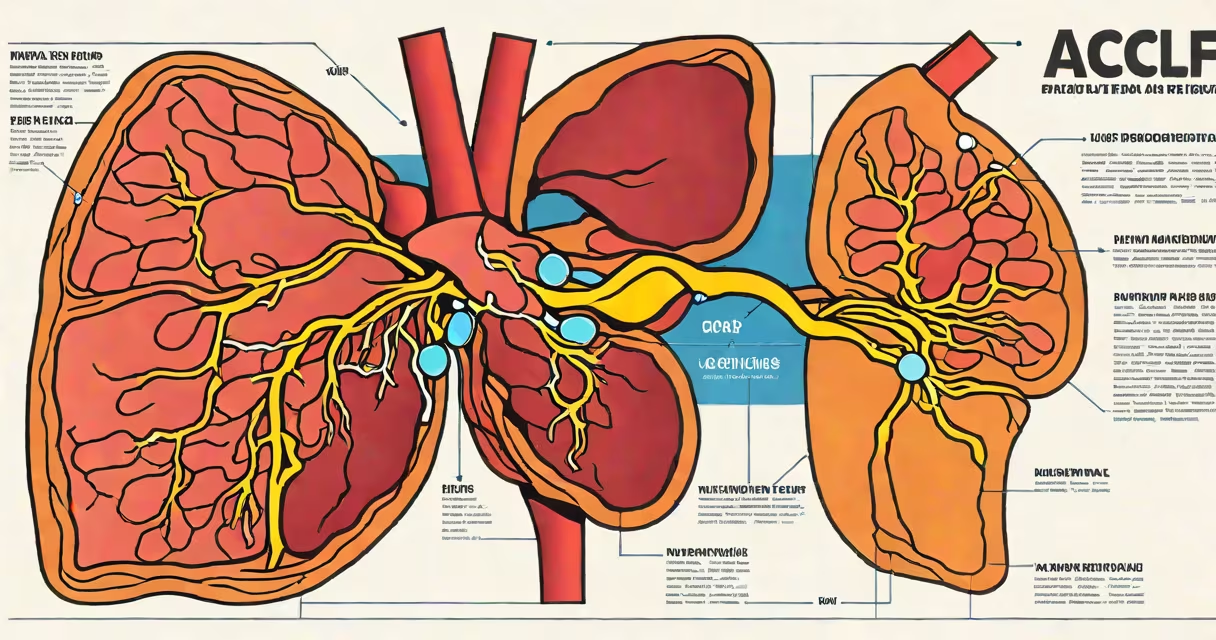
ACLF stands for acute-on-chronic liver failure, a syndrome characterized by acute decompensation of liver function in patients with underlying chronic liver disease, accompanied by organ failure and systemic inflammation. It occurs over days to weeks and carries high short-term mortality.
ACLF develops when a patient with cirrhosis experiences a sudden worsening of liver function due to an acute insult-such as infection, alcohol binge, or drug toxicity-leading to multiorgan dysfunction. The condition is not simply a progression of chronic liver disease; it represents a distinct clinical entity with unique pathophysiology and outcomes.
The diagnosis requires evidence of chronic liver disease (typically diagnosed via imaging, biopsy, or clinical history), acute-onset liver failure within 4 weeks, and presence of organ failure. The European Association for the Study of the Liver (EASL) defines ACLF using the Model for End-Stage Liver Disease (MELD) score, Sequential Organ Failure Assessment (SOFA) score, and the presence of systemic inflammatory response syndrome (SIRS).
ACLF results from a cascade of immune activation and mitochondrial dysfunction. When an acute event-like spontaneous bacterial peritonitis or severe alcohol withdrawal-hits a liver already compromised by fibrosis and impaired regeneration, the body mounts an exaggerated inflammatory response. This leads to widespread endothelial damage, microcirculatory failure, and organ system collapse.
Key mechanisms include gut-derived endotoxin translocation through a leaky intestinal barrier, triggering toll-like receptor (TLR) signaling in Kupffer cells. This activates NF-κB pathways, releasing pro-inflammatory cytokines such as TNF-α, IL-6, and IL-1β. These molecules drive hepatocyte apoptosis and impair liver repair capacity.
A 2022 study published in Hepatology found that patients with ACLF had higher levels of circulating HMGB1 (high-mobility group box 1), a damage-associated molecular pattern (DAMP) molecule linked to sterile inflammation and poor survival. This highlights that ACLF is not just a metabolic crisis but a dysregulated immune state.
ACLF is classified by the number of organ failures present. The EASL-CLIF Consortium criteria define three grades based on SOFA scores:
| Grade | Organ Failures | Mortality (30-day) | Example Triggers |
|---|---|---|---|
| Grade 1 | 1 organ failure | 10-20% | Alcoholic hepatitis, sepsis |
| Grade 2 | 2 organ failures | 30-50% | Bacterial infection, gastrointestinal bleed |
| Grade 3 | 3 or more organ failures | 60-80% | Severe sepsis, massive hemorrhage |
Grade 1 ACLF may be managed medically with intensive care support. Grades 2 and 3 often require critical care admission and have limited response to conservative therapy. The presence of renal failure (defined as serum creatinine >1.5 mg/dL) or respiratory failure (PaO₂/FiO₂ ratio <300) drastically increases risk of death.
ACLF is not synonymous with acute liver failure (ALF)-which occurs in previously healthy individuals without chronic liver disease. ALF typically presents with encephalopathy and coagulopathy within 8 weeks of onset, while ACLF is always superimposed on cirrhosis and involves systemic inflammation.
ACLF is frequently mistaken for acute decompensation of cirrhosis, which includes events like variceal bleeding or ascites. But acute decompensation lacks the systemic inflammatory component and organ failure criteria central to ACLF diagnosis.
Another error is equating ACLF with hepatorenal syndrome (HRS). While both involve renal impairment, HRS is a functional kidney failure due to splanchnic vasodilation and reduced effective arterial blood volume-not due to direct renal injury or systemic inflammation. ACLF-related renal failure is driven by sepsis, hypotension, and cytokine-mediated tubular damage.
I observed this distinction during a rotation at a tertiary liver center. A 58-year-old man with alcoholic cirrhosis presented with fever, confusion, and oliguria. Initial labs showed elevated bilirubin (12 mg/dL), INR 2.1, and creatinine 2.8 mg/dL. He met criteria for Grade 2 ACLF due to two failing organs (liver and kidneys) and positive SIRS markers. He was admitted to the ICU and later underwent liver transplantation. His case illustrates that ACLF is not just "worsening cirrhosis"-it's a separate syndrome requiring different management.
Short-term mortality for ACLF ranges from 20% in Grade 1 to over 70% in Grade 3. Survival drops sharply beyond 72 hours after presentation. Early identification allows for timely interventions such as antibiotics, hemodynamic support, and consideration for liver transplant evaluation.
Current guidelines from the American Association for the Study of Liver Diseases (AASLD) recommend early referral to transplant centers for patients with Grade 2 or 3 ACLF who do not respond to medical therapy. The MELD-Na score is used to prioritize listing, though ACLF patients often have higher urgency due to rapid decline.
Therapeutic strategies remain largely supportive. Corticosteroids are avoided unless there's autoimmune hepatitis or severe sepsis-induced shock. Antibiotics are initiated empirically in suspected infections. Renal replacement therapy may be needed for refractory fluid overload or hyperkalemia.
Research into targeted immunomodulation is ongoing. A phase II trial of anti-TNF-α monoclonal antibody (infliximab) in ACLF patients showed modest improvement in SOFA scores but increased infection rates. Results were mixed, underscoring the complexity of modulating inflammation without compromising host defense.
Understanding aclf medical abbreviation requires context with similar terms:
These abbreviations differ in domain and mechanism. Confusing them with ACLF can lead to diagnostic errors. For example, mistaking ARI for ACLF in a patient with fever and altered mental status could delay recognition of liver failure.
ACLF medical abbreviation refers specifically to acute-on-chronic liver failure-a syndrome defined by acute decompensation, organ failure, and systemic inflammation in patients with pre-existing chronic liver disease. It is not a synonym for cirrhosis, acute liver failure, or other forms of hepatic decompensation.