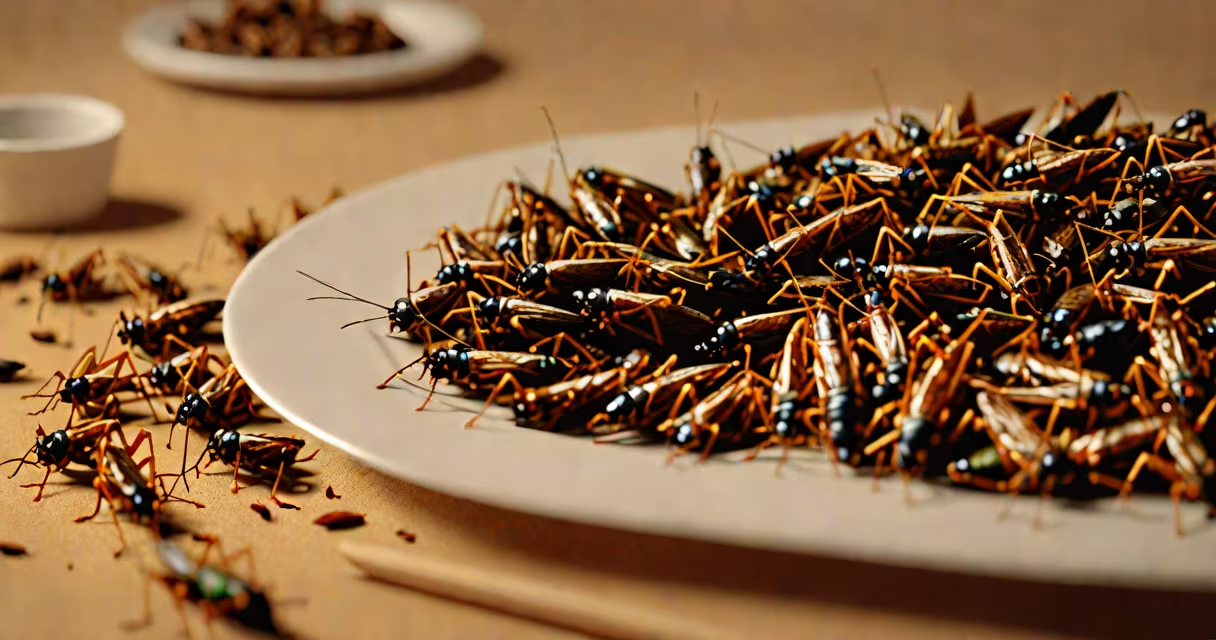
People eat insects because they are nutritious, environmentally sustainable, and deeply rooted in food traditions across many cultures. Insects provide high-quality protein, healthy fats, and essential micronutrients while requiring far less land, water, and feed than livestock.
Entomophagy-the practice of eating insects-is not a niche trend. It's a widespread human behavior. The Food and Agriculture Organization of the United Nations (FAO) estimates that over 2 billion people worldwide regularly consume insects as part of their diet. These foods appear in local markets, street stalls, and family meals from Thailand to Mexico, from parts of Africa to rural China.
Despite this, Western diets largely exclude insects. Yet, even in North America and Europe, insects are increasingly appearing in processed foods-added to protein bars, pasta, and baked goods-as a sustainable ingredient. The shift isn't about novelty. It's about solving real problems in food security and environmental impact.
Insects are consumed in multiple forms. They may be eaten whole, roasted, dried, or ground into flour. Preparation methods vary by region. In parts of Oaxaca, Mexico, chapulines-grasshoppers-are toasted with garlic and lime and served as a snack. In Cambodia, crickets are deep-fried and sold in markets alongside other street foods. In parts of Sub-Saharan Africa, termites are harvested during rainy seasons and eaten raw or cooked.
Processing changes texture and flavor. Roasting enhances nuttiness; grinding turns insects into a fine powder resembling flour. This powder can replace wheat or soy in recipes. A 2021 study published in Nutrients found that cricket flour contains 60% more protein per gram than beef and is rich in iron and B vitamins.
Some insects are farmed specifically for food. Species like the yellow mealworm (Tenebrio molitor) and the black soldier fly larva (Hermetia illucens) are raised in controlled environments. These are not wild-harvested. Farms use organic waste-like spent grain from breweries-to feed larvae, reducing food system waste.
The most commonly eaten insects fall into four categories based on species and culinary role:
| Type | Common Names | Preparation Methods | Primary Regions |
|---|---|---|---|
| Beetle Larvae | Mealworms, waxworms | Dried, roasted, ground into flour | Europe, North America, East Asia |
| Grasshoppers & Crickets | Chapulines, crickets | Fried, seasoned, eaten whole | Mexico, Southeast Asia, Africa |
| Ants & Termites | Ants (e.g., weaver ants), termites | Raw, boiled, fermented | Central Africa, South America, Southeast Asia |
| Bees & Wasps | Honeybee larvae, paper wasp pupae | Steamed, stuffed, added to sauces | China, India, parts of Latin America |
Each type brings different nutrients. Mealworms contain more omega-3 fatty acids than chicken. Crickets offer 20 grams of protein per 100 grams-comparable to lean beef. Termites are high in calcium and vitamin B12, critical for bone health and nerve function.
A lesser-known fact: insects have lower levels of saturated fat than red meat. According to the FAO, insects produce fewer greenhouse gas emissions per kilogram of protein than cattle, pigs, or chickens. Rearing crickets emits 10 times less methane than raising a cow.
Geographic patterns reveal why people eat insects. In tropical and subtropical regions, insects are abundant year-round. They're accessible, low-cost, and require minimal infrastructure to harvest. In rural communities, collecting insects is often a seasonal activity passed down through generations.
In urban centers, insect-based foods are gaining traction due to climate concerns. The European Union approved edible insects for sale in 2021, allowing companies to market products like cricket flour and roasted locusts. Companies such as Protix and Entofood now supply restaurants and retailers across France, Germany, and the Netherlands.
One example: in 2022, a Belgian restaurant chain began offering a "cricket burger" using 20% cricket flour in the patty. The dish received positive reviews for taste and texture. Customers reported it tasted similar to a traditional beef burger, with a slight earthy undertone.
Another example: in Nairobi, Kenya, women-run cooperatives collect mopane worms-caterpillars from the mopane tree-and sell them dried or smoked. These worms are a key protein source during drought years when livestock die off. A single kilogram of mopane worms provides nearly 400 grams of protein, enough to feed a family for days.
Many assume that eating insects is only practiced in poor or remote areas. That's false. In Japan, sushi-grade crickets are sold in specialty stores. In Sweden, insect-based snacks are available in supermarkets. In the U.S., startups like Chapul and Exo sell cricket protein bars to fitness enthusiasts and eco-conscious consumers.
Another myth: insects are unhygienic. In reality, commercially farmed insects follow strict food safety protocols. The FDA and EFSA both regulate insect-derived ingredients under existing food laws. Insects are cleaned, heated, and inspected before reaching markets.
Some confuse entomophagy with novelty or fad diets. But it's not new. Ancient Greeks ate locusts. Mayan codices depict people harvesting bees. In China, silkworm pupae have been consumed for over 2,000 years. The practice predates agriculture in many regions.
I once attended a food festival in Bangkok where vendors served fried giant water bugs. The smell was pungent-reminiscent of garlic and burnt rubber-but the texture was crisp, and the flavor mild, almost nutty. I tried one. It wasn't unpleasant. It was familiar in a way I hadn't expected.
Why do people eat insects? Because they are nutritious, sustainable, and culturally embedded in food systems around the world. Insect consumption is not a futuristic idea-it's a living practice. With rising global demand for protein and shrinking natural resources, edible insects offer a viable alternative to conventional meat.
Understanding this helps clarify why efforts to normalize insect-based foods are growing. From school lunch programs in Belgium to protein supplements in California, the movement is grounded in science, tradition, and survival. As climate pressures increase, the role of insects in human diets will likely expand.