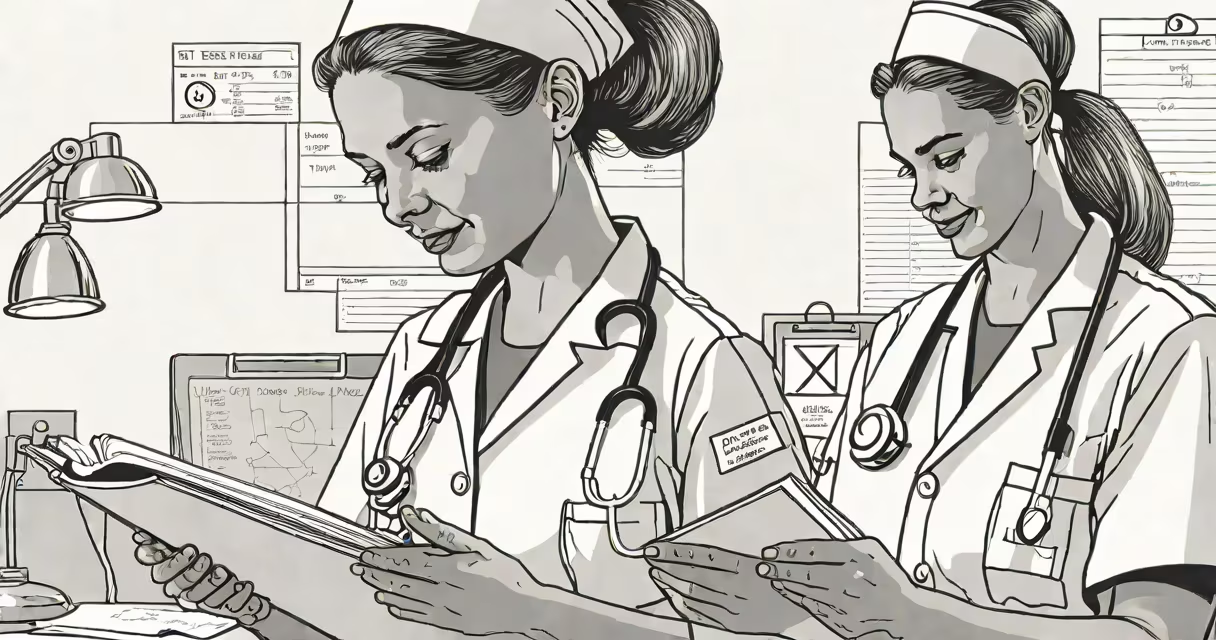
A nurse becomes a professional through formal education, state licensure, ethical conduct, clinical judgment, and continuous learning-criteria that align nursing with recognized professions like medicine and law.
Professionalism in nursing is not defined by title or uniform alone. It emerges from a combination of training, accountability, and commitment to patient-centered care. The National Council of State Boards of Nursing (NCSBN) states that professional nurses demonstrate competence, integrity, and responsibility in all aspects of practice.
Registered nurses (RNs) must complete accredited educational programs-typically an associate or bachelor's degree-and pass the NCLEX-RN exam to earn licensure. This credentialing process ensures baseline competency. But licensing is only the entry point. True professionalism develops through daily decisions, adherence to codes of ethics, and engagement in lifelong learning.
Professional nurses operate within a structure of autonomy and responsibility. They assess patients, develop care plans, administer medications, and advocate for patient rights-all under legal and ethical guidelines. Their actions are guided not by instinct but by clinical reasoning, research, and institutional protocols.
For example, a nurse in an ICU may notice subtle changes in a patient's blood pressure and respiratory rate. Rather than waiting for a physician's order, the nurse applies critical thinking: they check oxygen saturation, reassess fluid balance, and notify the provider with specific observations. This level of initiative reflects professional judgment, not just task execution.
The American Nurses Association (ANA) Code of Ethics for Nurses outlines ten provisions that govern behavior. Provision 1 states that "the nurse's primary commitment is to the patient, whether an individual, family, group, or community." This ethical foundation separates professional nursing from routine caregiving.
Professionalism in nursing rests on five pillars: education, licensure, ethical standards, clinical decision-making, and continued development. Each is measurable and enforceable.
| Component | Description | Example |
|---|---|---|
| Formal Education | Completion of an accredited program (ADN or BSN). | Nursing school curriculum includes anatomy, pharmacology, and mental health care. |
| Licensure | Passing the NCLEX-RN exam and state registration. | Over 90% of U.S. RNs hold active licenses; failure rates average 12% nationally. |
| Ethical Conduct | Adherence to the ANA Code of Ethics. | Reporting a colleague who falsifies medication records. |
| Clinical Judgment | Using evidence and experience to make safe, timely decisions. | Recognizing sepsis signs early and initiating rapid response protocol. |
| Continuing Education | Ongoing learning to maintain competency. | Completing 10 hours of trauma care training annually. |
These elements are not optional. The Commission on Collegiate Nursing Education (CCNE) requires accredited programs to embed these competencies into curricula. Failure to meet them results in academic dismissal or disciplinary action.
Many assume that being a nurse means following doctor's orders. That view reduces nursing to a clerical role. But professionals don't just follow directions-they interpret, adapt, and challenge when necessary.
Consider a scenario: A physician orders a high-dose opioid for a post-op patient. The nurse reviews the chart and notices the patient has a history of sleep apnea and recent sedation. Instead of administering the drug, the nurse consults the provider with concerns about respiratory depression. This is not defiance-it's professional responsibility.
Another common confusion is equating professionalism with politeness or appearance. A nurse may wear scrubs neatly and speak kindly-but if they ignore a patient's pain report or fail to document a fall, their actions lack professional integrity. The ANA emphasizes that professionalism includes accountability, not just demeanor.
Even among nurses, misunderstandings persist. Some believe that bedside experience alone qualifies someone as professional. But a 2021 study published in the Journal of Nursing Regulation found that nurses with higher education levels were more likely to report using evidence-based practices and to identify safety risks early.
In 2019, a nurse in a rural emergency department noticed inconsistencies in a patient's lab results and important signs. The patient had been admitted for chest pain. While the ER team debated imaging, the nurse initiated a cardiac monitor, reviewed the EKG, and flagged a new-onset arrhythmia. She advocated for immediate cardiology consultation.
That intervention led to a diagnosis of acute myocardial infarction. The patient received thrombolytic therapy within 30 minutes of symptom onset-well under the recommended 60-minute window. The hospital later cited the nurse's actions in its quality improvement report.
This case illustrates how professionalism manifests: through vigilance, critical thinking, and courage to act. The nurse wasn't just "doing her job"-she was practicing at a professional level.
I once observed a new graduate nurse in a medical-surgical unit hesitate before reporting a patient's deteriorating condition. The patient's oxygen saturation dropped from 96% to 88% over 15 minutes. The nurse checked the chart, confirmed the trend, and called the rapid response team. Her supervisor later said, "She didn't wait for permission. That's what professionalism looks like."
That moment stayed with me. It wasn't about speed-it was about recognizing the duty to act, even when uncertain. That internal compass, shaped by education and ethics, defines a professional nurse.
What makes a nurse a professional is not a single event but a consistent pattern of behavior grounded in education, ethics, and accountability. It's demonstrated in quiet moments-like double-checking a medication dose or speaking up during a shift handoff.
Professionalism in nursing is not a destination. It's a daily practice. Every time a nurse chooses evidence over habit, advocacy over silence, or reflection over routine, they affirm their place in a true profession.