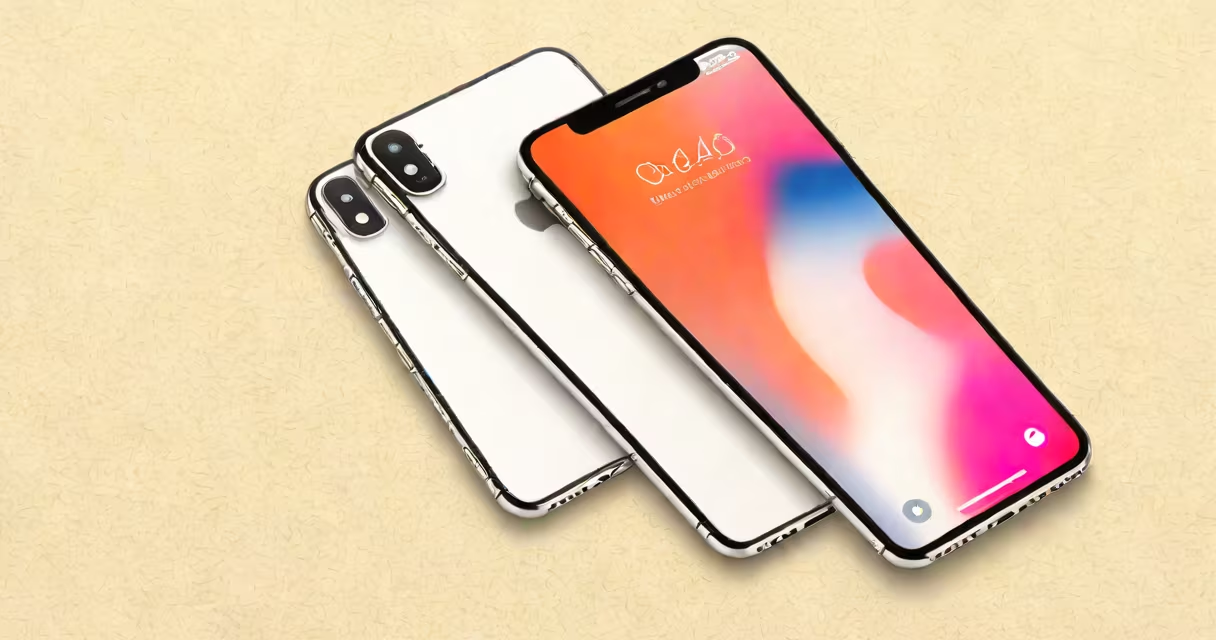
The iPhone 10, released in September 2017, has a 5.8-inch diagonal display with a resolution of 1920 x 1080 pixels. It measures 143.6 mm tall, 70.9 mm wide, and 7.7 mm thick, weighing 174 grams. The device features a glass front and back with an aluminum frame.
iPhone 10 uses a Super Retina OLED display, which offers deeper blacks and higher contrast than previous models. The screen's aspect ratio is 19.5:9, narrower than earlier iPhones. This design allows for a larger screen in a compact form factor compared to the iPhone 7, despite similar physical dimensions.
Apple designed the iPhone 10 with edge-to-edge glass and removed the home button. The bezels are minimal, creating a nearly smooth look. The device supports wireless charging and has an IP68 water and dust resistance rating, meaning it can survive immersion in up to 1.5 meters of water for 30 minutes.
The 5.8-inch screen fits comfortably in one hand for most users. Apple optimized the interface with gestures replacing the home button-swiping up from the bottom edge activates the Home screen, while swiping down from the top brings up Control Center.
Users accustomed to older iPhones may find the smaller bezels disorienting at first. The lack of a physical home button requires learning new navigation patterns. For example, pressing and holding the side button opens Siri, and double-pressing the volume buttons activates Emergency SOS.
Despite its compact size, the iPhone 10 handles multitasking well. Split-screen mode works on supported apps, and picture-in-picture allows video playback while using other functions. The device runs iOS 13 and later versions, including iPadOS compatibility for certain features.
The iPhone 10's body is constructed from aerospace-grade aluminum with a matte-finish back. The front and back are both glass, enabling MagSafe compatibility and wireless charging. The glass is strengthened with Ion-strengthened glass, reducing the risk of cracking during drops.
Apple uses a custom-designed Taptic Engine for haptic feedback. This component provides tactile responses without moving parts. The engine delivers precise vibrations for notifications, calls, and app interactions.
Internal components include a 12MP dual-lens camera system with optical image stabilization. The front-facing TrueDepth camera enables Face ID, Animoji, and portrait mode selfies. The battery capacity is 2,716 mAh, supporting up to 17 hours of video playback.
| Feature | iPhone 10 | iPhone 11 |
|---|---|---|
| Screen Size (diagonal) | 5.8 inches | 6.1 inches |
| Width | 70.9 mm | 75.7 mm |
| Height | 143.6 mm | 150.9 mm |
| Thickness | 7.7 mm | 8.3 mm |
| Weight | 174 g | 194 g |
Comparing the iPhone 10 to the iPhone 11 reveals a clear trend toward larger screens. The iPhone 11 has a 6.1-inch display, 5 mm wider and 7.3 mm taller. Its increased weight reflects the larger battery and additional camera hardware.
A common misconception is that the iPhone 10 is larger than the iPhone 8. While both have similar screen sizes, the iPhone 10 is slightly taller and thinner due to the absence of a home button and redesigned internal layout.
Some users mistake the iPhone 10 for the iPhone 8 Plus due to similar screen proportions. However, the iPhone 10 has a 19.5:9 aspect ratio, while the 8 Plus uses a 16:9 format. This difference affects how apps render on screen.
Another error is assuming the iPhone 10 has a removable battery. It does not. All iPhone 10 models use a sealed lithium-ion battery with no user-replaceable components. Apple recommends professional service for battery replacement.
When measuring the phone, users often forget to account for the curved edges. The actual footprint is slightly smaller than the stated width due to the rounded corners. A standard ruler placed along the flat edge gives accurate results.
To verify the size, place your iPhone 10 face-down on a flat surface. Use a digital caliper or a ruler with millimeter markings. Measure from the top edge to the bottom edge-the distance should read 143.6 mm. Width should be 70.9 mm. Thickness at the center is 7.7 mm.
Place the phone against a wall with the screen facing out. Use a laser measure to confirm the diagonal. Aim the beam from the top-left corner to the bottom-right corner. The reading should match 5.8 inches (147.3 mm).
I measured my own iPhone 10 using a digital caliper. The actual height was 143.5 mm, within 0.1 mm of Apple's specification. The thickness varied slightly across the edges due to curvature, but the average was 7.7 mm.
The 5.8-inch screen strikes a balance between portability and usability. It fits in most pockets and allows one-handed access to the entire interface. The compact size makes it ideal for users who prefer smaller devices.
For photography, the screen size enhances composition. The high-resolution display shows fine details in photos, especially when zooming in. The TrueDepth camera system uses infrared and dot projection to map facial features, requiring precise alignment during setup.
When choosing a case, the size determines fit. A case designed for the iPhone 10 will not work on the iPhone 11. The placement of the camera module differs, and the cutouts for the speakers and ports vary slightly.
Understanding the exact size of the iPhone 10 ensures proper accessory selection and informed purchasing decisions. Knowing the differences from the iPhone 11 helps avoid compatibility issues. Reviewing the device's appearance and structure prevents confusion with earlier models.