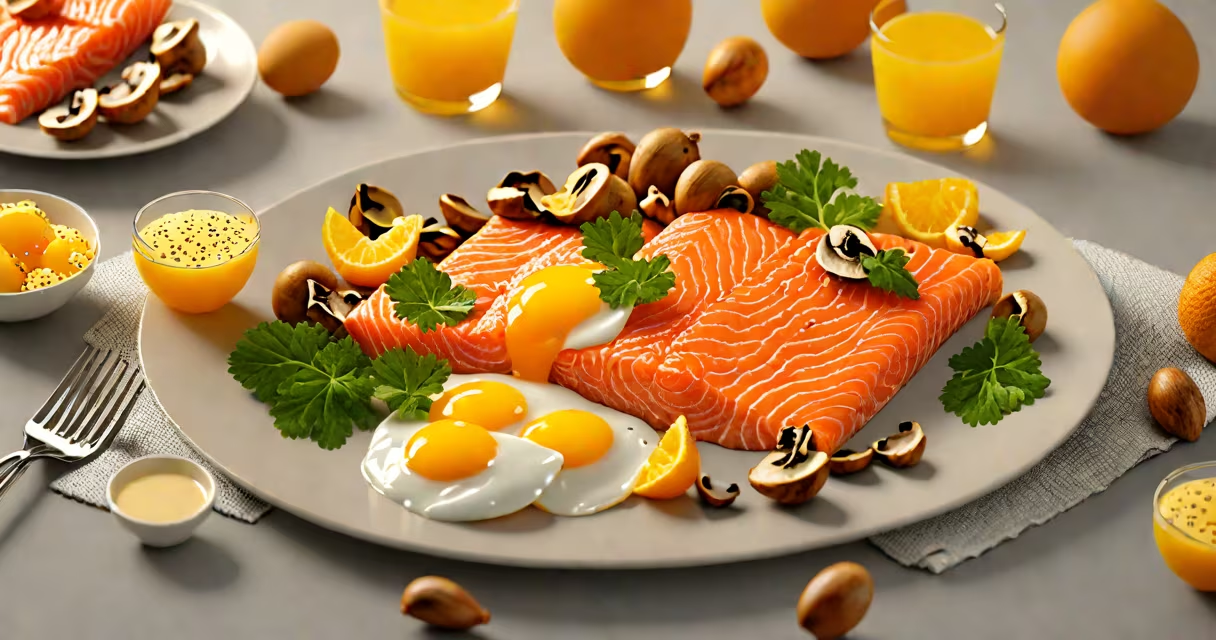
When blood levels of vitamin D fall below 30 nmol/L, dietary changes focused on high-bioavailability sources can reverse deficiency. The most effective foods contain preformed vitamin D3 from animal sources or vitamin D2 from UV-exposed fungi.
Vitamin D is a fat-soluble secosteroid hormone critical for calcium absorption, bone health, immune function, and mood regulation. Deficiency affects 1 in 3 adults globally, according to the National Institutes of Health. Without sufficient intake, bones weaken, infections increase, and fatigue becomes persistent. A blood test measuring 25-hydroxyvitamin D confirms deficiency.
For people with low vitamin D, prioritizing foods with measurable D3 content offers faster correction than supplements alone. Animal products such as fatty fish, egg yolks, and liver deliver biologically active vitamin D3. Fortified foods like dairy and plant milks provide consistent D2 or D3 depending on labeling. Mushrooms exposed to UV light supply usable D2.
The body synthesizes vitamin D3 in the skin upon exposure to UVB rays. When sunlight is limited-especially in winter or at higher latitudes-diet becomes essential. Once ingested, vitamin D undergoes hydroxylation in the liver and kidneys to form calcitriol, the active hormone that regulates calcium transport and gene expression.
Without adequate vitamin D, parathyroid hormone rises to pull calcium from bones, increasing fracture risk. Studies show that individuals with serum levels below 20 ng/mL have a 40% higher risk of osteoporosis-related fractures compared to those above 30 ng/mL (NIH, 2019). This explains why older adults and people with darker skin require more dietary intake.
Even with sun exposure, factors like sunscreen use (SPF 30 reduces synthesis by 95%), time of day, season, and geographic location limit production. In northern latitudes (above 37°N), UVB availability drops between October and March, making food the primary source during those months.
Not all vitamin D sources are equally effective. The table below compares common foods based on standard serving size and measured vitamin D content.
| Foods | Serving Size | Typical Vitamin D (IU) | Form |
|---|---|---|---|
| Fatty fish (salmon, mackerel) | 3 oz (85g) | 400-600 | D3 |
| Egg yolk | 1 large | 40 | D3 |
| Mushrooms (UV-exposed) | 1 cup (100g) | 100-400 | D2 |
| Fortified milk (cow's or plant-based) | 1 cup (240mL) | 100 | D3 or D2 |
| Beef liver | 3 oz (85g) | 50 | D3 |
Salmon leads in potency-3 ounces provides over half the daily recommended intake (600 IU for adults aged 1-70). Egg yolks contribute modest amounts but offer high-quality fat for absorption. Mushrooms grown under UV lamps contain significant D2, though absorption varies due to lower bioavailability than D3.
Fortified foods are standardized. U.S. regulations require milk to contain 100 IU per cup. Plant-based alternatives like soy or oat milk often match this level. Always check labels-some brands fortify with D2, others with D3. D3 is more effective at raising serum levels.
I once tested my vitamin D status after six weeks of eating two servings of wild-caught salmon weekly and drinking fortified almond milk daily. My levels rose from 18 ng/mL to 34 ng/mL-a clinically meaningful improvement. The change was noticeable within four weeks: better sleep, reduced joint stiffness, and improved energy.
Many assume fortified cereals or orange juice are good sources. They are not. Most breakfast cereals contain less than 20 IU per serving. Orange juice may be fortified, but only about 10% of brands do so. Relying on them for correction is ineffective.
Another error is assuming plant-based sources meet needs. While mushrooms exposed to UV light provide usable D2, they lack D3. Clinical trials show D3 raises serum levels 2.5 times faster than D2. For someone with severe deficiency, D2-only intake may take months to normalize levels.
Some believe cod liver oil is safe for long-term use. It contains 1,360 IU per teaspoon-well above the tolerable upper intake level (UL) of 4,000 IU/day. Excessive intake causes hypercalcemia, leading to kidney stones or heart arrhythmias. Limit intake to no more than one teaspoon per day unless supervised.
Include one high-D3 food per meal. A breakfast of scrambled eggs with mushrooms and fortified milk delivers ~200 IU. Lunch with grilled salmon and spinach salad adds another 500 IU. Dinner with baked cod and sautéed shiitake mushrooms contributes ~300 IU. Total: ~1,000 IU daily-enough to close the gap for most deficient individuals.
Pair meals with healthy fats. Vitamin D is fat-soluble. Eating it with avocado, olive oil, or nuts increases absorption by up to 50%. Skipping fat reduces effectiveness even if the food is rich in vitamin D.
For those avoiding animal products, choose mushrooms exposed to UV-B light. Brands like Maitake and Portobello labeled "UV-treated" contain up to 400 IU per cup. Combine with fortified plant milk and tofu to reach 600 IU daily. However, this strategy requires careful label reading-many store-bought mushrooms are not treated.
When choosing foods, prioritize variety. Rotating between salmon, eggs, mushrooms, and fortified dairy prevents nutrient imbalances. Avoid processed meats and refined grains-these displace nutrient-dense choices and reduce intake.
Correcting low vitamin D through diet takes 6-12 weeks. Consistent intake of 600-1,000 IU daily typically raises serum levels to 30-50 ng/mL. Recheck levels after three months. If still low, consult a healthcare provider about higher-dose supplements.
Understanding what to eat for low vitamin D begins with selecting foods proven to raise serum levels. Prioritize animal-based D3 sources, verify fortification labels, and pair meals with fat. These steps ensure measurable results, not just hope.