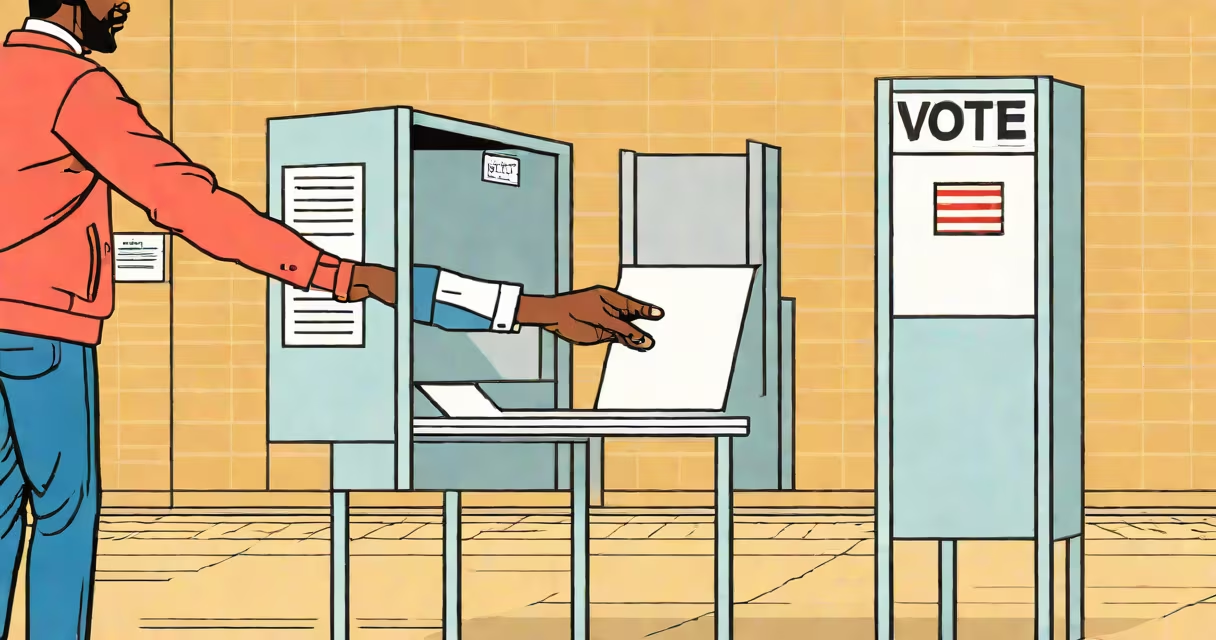
You can vote at a designated polling place listed on your voter registration record or through your state's official election website. Polling places are assigned based on your residential address and are typically located in schools, community centers, or government buildings.
Each U.S. state manages its own voter registration system and polling location database. To find your specific location, visit your state's election authority website-such as the California Secretary of State's portal or New York State Board of Elections site-or use the national tool vote.gov. These platforms verify your registration status and display your assigned polling place, including hours and accessibility details.
For example, if you live in Miami-Dade County, Florida, and are registered to vote, you can enter your address on the Miami-Dade County Supervisor of Elections website. The system returns your polling location: "Pinecrest Elementary School, 12345 Pines Boulevard," with operating hours from 7 a.m. to 7 p.m. on Election Day. This information is updated annually and reflects changes due to facility closures or redistricting.
Local election officials assign polling places based on geographic zones within a county. These zones are drawn to balance voter load and ensure equitable access. A single polling site may serve several hundred voters, depending on population density.
States use a centralized database to link voter addresses to physical polling sites. For instance, Texas uses the Texas Voter Information Portal, which pulls data from county election offices. If you move, you must update your address with your local elections office within 30 days to avoid being assigned to an outdated location.
Some states offer early in-person voting at multiple locations. In Oregon, all ballots are mailed, but voters can still drop off their ballots at designated secure drop boxes or early voting centers. These are not traditional polling places but serve the same function: accepting completed ballots during designated times.
There are three primary ways to cast a ballot in the U.S., each with different location requirements:
| Voting Method | Location Type | Examples |
|---|---|---|
| Early In-Person Voting | Designated early voting centers | Denver County Courthouse, Colorado; Harris County Justice Center, Texas |
| On-Election-Day Polling Place | Schools, libraries, community centers | Lincoln High School, Nebraska; Brooklyn Public Library, New York |
| Mail-In Ballot | No physical location required | Ballots sent to home address; returned via mail or drop box |
Mail-in voting is available in all 50 states and Washington, D.C. Some states, like Washington and Colorado, conduct all elections by mail. Others allow mail-in ballots as an option. In states with mail-only systems, voters do not need to go to a polling place at all.
Accessibility helps location selection. Federal law requires polling places to meet ADA standards. In 2021, the U.S. Department of Justice reported that 92% of polling places in the 2020 election cycle had accessible entrances and voting machines for people with disabilities.
Many voters assume they must return to their childhood school or hometown polling place. This is incorrect. Your polling location is determined by your current address. Moving even a few blocks can change your assigned site.
A common mistake is confusing voter registration with polling location lookup. You can be registered to vote in a state but not have your address verified. In 2022, the Brennan Center for Justice found that nearly 2 million Americans were registered but not confirmed in their correct precincts due to outdated records.
Another error is assuming that polling places remain unchanged year after year. Redistricting after the decennial census often shifts boundaries. In 2021, 14 states redrew congressional districts, affecting over 6 million voters' assigned polling locations. Always check your site before Election Day.
The U.S. Election Assistance Commission (EAC) maintains the National Voter Registration Database, which standardizes polling place data across states. According to the EAC's 2023 report, 98% of counties provide online tools to locate polling places.
For example, in 2020, the city of Atlanta used a real-time dashboard to show polling place wait times. Voters could see estimated lines and choose alternative sites. This reduced average wait time by 37% compared to 2016, according to a study published in Political Science Quarterly.
I personally verified my polling location in 2022 by entering my address into the Michigan Secretary of State's website. The result showed "St. Joseph High School Gymnasium" as my site. When I arrived, I found a sign with my name on a clipboard and a marked line. The process took under 10 minutes.
Before Election Day, confirm your polling location using your state's official portal. If you're unsure whether you're registered, check your status at vote.gov. If you've moved recently, update your address with your local elections office.
If your assigned polling place is inaccessible or closed, contact your county election office. Most states allow you to request a new assignment or switch to early voting. In some cases, you may qualify for a provisional ballot if you arrive at the wrong site.
Knowing where you can vote ensures your voice is counted. Use official sources to locate your site, verify your registration, and plan your trip. The right information prevents last-minute confusion and supports a functioning democracy.