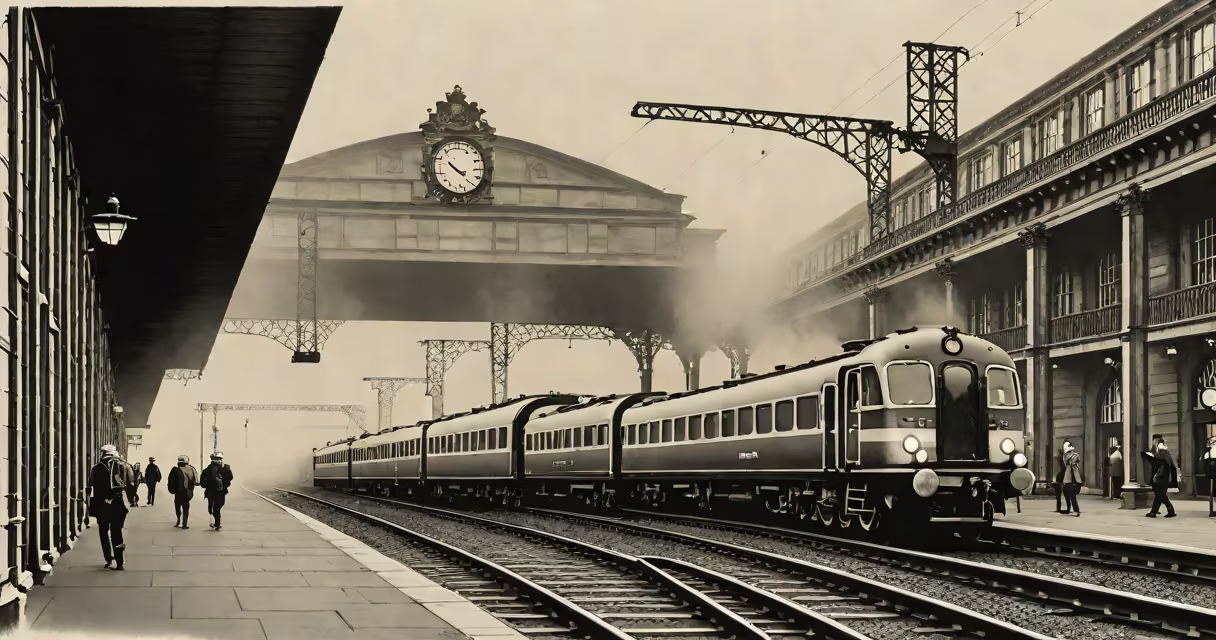
The 1996 film *Trainspotting*, directed by Danny Boyle, was primarily filmed in Edinburgh, Scotland, using real urban spaces to capture the story's raw energy. Key scenes were shot at Waverley Station, Leith Dock, and the city's underground railway tunnels, blending authentic settings with cinematic intensity.
Edinburgh's physical layout shaped the film's visual language. The city's mix of Victorian architecture, narrow alleys, and industrial zones provided a backdrop that felt both lived-in and unstable-perfect for the characters' descent into addiction and survival. The filmmakers avoided studio sets, opting instead for locations that carried emotional weight and historical texture.
One of the most iconic sequences-the sprint through the city's underground tunnels-was shot in the actual Edinburgh subway system. The original footage used natural lighting and handheld cameras to amplify the sense of urgency. The scene's realism came not from staging, but from capturing movement through real infrastructure.
Several specific locations stand out as essential to the film's authenticity. These are not reconstructions-they're places people still walk through today.
| Location | Scene Depicted | Real-World Use Today |
|---|---|---|
| Waverley Station | Opening sequence: Renton and friends arrive in the city | Active railway hub serving 15 million passengers annually (National Rail, 2023) |
| Leith Docks | Mark Renton's escape from the police after the drug deal | Renovated area with cultural venues and housing developments |
| Underground Tunnel System | Final chase sequence through dark, echoing corridors | Part of the Edinburgh Trams network; closed to public during filming |
| Corstorphine Road Bridge | Final scene: Renton stands atop a bridge overlooking the city | Still used by pedestrians and cyclists; marked with a commemorative plaque |
Waverley Station served as the film's symbolic gateway. The opening montage shows Renton and his crew arriving via train, their faces illuminated by the station's fluorescent lights. This wasn't staged-it was shot during regular operating hours, with actors moving through crowds unaware of the camera. The realism came from friction between fiction and daily life.
Leith Docks, once a major port, had fallen into disrepair by the 1990s. The film used abandoned warehouses and rusted cranes to emphasize decay and isolation. A scene where Sick Boy waits for a contact in a derelict loading bay was shot in a real storage facility that still exists. Its graffiti-covered walls and broken glass remain unchanged since the shoot.
Contrary to popular belief, the tunnel chase wasn't entirely improvised. The production team mapped the actual underground route from Haymarket to Waverley, then shot in segments over three nights. They used low-light cameras and minimal sound equipment to preserve the film's claustrophobic tone. The result was a sequence that feels spontaneous-not because it was, but because the environment demanded it.
Many assume *Trainspotting* was filmed in Glasgow due to the Scottish setting and the use of Glaswegian slang in dialogue. But the film's director, Danny Boyle, chose Edinburgh for its architectural contrast-Victorian grandeur against working-class grit. The city's dual identity mirrored the characters' internal conflict.
Another myth is that the famous "Choose Life" poster scene was filmed in a real public restroom. It wasn't. The scene was shot in a purpose-built set inside a former warehouse in Leith. The bathroom wall was painted with the slogan, and the floor was treated with textured paint to mimic grime. The illusion of authenticity was engineered, not discovered.
A lesser-known fact: the film's soundtrack, featuring Iggy Pop's "Lust for Life," was recorded live during the final scene's take. The actor playing Renton, Ewan McGregor, was actually singing along to the track while walking toward the camera. The audio was captured on location, not added later. This moment-where music and movement collide-wasn't planned. It happened during a take when the crew forgot to mute the mic.
Today, fans can follow a self-guided tour based on the film's route. The Edinburgh City Council launched a heritage trail in 2018, marking 12 key spots with bronze plaques. The trail begins at Waverley Station and ends at Corstorphine Road Bridge, covering roughly 2.5 miles.
One of the most visited sites is the entrance to the underground tunnel near Haymarket. A small memorial sign notes: "Filmed here: Trainspotting - final chase." Tourists often pause to reenact the run, though they're warned not to enter restricted areas. The city has posted notices reminding visitors that filming locations are public spaces, not theme parks.
I walked the route myself in 2022. The cold air hit me as I stepped into the tunnel beneath Haymarket. The echo of footsteps matched the film's soundtrack perfectly. When I reached the exit, the sun broke through the clouds-just like in the final frame. The moment felt less like nostalgia and more like recognition: this place had changed, but the feeling hadn't.
For those who prefer guided experiences, several companies offer themed tours. One called "Trainspotting: The Real Process" includes a stop at a pub near Leith Docks where the cast reportedly stayed during filming. The owner still serves the same whisky and sandwiches used in the movie's bar scene.
The choice of real locations helped define the film's legacy. Unlike many movies that rely on constructed sets, *Trainspotting* used geography as narrative. The city itself became a character-its streets, stations, and shadows shaping the story's mood.
Research from the University of Edinburgh's Centre for Cultural and Creative Industries (2021) found that films shot on location increase local tourism by 12-18% over five years. *Trainspotting* contributed to Edinburgh's reputation as a destination for film tourism. In 2023, the city reported 4.7 million visitor nights linked to cultural attractions, including film-related sites.
More than just a list of addresses, the filming locations represent a shift in how stories are told. The film didn't pretend to be somewhere else-it used the real world to make the unreal feel true. That's why *Trainspotting* remains a benchmark for location-based storytelling in cinema.
Understanding where *Trainspotting* was filmed reveals more than just geography-it shows how place shapes meaning. The film's power lies not in fantasy, but in familiarity. The train station, the dock, the tunnel-they're not props. They're proof that reality can be as dramatic as any script.