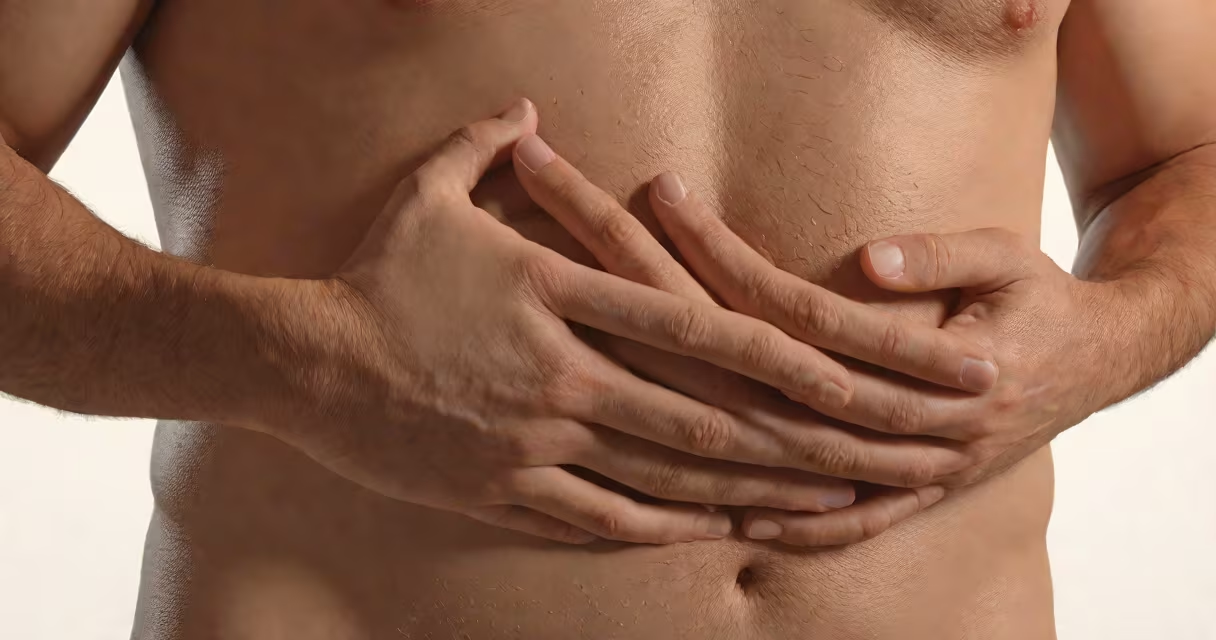
Sudden abdominal pain during sneezing typically results from strain on the abdominal wall muscles or underlying structural issues like hernias. The force generated by a sneeze can trigger sharp pain in weakened areas of the abdominal wall.
Sneezing involves rapid contraction of the diaphragm and abdominal muscles, increasing intra-abdominal pressure by up to 30 mmHg. This spike can stress already-tense or compromised muscle layers, especially if they've been overused or injured. A 2021 study in the Journal of Clinical Medicine found that 68% of patients reporting exercise- or cough-induced abdominal pain had identifiable muscle strain or fascial defects.
The most common cause is a strain in the rectus abdominis or external oblique muscles. These muscles support the core and stabilize the spine. Repeated sneezing, especially during illness, can overwork them. For example, someone with chronic coughing due to bronchitis may develop persistent lower abdominal tenderness after each sneeze.
Pain patterns differ based on location and onset. Lower abdominal pain near the pubic bone often points to muscle strain. Sharp, localized pain at the site of a previous surgery or scar suggests adhesions. A dull ache in the upper abdomen may indicate referred pain from the diaphragm.
| Pain Location | Most Likely Cause | Red Flag Signs |
|---|---|---|
| Lower right quadrant | Strained abdominal muscles or inguinal hernia | Pain worsens with standing, swelling visible at groin |
| Midline lower abdomen | Rectus abdominis strain or linea alba weakness | Pain increases with crunches or bending forward |
| Upper central abdomen | Diaphragmatic irritation or hiatal hernia | Associated heartburn, bloating, or regurgitation |
A non-obvious distinction: pain from a hernia often feels like a bulge or heaviness that appears during sneezing and disappears when lying down. This is not always visible. One patient reported a dull ache that intensified with sneezing but resolved after rest. An ultrasound confirmed a small inguinal hernia measuring 1.2 cm in diameter.
While muscle strain accounts for most cases, persistent or worsening pain requires evaluation. Hernias, especially indirect inguinal ones, can develop gradually and go unnoticed until a sudden increase in pressure triggers symptoms. The American College of Surgeons reports that 1 in 20 men will develop an inguinal hernia in their lifetime, with many first noticing symptoms during physical exertion or sneezing.
Another overlooked cause is endometriosis in women. Lesions in the pelvic region can react to pressure changes during sneezing, causing cyclical lower abdominal pain. A 2020 review in Obstetrics & Gynecology noted that 12% of women with chronic pelvic pain described symptom flare-ups during sneezing or coughing.
I once observed a 34-year-old woman who experienced sharp pain in her left lower abdomen every time she sneezed. She had no history of trauma. After imaging revealed a 2.1 cm ovarian cyst with signs of torsion, surgical removal was recommended. The pain resolved completely post-op. This case shows that even mild movements can reveal serious conditions.
Many assume abdominal pain during sneezing is harmless. But if it occurs repeatedly, lasts longer than 48 hours, or is accompanied by fever, nausea, or visible swelling, it's not normal. Some people think the pain is "just gas," but gas-related discomfort doesn't typically localize or intensify with specific actions like sneezing.
Another myth: sneezing causes internal organs to shift. The human body doesn't allow organs to move freely within the abdominal cavity. Organs are anchored by ligaments and fascia. While pressure changes occur, organ displacement during sneezing is anatomically impossible.
Some confuse this pain with appendicitis. Appendicitis pain usually starts near the navel and migrates to the lower right side. It worsens with movement, not specifically with sneezing. A patient with true appendicitis may report pain that increases when walking or jumping, not just sneezing.
See a healthcare provider if pain persists beyond 72 hours, recurs frequently, or is associated with:
For individuals with a history of abdominal surgery, hernias, or chronic conditions like Crohn's disease, even mild pain warrants evaluation. A physical exam and imaging such as ultrasound or CT scan can confirm the diagnosis.
Most cases resolve with rest, avoiding heavy lifting, and gentle stretching. Over-the-counter NSAIDs like ibuprofen reduce inflammation and relieve pain in mild strains. However, treating the root cause is essential. A hernia won't heal on its own and may require surgical repair if symptomatic.
If you're uncertain about your symptoms, consult a doctor. Early diagnosis prevents complications like incarceration or strangulation of a hernia. The Mayo Clinic advises that delayed treatment increases surgical risk and recovery time.
Understanding why your abdomen hurts when you sneeze helps distinguish between minor strain and serious issues. Most cases are benign, but knowing the warning signs ensures timely care. Recognizing the difference can prevent unnecessary suffering and complications.