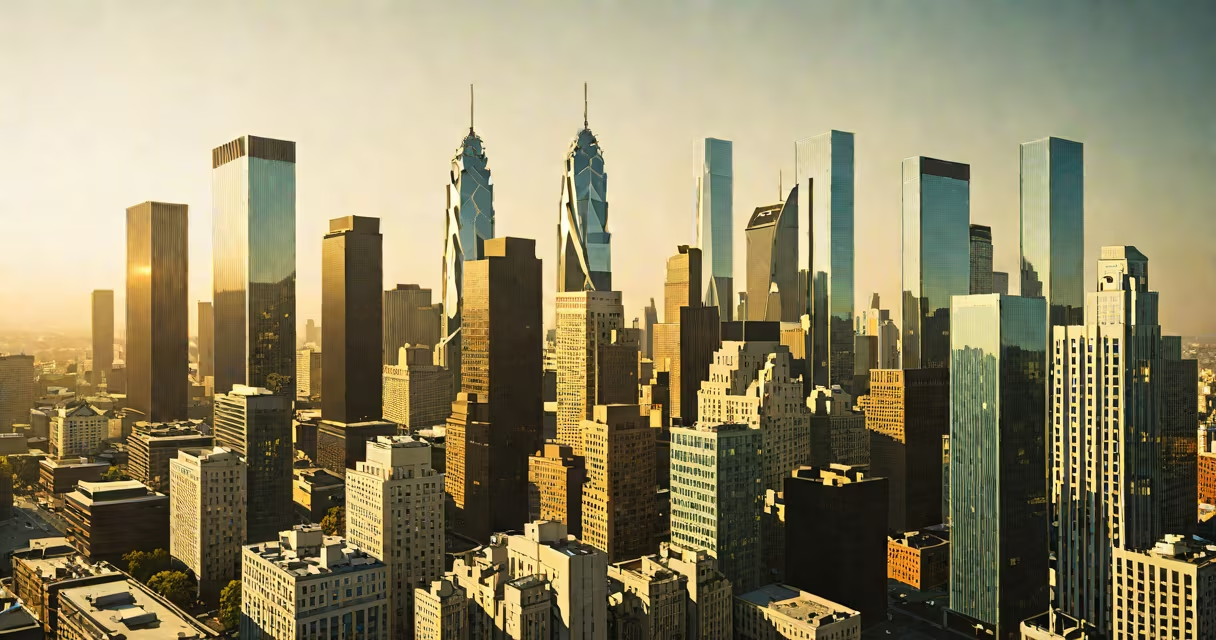
The term "modern" describes a state of being current, progressive, and aligned with recent developments in culture, technology, and thought-distinct from traditional or outdated systems. It emerged in the late 18th century to mark a break from the past, particularly in art, philosophy, and social organization.
Modern refers to both a timeframe and a mindset. As a timeframe, it begins around 1750 and continues through the present, encompassing industrialization, digital transformation, and global interconnectedness. As a mindset, it emphasizes innovation, rationalism, and adaptation to new conditions. The word itself derives from Latin *modernus*, meaning "of the present," and evolved through French *moderne* before entering English.
Modern is not synonymous with "new." A smartphone is modern because it reflects current design principles and technological capability. A 19th-century steam engine, while advanced for its time, is not modern by today's standards. What matters is relevance to the present moment-not just chronology.
"Modern" functions as an adjective describing objects, ideas, and behaviors that reflect current norms. It appears in phrases like "modern architecture," "modern medicine," and "modern lifestyle." These uses signal alignment with prevailing scientific, aesthetic, or social values.
In design, modern means clean lines, minimal ornamentation, and functional form. The Bauhaus movement in Germany (1919-1933) codified this ideal: "form follows function." A chair designed by Marcel Breuer in 1925-using tubular steel and geometric shapes-is modern not because it's new, but because it rejects decorative excess in favor of efficiency and material honesty.
Cultural shifts define modernity too. The rise of individual rights, secular governance, and mass media in the 20th century marked a modern turn away from religious authority and inherited hierarchies. The Universal Declaration of Human Rights (1948), drafted by representatives from 50 nations, reflects modern values: universal dignity, equality, and freedom of expression.
Modern isn't a single idea. It operates at different levels-individual, institutional, societal-and varies by region and context. The following table outlines key dimensions:
| Type | Description | Example |
|---|---|---|
| Technological Modernity | Adoption of new tools and systems | AI-powered diagnostics in hospitals |
| Cultural Modernity | Shifts in values, identity, and expression | Gender-neutral pronouns in public institutions |
| Political Modernity | Secular governance, rule of law, transparency | Free elections in South Korea since 1987 |
| Economic Modernity | Market-based systems, digital finance | Mobile payments in Kenya via M-Pesa |
These layers don't always align. A country may have modern infrastructure but lack political modernity. Nigeria, for example, has a growing tech sector and widespread mobile internet use, yet faces persistent challenges in democratic accountability and judicial independence.
"Modern" is often confused with "advanced" or "futuristic." But a device can be technologically advanced without being modern. The 1960s-era IBM 7090 computer was useful for its time, but it's not modern-its vacuum-tube architecture and batch-processing model are obsolete.
Another error is assuming modern equals Western. While modernity emerged strongly in Europe during the Enlightenment, it is not exclusive to Western nations. Japan's Meiji Restoration (1868-1912) deliberately adopted Western technologies and institutions to modernize rapidly. By 1900, Japan had a modern navy, rail system, and constitution-proving modernity can be culturally rooted even when externally inspired.
A lesser-known point: modernity includes self-critique. The term "postmodern" arose in the 1970s not as a rejection of modernity, but as a reflection on its limits. Philosophers like Jean-François Lyotard argued that modernity's promise of progress and universal truth had failed in practice-especially in colonial contexts and large-scale social engineering projects.
Consider the redesign of Copenhagen's city center between 2000 and 2020. The city replaced car lanes with bike paths, added green spaces, and mandated energy-efficient buildings. This wasn't just a physical update-it reflected a modern urban ethos: sustainability, walkability, and citizen-centered design.
Before 2000, Copenhagen's traffic planning prioritized vehicles. Afterward, it embraced modern principles: data-driven policy, public participation, and environmental responsibility. Today, over 60% of residents commute by bicycle. The city's carbon emissions dropped 40% between 2005 and 2020, despite population growth.
This shift illustrates that modern isn't about gadgets-it's about values. The choice to prioritize people over cars, nature over concrete, and long-term health over short-term convenience defines modern thinking.
I once visited a small town in rural Italy where a 19th-century church still used candles for lighting. The building was preserved, and the community valued tradition. Yet, the local school had installed solar panels and taught coding to children. The contrast showed me that modernity isn't binary. A place can honor the past while embracing modern solutions-like using renewable energy in a centuries-old structure.
"Modern" and "contemporary" are often used interchangeably, but they differ. "Contemporary" refers to the present moment-what's happening now. "Modern" refers to a broader historical and philosophical structure. A painting from 2024 may be contemporary, but only if it engages with current themes (climate crisis, digital identity) is it truly modern.
For example, a 2023 photograph of a refugee camp in Jordan is contemporary. But if it's displayed in a museum alongside works that challenge viewers to confront systemic migration policies, it becomes part of a modern artistic discourse-one focused on justice, visibility, and human agency.
The meaning of modern centers on alignment with current values, technologies, and ways of thinking. It's not a label for anything new-it's a descriptor for what is relevant, adaptive, and forward-looking. Understanding this helps clarify debates about education reform, climate policy, and digital ethics. When we ask whether something is modern, we're really asking: does it meet the demands of today?