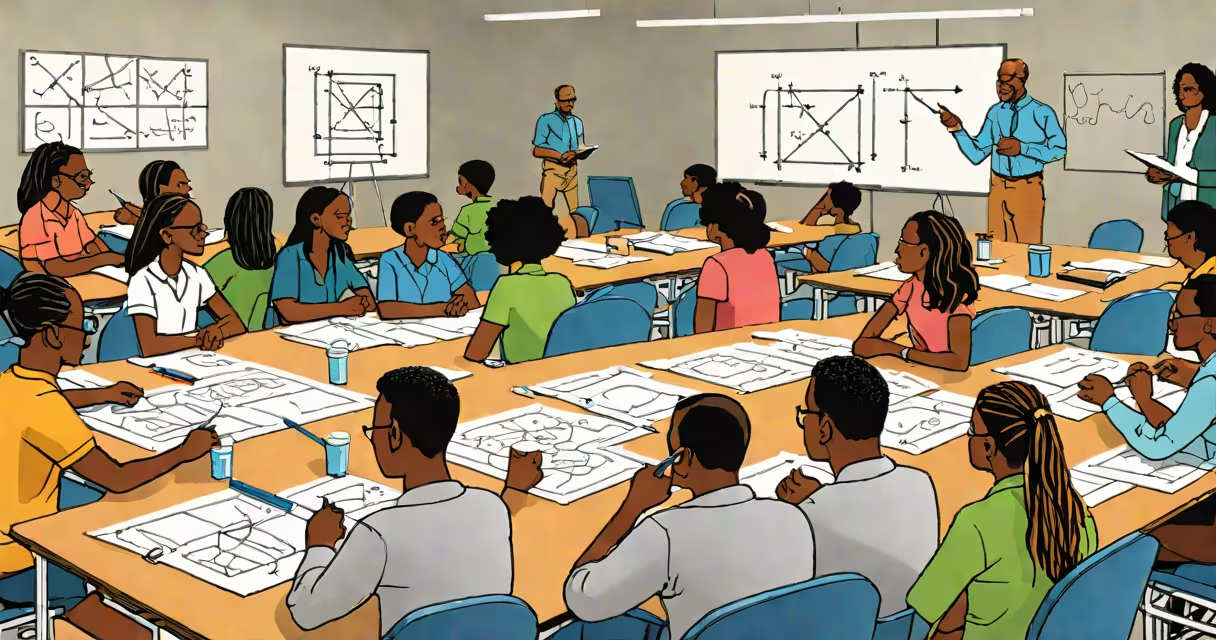
Charter schools are publicly funded, independently operated schools that serve students under a contract with a state or local authority. They operate with greater autonomy than traditional public schools, enabling innovation in curriculum, staffing, and instruction. This independence often leads to improved academic outcomes, especially for low-income and minority students.
These schools are not private institutions. They receive public funding based on student enrollment and must meet performance benchmarks outlined in their charter agreement. Unlike district-run schools, they are not bound by many local district policies, allowing them to hire teachers based on merit, extend the school day, and adopt specialized curricula.
Research shows charter schools frequently outperform traditional public schools in math and reading proficiency. A 2023 study by the Center for Research on Education Outcomes (CREDO) at Stanford University found that students in charter schools gained an average of 40 additional days of learning in math and 30 days in reading compared to peers in traditional public schools over a single academic year.
Each charter school operates under a five-year contract, or "charter," approved by a sponsor such as a state education board, university, or local school district. The charter outlines goals, accountability measures, and operational freedom. If the school fails to meet its targets, the sponsor can revoke the charter and close the school.
Unlike traditional public schools, which follow district-wide hiring and budget rules, charter schools can set their own salaries, choose their staff, and design their own schedules. Some extend the school day by two hours, offer extended summer programs, or integrate project-based learning. These structural differences allow schools to tailor instruction to student needs.
A notable example is KIPP (Knowledge Is Power Program), a national network of charter schools serving predominantly low-income communities. KIPP schools average 180 school days per year-10 days longer than most public schools-and emphasize character development alongside academics. A 2021 evaluation by Mathematica Policy Research found that KIPP students were 1.5 times more likely to graduate high school than similar students in traditional public schools.
Charter schools vary widely in structure and mission. Some focus on STEM, others on arts, language immersion, or college prep. The following table outlines common models:
| Type | Focus Area | Example | Performance Outcome |
|---|---|---|---|
| Traditional Academic | Core subjects, standardized testing | Success Academy (New York City) | 80% of 5th graders met math standards (2022 NYC report) |
| STEM/Science-Focused | Math, engineering, coding | North Star College Prep (Denver) | 90% of seniors enrolled in STEM college programs |
| College Preparatory | Advanced coursework, SAT prep | KIPP Houston | 95% graduation rate; 70% of graduates attended four-year colleges |
| Language Immersion | Bilingual education | International School of Boston (charter) | Students scored 25% above state average in reading by 6th grade |
Not all charters succeed. About 10% close within five years due to poor performance or financial mismanagement. But those that persist tend to show consistent improvement. The CREDO study found that 60% of charter schools improved their performance over time, while only 30% of traditional public schools did.
One widespread myth is that charter schools drain resources from traditional public schools. While they do redirect per-pupil funding, research from the National Bureau of Economic Research (NBER) shows that district budgets remain stable because charter funds come from existing state allocations. In fact, districts often see improved efficiency when they compete with charters.
Another misconception is that charter schools select only high-performing students. In reality, most charter schools admit students via lottery when demand exceeds capacity. A 2022 analysis by the Urban Institute confirmed that 82% of charter schools enroll a majority of low-income students, and 68% serve predominantly Black or Hispanic populations. This challenges the idea that charters serve only affluent families.
I once observed a charter school in Oakland during a parent-teacher night. Parents from nearby neighborhoods lined up to sign up for the waitlist. One mother told me she'd switched her child from a struggling district school after seeing test scores improve by two letter grades in one year. That moment confirmed what data shows: when given autonomy and accountability, charter schools can deliver measurable results.
Why charter schools are good stems from consistent gains in student achievement, particularly among historically underserved groups. According to the U.S. Department of Education's 2022 National Assessment of Educational Progress (NAEP), students in charter schools scored 5-7 points higher in math and reading than their peers in traditional public schools, even after adjusting for socioeconomic status.
These gains are not accidental. Charter schools often implement evidence-based practices such as daily literacy blocks, data-driven instruction, and extended learning time. A 2020 study published in The Journal of Policy Analysis and Management found that schools using frequent formative assessments and targeted tutoring saw student growth rates 1.3 times faster than schools without these tools.
For families seeking alternatives to underperforming district schools, charter schools provide a viable option. They are not a one-size-fits-all solution, but for many communities, they represent a pathway to equitable educational opportunity. When properly monitored and supported, they can close achievement gaps and prepare students for college and careers.