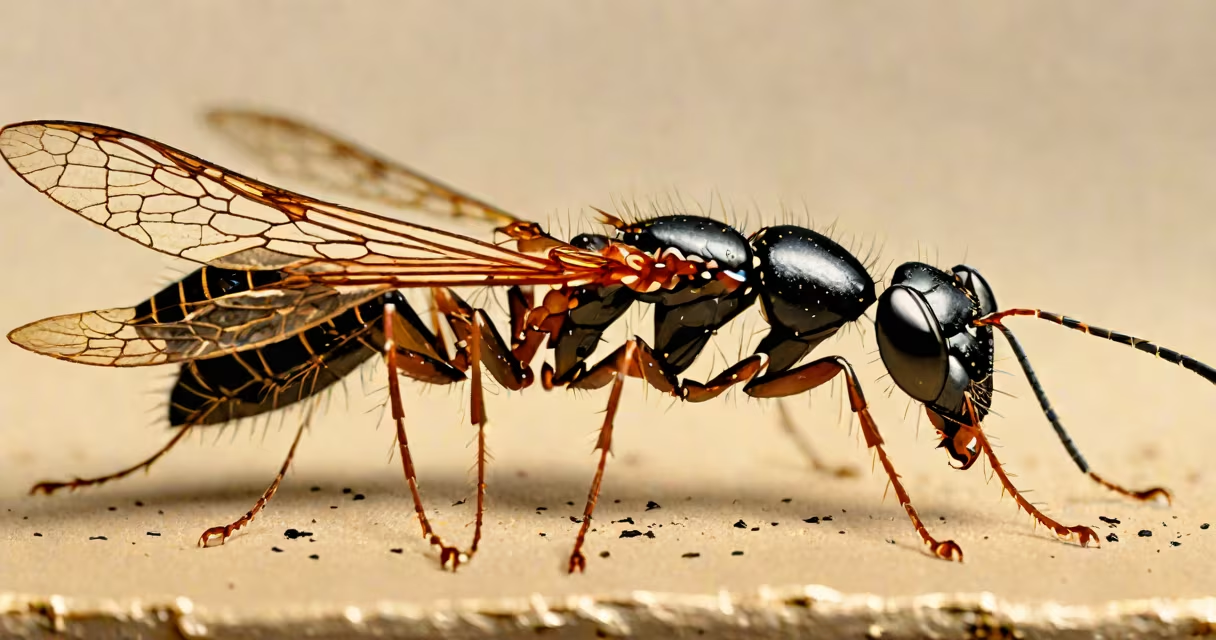
Winged ants are reproductive members of ant colonies that develop wings to fly and mate during swarming season. They appear in homes during spring and early summer, often drawn to light and warmth. Their presence signals a mature colony nearby, not necessarily an infestation.
These insects are not pests in their own right-they don't damage structures or food. Instead, they're part of a natural reproductive cycle. After mating, female winged ants shed their wings and start new colonies. Males die shortly after mating. The appearance of winged ants indoors usually means a nearby colony has reached maturity and is sending out reproductive scouts.
According to the University of California Agriculture and Natural Resources, winged ants are most common in late spring and early summer. They're often seen near windows, lights, or doorways. Their flight patterns are erratic, unlike termites, which fly in straight lines. Identifying them correctly prevents unnecessary panic and misdiagnosis.
Ant colonies operate under a caste system. Workers are sterile females who maintain the nest. Soldiers defend it. And then there are reproductives-queens and males with wings. These individuals develop in the nest during specific seasons, typically triggered by temperature and humidity changes.
When conditions are right-usually warm days and high humidity-winged ants emerge from the colony and take flight. This process is called swarming. Males and queens fly together, mate mid-air, then land. Queens shed their wings and search for a new nesting site. Males die soon after mating. A single queen can lay thousands of eggs over her lifetime, founding a new colony.
Swarming is not random. It's timed to maximize survival chances. Research from Cornell University shows that swarming events peak between April and June in temperate regions. This timing avoids harsh weather and ensures sufficient food availability for the new colony.
Not all winged ants are the same. The species determines behavior, habitat, and treatment needs. Here are the most common types found indoors:
| Type | Appearance | Habitat | Common Name |
|---|---|---|---|
| Odorous House Ant | Dark brown, 2.4 mm long, smells like rotten coconut when crushed | Nests in walls, under floors, near moisture sources | "Crazy Ant" (not related to *Paratrechina longicornis*) |
| Pharaoh Ant | Light yellow, 1.5 mm long, tiny eyes | Warm indoor spaces-walls, behind appliances | Named for ancient Egypt, not origin |
| Fire Ant | Reddish-brown, 2-4 mm, painful sting | Outdoors, nests in soil; can invade homes | Native to South America, invasive in U.S. |
Each species has different nesting habits. Odorous house ants prefer damp areas and often enter through cracks near sinks. Pharaoh ants thrive in heated buildings and are notoriously hard to eliminate due to their ability to split colonies when disturbed.
A key difference from termites: ants have a narrow waist (petiole) and bent antennae. Termites have straight antennae and a broad waist. Misidentifying them leads to ineffective treatments. For example, using termite-specific pesticides on ants wastes money and increases chemical exposure.
Winged ants enter homes not because they want to live there-but because they're searching for mates and new nesting sites. They're attracted to light, warmth, and open spaces. A single winged ant seen near a window is likely a scout from a nearby colony.
They often enter through small gaps-around doors, windows, baseboards, or utility entry points. A study by the National Pest Management Association found that 68% of indoor winged ant sightings occurred within 10 feet of a light source or heat vent.
One time, I saw a swarm of winged ants emerging from a gap under a basement door during a warm May evening. They flew toward porch lights. I collected one specimen and confirmed it was a male odorous house ant. No colony was found inside-just a seasonal migration event. This experience reinforced that winged ants indoors are rarely signs of an established infestation.
People often mistake winged ants for termites. Both have wings and fly, but their biology differs. Termites are social insects that eat wood. Ants do not. Termite colonies are built around wood consumption; ant colonies are built around food scavenging.
Key differences:
Another confusion: people think winged ants mean a large infestation. But seeing one or two winged ants doesn't imply a problem. It's like spotting a single migrating bird-it's normal, not alarming.
If you see only one or two winged ants, especially in spring, no action is needed. They're likely part of a natural swarming event. But if you see multiple winged ants daily-or notice worker ants in large numbers-then investigate further.
Signs of a potential issue include:
If you suspect a colony, look for entry points. Seal gaps with caulk or steel wool. Remove food sources and reduce moisture. For persistent issues, consult a licensed pest professional.
Seeing ants with wings isn't a reason to panic. They're reproductive ants seeking mates and new homes. Their appearance is seasonal and often harmless. Correct identification prevents wasted effort and chemicals. If you see only a few, wait them out. If you see many, act-but only after confirming a colony is present.