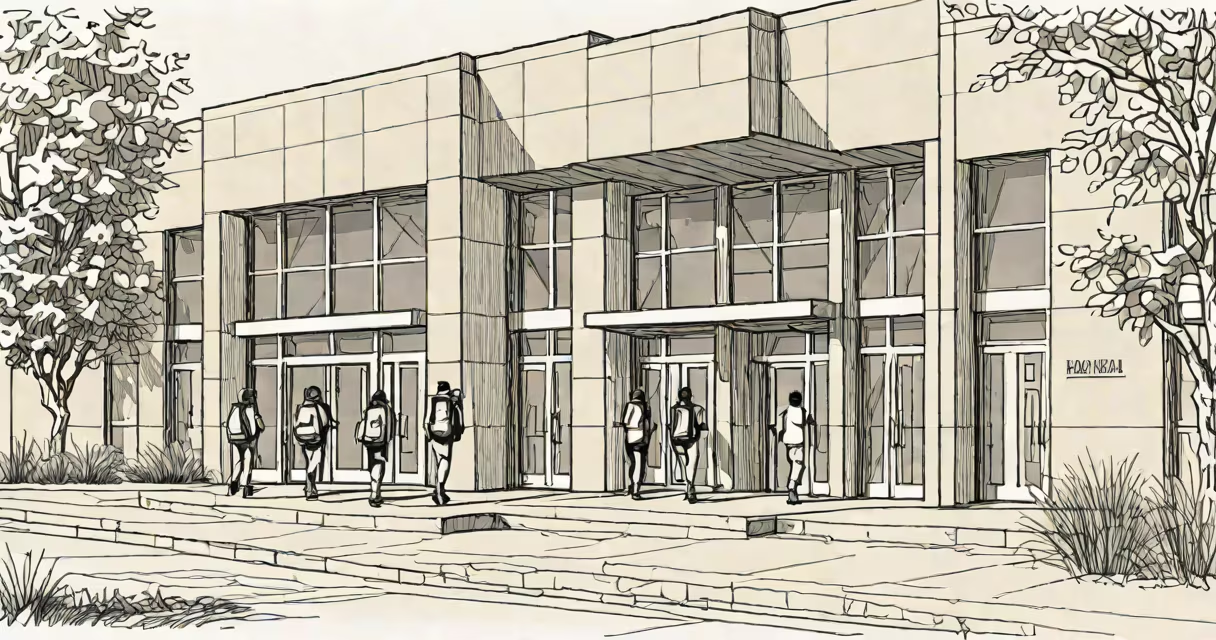
Natomas Charter School is a publicly funded, tuition-free K-12 school located in Sacramento, California, operating under state charter laws that allow autonomy in curriculum and governance while being accountable for student outcomes. It serves students from kindergarten through 12th grade with a focus on college preparation, project-based learning, and individualized instruction.
Charter schools like Natomas operate independently of traditional district control but remain subject to state oversight. They receive public funding based on student enrollment and must meet performance benchmarks outlined in their charter agreement. Natomas Charter School was established in 2006 and is part of the broader network of charter schools in California designed to offer alternative educational models.
The school's mission emphasizes academic rigor, equity, and student agency. It uses a blended learning model combining face-to-face instruction with digital tools. Students engage in interdisciplinary projects, such as designing sustainable urban gardens or analyzing local policy proposals, which align with Common Core State Standards and Next Generation Science Standards.
Natomas Charter School functions under a charter approved by the California Department of Education. This charter grants the school legal independence in staffing, budgeting, and curriculum design, provided it meets annual performance goals. The school board, composed of parents, educators, and community members, oversees operations and approves strategic plans.
Instruction is delivered through a mix of synchronous online sessions and in-person classes. During the 2023-2024 academic year, 78% of students participated in hybrid learning, with full remote options available for families requiring flexibility. Teachers use platforms like Google Classroom and Canvas to manage assignments, assessments, and communication.
A key feature is the personalized learning plan (PLP) developed for each student. These plans track academic progress, set goals, and identify interventions. For example, a 7th grader scoring below proficiency in math receives targeted tutoring and access to adaptive software like Khan Academy and IXL. Data from the 2023 California Assessment of Student Performance and Progress (CAASPP) showed a 12-point increase in math proficiency among students who completed PLPs.
Natomas Charter School offers a college-preparatory curriculum aligned with A-G requirements for University of California and California State University admissions. All students take four years of English, three years of math (including Algebra II and Geometry), two years of lab science, and two years of foreign language. Electives include robotics, AP Psychology, and creative writing.
Students in grades 9-12 may enroll in Advanced Placement (AP) courses. In 2023, 42% of seniors took at least one AP exam, with a 68% pass rate-above the statewide average of 61%. The school also partners with local colleges for dual enrollment programs. In 2022, 15 students earned college credit through Sacramento City College courses taught on-site.
| Grade Level | Core Subjects | Special Programs |
|---|---|---|
| K-5 | Math, ELA, Science, Social Studies | STEM clubs, reading intervention |
| 6-8 | Pre-algebra, literature, earth science | Project-based learning, career exploration |
| 9-12 | Calculus, AP U.S. History, Biology | AP courses, dual enrollment, internships |
One non-obvious fact: Natomas Charter School does not assign letter grades until 6th grade. Instead, students receive narrative feedback describing strengths, areas for growth, and specific strategies for improvement. Research from the National Charter School Research Project (2022) found that this approach reduced anxiety and improved long-term academic persistence in middle school students.
Natomas Charter School is often mistaken for a private school due to its selective admission process and high academic expectations. It is not private. It is publicly funded and cannot charge tuition. Admission is determined by lottery when applications exceed capacity. In 2023, 1,240 families applied for 320 spots in grades K-8, resulting in a waitlist of 18 months.
Another misconception is that charter schools serve only high-performing students. Natomas enrolls a diverse population: 41% of students qualify for free or reduced-price lunch, and 29% are English learners. The school provides ESL support through a sheltered instruction model, with teachers trained in SIOP (Sheltered Instruction Observation Protocol).
Some assume charter schools lack accountability. Natomas Charter School publishes annual reports detailing student achievement, attendance, and financial audits. Its 2023 report showed a 94% graduation rate, compared to 86% in the Sacramento Unified School District. The school is also accredited by the Western Association of Schools and Colleges (WASC), confirming compliance with rigorous standards.
I visited Natomas Charter School in February 2023 during a student-led sustainability fair. Eighth graders presented projects on reducing plastic waste in school cafeterias. One group redesigned lunch trays using biodegradable materials and tracked usage patterns over six weeks. Their data showed a 37% reduction in single-use plastics. The project met science standards, incorporated math analysis, and included public speaking components.
This example illustrates how Natomas integrates cross-curricular learning. The project required research, measurement, modeling, and presentation-all assessed using rubrics aligned with state standards. Teachers reported that students demonstrated deeper understanding than in traditional unit tests.
Natomas Charter School exemplifies the charter model's potential: public accountability with institutional freedom. It is not a replacement for district schools but a distinct option within California's education field. Families seeking structured, inquiry-driven learning with measurable outcomes often find it a strong fit.