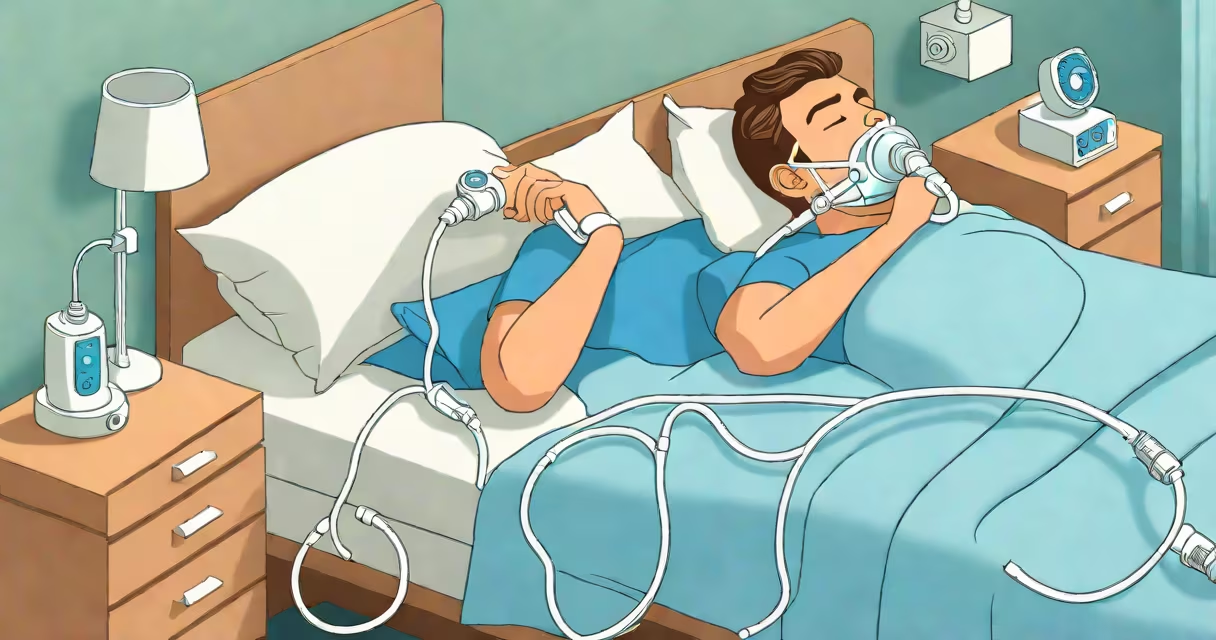
People need CPAP (continuous positive airway pressure) therapy to treat obstructive sleep apnea, a condition where the airway collapses during sleep, causing repeated breathing pauses. Without treatment, these pauses reduce oxygen levels and disrupt sleep cycles, increasing risks for hypertension, stroke, and heart failure.
CPAP delivers a steady stream of pressurized air through a mask worn over the nose or mouth. This air acts as a splint, keeping the upper airway open throughout the night. The therapy is prescribed based on a sleep study showing apnea events-defined as pauses in breathing lasting 10 seconds or longer-occurring five times per hour or more.
The American Academy of Sleep Medicine (AASM) states that CPAP is the gold standard for treating moderate to severe obstructive sleep apnea. A 2021 review in Sleep Medicine Reviews confirmed that consistent CPAP use reduces apnea episodes by 90% and improves daytime alertness in 85% of users.
During normal sleep, the muscles in the throat relax. In people with obstructive sleep apnea, this relaxation causes the soft tissues in the back of the throat to collapse inward, blocking airflow. The brain senses low oxygen and briefly wakes the person to resume breathing-sometimes hundreds of times per night.
CPAP machines generate air pressure between 4 and 20 cm H2O, adjusted during a titration study. The pressure is delivered via a hose to a mask that fits snugly over the nose or both nose and mouth. The constant flow prevents tissue collapse, allowing uninterrupted breathing and deeper sleep stages.
A 2020 clinical trial published in JAMA Internal Medicine found that patients using CPAP for six months had a 30% lower risk of cardiovascular events compared to untreated controls. The study tracked 1,200 participants over three years and concluded that adherence to CPAP reduced hospitalizations related to heart failure by 40%.
CPAP systems vary by pressure delivery method, mask design, and added features. The most common types are:
| Type | Pressure Delivery | Best For | Example Use Case |
|---|---|---|---|
| Fixed-pressure CPAP | Constant pressure set during sleep study | Stable airway resistance | John, 52, uses a fixed 12 cm H2O setting after a 6-hour sleep study showed consistent obstruction. |
| Auto-adjusting (APAP) | Adjusts pressure in real time based on breathing patterns | Variable obstruction or frequent position changes | Sarah, 44, switches to APAP due to snoring that worsens when lying on her side. |
| BiPAP (BPAP) | Delivers different pressures for inhalation and exhalation | Neurological conditions or high CO2 retention | David, 68, uses BiPAP because his COPD makes exhaling against fixed pressure difficult. |
Mask styles include nasal pillows (small cushions at the nostrils), nasal masks (covers only the nose), and full-face masks (covers nose and mouth). Nasal pillows reduce claustrophobia and are preferred by side sleepers. Full-face masks are used when mouth breathing is persistent or nasal congestion prevents effective seal.
One underappreciated factor is mask fit. A 2019 study in Chest found that 43% of CPAP users discontinue therapy within the first year due to discomfort or leaks-not lack of effectiveness. Proper fitting, often guided by a respiratory therapist, increases long-term adherence.
Many assume CPAP is only for overweight men. While obesity is a major risk factor, CPAP is prescribed for women, children, and people with normal BMI who have anatomical airway narrowing. A 2022 study in Sleep reported that 38% of diagnosed cases were in individuals with a BMI below 25.
Another myth is that CPAP replaces other treatments. It doesn't. CPAP addresses the mechanical obstruction but doesn't reverse underlying causes like enlarged tonsils or neuromuscular weakness. Surgery or oral appliances may still be needed in combination.
I once observed a patient who stopped using CPAP after three weeks because the machine was too loud. He later switched to a newer model with a quieter motor (under 30 dB) and resumed therapy. Noise reduction technology has improved since early models, which often exceeded 40 dB-comparable to a refrigerator hum.
Consistent CPAP use leads to measurable improvements in quality of life. A 2023 meta-analysis in European Respiratory Journal analyzed 17 trials involving over 5,000 patients. Results showed:
Without CPAP, untreated sleep apnea increases the risk of motor vehicle accidents by 2.5 times, according to the National Highway Traffic Safety Administration (NHTSA). Drivers with untreated apnea are more likely to fall asleep at the wheel due to chronic sleep deprivation.
Adherence remains a challenge. The AASM recommends using CPAP for at least 4 hours per night on 70% of nights to achieve clinical benefit. Studies show that users who meet this threshold see a 50% reduction in mortality over five years compared to inconsistent users.
Understanding why people need CPAP clarifies that it's not a lifestyle choice-it's a medical intervention proven to extend life, improve mental health, and prevent chronic disease. The device is not optional for those diagnosed with moderate to severe obstructive sleep apnea.
When used correctly, CPAP restores natural breathing during sleep, enabling restorative sleep architecture. The benefits are not theoretical-they're documented in large-scale studies and visible in daily life: clearer thinking, more energy, and fewer health complications.