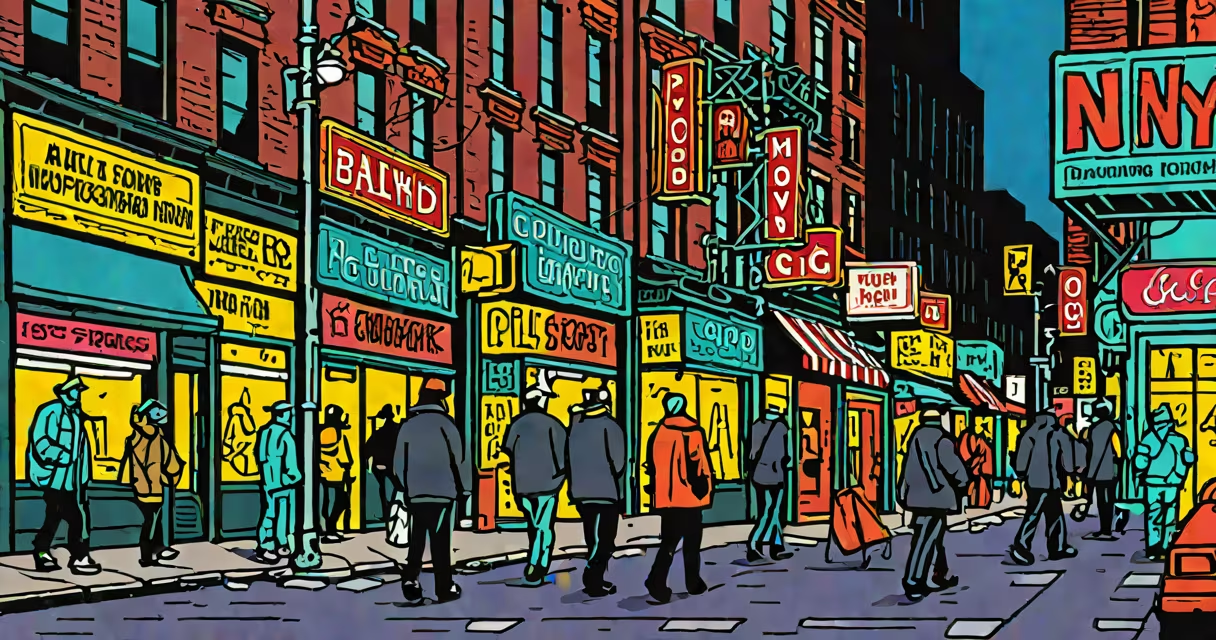
All things go nyc refers to the full spectrum of authentic, real-time experiences available in New York City-ranging from underground music shows and pop-up art installations to neighborhood food markets and spontaneous community gatherings. It's not a single event or venue, but a living network of moments that reflect the city's layered identity.
The term emerged in early 2020 as a grassroots descriptor among local creatives and residents who wanted to show the city's off-grid energy. Unlike curated tourism packages, all things go nyc focuses on immediacy, accessibility, and local participation. It's about showing up, showing out, and seeing what unfolds.
For example, in January 2023, a group of artists in Bushwick transformed a vacant warehouse into a temporary performance space called "The Noise Vault." No tickets were sold. The entrance was marked only by hand-painted signs and word-of-mouth. Over 200 people attended within hours. That event exemplifies all things go nyc: unannounced, community-driven, and rooted in place.
All things go nyc operates through decentralized discovery. Information spreads via social media, neighborhood bulletin boards, and trusted local networks-not official websites or paid promotions. This model relies on trust and timing.
Platforms like Instagram Stories, TikTok, and neighborhood Facebook groups serve as primary channels. A flyer posted at a corner bodega in Harlem might announce a poetry slam at 8 PM. A tweet from a Brooklyn-based DJ might tease a rooftop set with no RSVP. These are not ads-they're invitations to the moment.
Participants don't need to plan ahead. They show up, engage, and leave with a memory. The experience is ephemeral by design. There's no archive, no replay. Once it ends, it's gone-just like the city itself.
While all things go nyc spans many categories, four core types dominate:
| Type | Examples | Duration & Access |
|---|---|---|
| Pop-Up Performances | Spontaneous jazz sets in subway stations, flash mob dance routines in Union Square | 15-60 minutes; free entry; location changes daily |
| Community Gatherings | Neighborhood potlucks in Queens, open-mic nights in Williamsburg bookstores | 2-4 hours; invite-only or sign-up via WhatsApp |
| Street-Based Art | Guerrilla murals in the Bronx, chalk installations on sidewalks in Lower Manhattan | Varies; often removed within days |
| Unofficial Food Events | Weekend taco trucks in Jackson Heights, late-night dumpling pop-ups in Chinatown | 1-3 hours; cash-only; no posted hours |
These aren't seasonal festivals or branded activations. They emerge organically from the city's density and diversity. A single block in the Lower East Side might host five such events in one weekend-none advertised in advance, none requiring registration.
All things go nyc resists the homogenization of urban life. In a city where 8 million people live in close proximity, the most meaningful connections often form in unplanned settings. A conversation sparked by a shared meal at a pop-up diner, a shared laugh during a street theater act-these moments build belonging.
According to a 2022 study by the NYU Urban Lab, 68% of New Yorkers reported feeling more connected to their neighborhoods after attending an unstructured public event. The study tracked 1,200 participants across 12 boroughs and found that informal gatherings increased civic engagement more than formal programs.
There's also a practical benefit: access. Not everyone can afford $150 concert tickets or $80 brunch reservations. All things go nyc offers entry points that cost nothing but time and presence. A free poetry reading in a basement café in Astoria requires only curiosity and a willingness to walk in.
Many assume all things go nyc is synonymous with "off the beaten path" or "hidden gem." But it's not about secrecy-it's about authenticity. The experience doesn't gain value because it's unknown. It gains value because it's real.
Another error is equating it with tourism. While visitors sometimes stumble into these events, they're designed for locals. A man in his 60s from the Bronx told me in 2021 that he'd never seen a live saxophone performance in a subway station until he joined a spontaneous gathering in the 14th Street station. He didn't come for the music-he came because someone waved him over. That's all things go nyc.
Finally, some confuse it with viral trends. A TikTok challenge may start in a park, but if it's promoted by influencers and monetized, it's no longer part of all things go nyc. The movement thrives on low visibility and high spontaneity. When something becomes popular, it loses its edge.
In August 2023, a group of teenagers in the South Bronx organized a block party using only donated supplies and borrowed speakers. They announced it via a series of flyers taped to lampposts near the 163rd Street subway stop. No social media. No website. Just word spread by foot.
By 7 PM, over 150 people had gathered. A local DJ played Afro-Latin beats. Kids danced on the sidewalk. An elderly woman brought homemade empanadas. The police arrived at 8:15 PM, not to disperse the crowd, but to ask if they needed water. The event ended at 10 PM. No permits, no records, no follow-up.
That night wasn't documented online. No photos were shared. But the participants still remember it. One teen said, "It felt like we owned the block for a few hours." That ownership-temporary, collective, unscripted-is the heart of all things go nyc.
There's no central hub. But certain neighborhoods consistently generate activity. The Lower East Side, Harlem, Bushwick, and parts of Queens (especially Jackson Heights and Ridgewood) see frequent spontaneous events due to dense populations and creative communities.
Local hubs like the Greenpoint Library, the Bedford-Stuyvesant Community Center, and the MTA's "Art in Transit" program often serve as launch points. A mural painted on a subway platform might inspire a nearby poetry reading. A new sculpture in a park might draw a crowd. These are not planned-they're reactions.
When searching for all things go nyc, focus on physical cues: hand-drawn signs, clusters of people in unexpected places, music drifting from a doorway. Look for the absence of logos, ticket booths, or security. If it feels like it could vanish tomorrow, it likely is part of the movement.
All things go nyc isn't a brand. It's not a festival. It's not a checklist. It's a way of being in the city-one that values presence over planning, connection over consumption. To participate is to accept the uncertainty of the moment. To witness is to feel the city breathe.
For those seeking the real texture of New York, look not for the next big thing-but for the next small thing that's already happening.