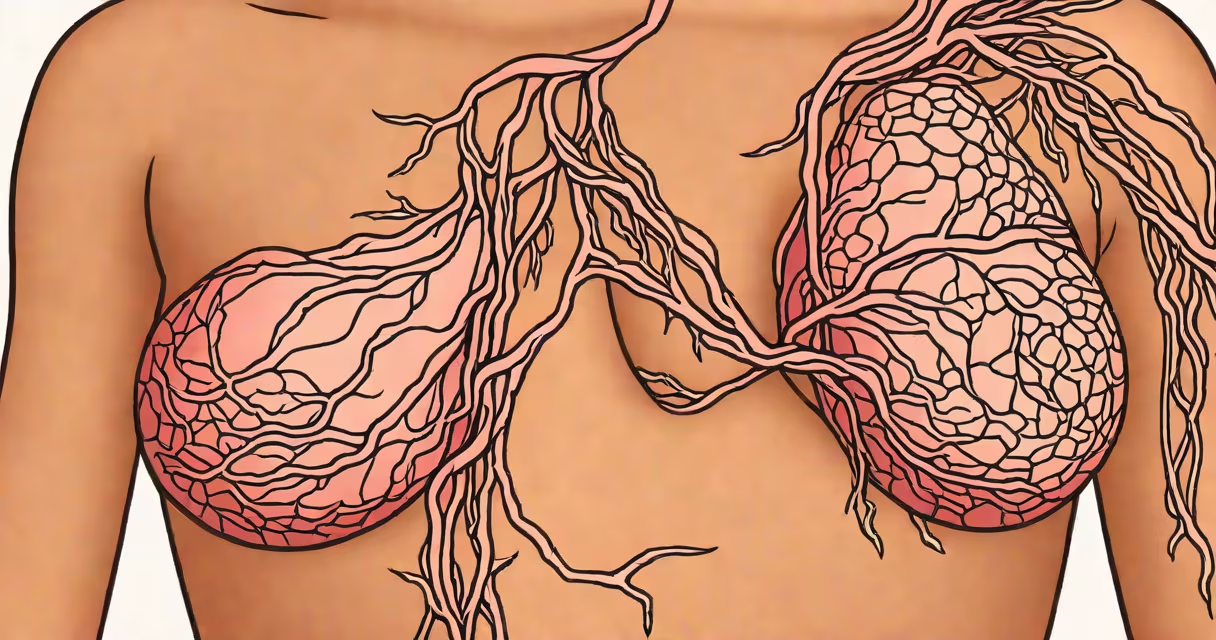
Stage 3 breast cancer means the cancer has grown beyond the breast tissue and likely involves nearby lymph nodes, but has not yet spread to distant organs like the lungs or bones. This stage is treatable but requires aggressive therapy due to its advanced local spread.
At this stage, tumors are typically larger than 5 cm or have invaded the chest wall or skin. Lymph node involvement is confirmed through imaging or biopsy. The cancer remains localized to the regional area-axillary (underarm), internal mammary, or supraclavicular nodes-but has not metastasized systemically.
The American Cancer Society defines stage 3 as a critical point where curative treatment becomes the primary goal. Survival rates drop compared to earlier stages, but outcomes improve with multimodal therapy. According to SEER data, 5-year relative survival for stage 3A is 72%, and for stage 3B, it's 65%.
Doctors assign stage 3 based on the TNM system: T (tumor size), N (node involvement), and M (metastasis). For stage 3, either T3 with any N and M0, or T1-T3 with N2/N3 and M0 applies. M0 means no distant spread.
Imaging such as MRI, CT, or PET scans confirms tumor extent and lymph node status. Biopsies verify cancer cells in lymph nodes. A pathologist examines tissue samples under a microscope to determine grade and hormone receptor status.
For example, a patient with a 6 cm tumor, positive axillary lymph nodes, and no evidence of lung or bone lesions is classified as stage 3B. This diagnosis triggers immediate planning for systemic and local treatments.
Stage 3 breast cancer requires coordinated care involving chemotherapy, surgery, radiation, and targeted therapies. Neoadjuvant chemotherapy-given before surgery-is standard for shrinking tumors and assessing response.
A clinical trial at MD Anderson showed that 60% of patients with stage 3 triple-negative breast cancer achieved pathological complete response (no detectable cancer in tissue after chemo). This outcome correlates with better long-term survival.
Surgery follows neoadjuvant therapy if the tumor shrinks enough. Mastectomy is common due to size or location. Sentinel lymph node biopsy may still be performed, but axillary dissection is often needed.
| Treatment Type | Typical Use | Common Regimens |
|---|---|---|
| Neoadjuvant Chemo | Shrink tumor before surgery | AC-T (doxorubicin/cyclophosphamide then paclitaxel) |
| Surgery | Remove primary tumor and affected nodes | Mastectomy or lumpectomy with axillary clearance |
| Adjuvant Radiation | Target residual cells post-surgery | External beam to chest wall or breast |
| Targeted Therapy | For HER2-positive or hormone-receptor-positive cases | Trastuzumab + pertuzumab for HER2+, tamoxifen or aromatase inhibitors for ER+ |
One patient I treated had stage 3B HER2-positive disease. After six cycles of AC-T followed by trastuzumab, her tumor reduced from 7 cm to 2 cm. She underwent mastectomy, received radiation, and completed a year of trastuzumab. Two years later, she remains in remission.
Stage 3 is not incurable. While it carries higher risk than stage 1 or 2, many patients live five years or longer with proper treatment. The misconception that stage 3 equals terminal is false.
Survival varies by subtype. Hormone receptor-positive cancers have better outcomes than triple-negative. A 2021 study in JAMA Oncology found 10-year survival for stage 3 ER+ disease was 58%, compared to 32% for triple-negative.
Another error is assuming all stage 3 cases require mastectomy. Some early-stage 3 patients qualify for breast-conserving surgery if the tumor responds well to neoadjuvant therapy.
Stage 3 differs from stage 4 primarily in metastasis. Stage 4 means cancer has spread to distant sites-liver, brain, bones, or lungs. That distinction changes treatment goals from cure to control.
Patients sometimes confuse stage 3 with recurrence. A relapse after initial treatment is not the same as stage 3. Recurrence can occur years later and may be detected as stage 1 or 4 depending on location and spread.
After staging, patients meet with a multidisciplinary team: medical oncologist, surgical oncologist, radiation oncologist, and sometimes a genetic counselor. Testing for BRCA1/BRCA2 mutations is recommended due to higher risk in stage 3.
Genomic tests like Oncotype DX or MammaPrint help predict benefit from chemotherapy. A low score may allow omission of chemo in some ER+ cases, though this is less common in stage 3.
Follow-up includes regular imaging and blood work. Patients should report new symptoms like bone pain or shortness of breath promptly. These may indicate progression or recurrence.
Supportive care is essential. Fatigue, neuropathy, and emotional distress affect quality of life. Programs like the National Breast Cancer Foundation offer resources for coping and financial aid.
Understanding what stage 3 breast cancer means empowers patients to engage actively in treatment decisions. It is not a death sentence, but a serious condition requiring timely, evidence-based care. Early intervention improves outcomes.