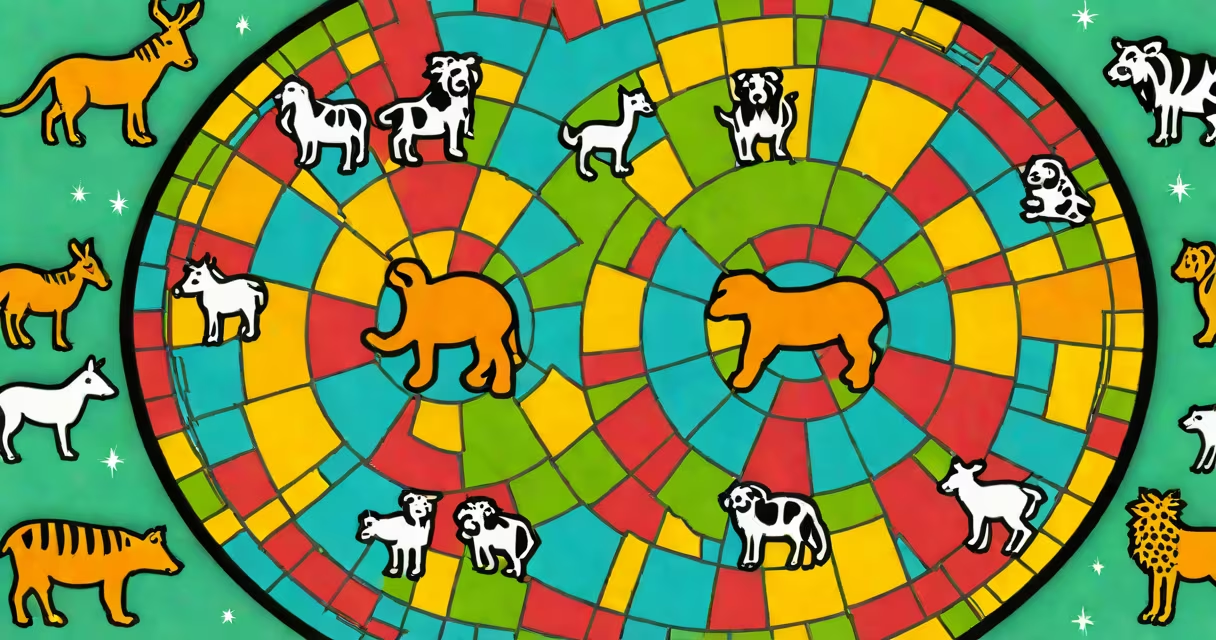
Animal spin the wheel is a digital game format where a virtual wheel divided into segments labeled with different animals spins and lands on a random creature, often used in educational settings to teach animal names, habitats, and characteristics through interactive play.
The game functions as a randomized selection tool. When activated, the wheel rotates at increasing speed before slowing down and stopping on one segment. Each segment contains a visual and textual label identifying a specific animal. The outcome is determined by chance, making it unpredictable and engaging.
These games are commonly embedded in interactive learning apps, classroom presentation software, and children's websites. They support language acquisition, memory recall, and attention span development through repetition and surprise. According to the National Association for the Education of Young Children (NAEYC), interactive games like this improve early childhood engagement with subject matter by up to 40% compared to passive instruction.
Each animal spin the wheel uses a digital interface with a rotating disc divided into equal sectors. Each sector holds an image and name of an animal. The player triggers the spin via touch or click. The wheel accelerates, then decelerates gradually until it stops on one segment.
Behind the scenes, the system uses a random number generator (RNG) to select the final position. The RNG ensures fairness and unpredictability. For example, a wheel with 12 segments assigns each animal a unique numerical range. When the spin ends, the algorithm picks a number between 1 and 12, mapping it to the corresponding animal.
Some versions include sound effects or animations upon landing. A lion might roar, a frog croak, or a bird chirp. These audio cues reinforce auditory recognition and make the experience more immersive, especially for younger learners.
Animal spin the wheel comes in several formats tailored to different audiences and purposes:
| Type | Use Case | Features | Example |
|---|---|---|---|
| Basic Educational | Preschool and kindergarten classrooms | Simple images, single-word labels, no sounds | Spinning a wheel with cat, dog, bird, fish |
| Advanced Learning | Elementary school science lessons | Species names, habitat icons, short facts | Wheel includes polar bear (Arctic), camel (desert), octopus (ocean) |
| Interactive Quiz Mode | Online quizzes and review games | Multiple choice follow-up, score tracking | After landing on "elephant," the screen asks "Which continent do elephants live in?" |
| Themed Versions | Holidays, seasons, or special events | Seasonal animals (e.g., snow leopard in winter) | "Rainforest Adventure" wheel with toucan, jaguar, tree frog |
A lesser-known variant is the "reverse spin" mode, where the wheel starts with a known animal and players must guess which one will land. This shifts focus from passive observation to active prediction, improving cognitive engagement. Research from the Journal of Educational Psychology shows that predictive gameplay increases retention rates by 27% compared to standard recall exercises.
Many assume animal spin the wheel is purely entertainment. While fun, it serves measurable educational goals. It's not just a toy-it's a structured tool for reinforcing vocabulary, categorization, and decision-making under uncertainty.
Another misconception is that all wheels are equally effective. In reality, the number of segments impacts usability. A wheel with 20 animals may overwhelm young users. Experts recommend 6-10 segments for ages 3-7. More than 12 segments reduce accuracy in identifying the result due to visual clutter and cognitive overload.
Some educators confuse it with random animal generators. Unlike those tools-which output a single animal without interaction-spin the wheel requires user input to start the action. The physical act of clicking or tapping enhances motor skill development and intentional engagement.
In a 2022 study conducted by the University of California, Irvine, researchers tested a classroom version of animal spin the wheel with 45 second-grade students. The wheel had 8 segments: lion, zebra, giraffe, elephant, kangaroo, penguin, octopus, and fox. Each session lasted 15 minutes, twice weekly for four weeks.
Pre- and post-tests measured animal recognition. Students improved their correct identifications from 58% to 89%. Teachers reported increased participation and reduced off-task behavior during sessions. One teacher noted, "The kids didn't want to stop spinning-they were asking for extra rounds."
This example demonstrates that animal spin the wheel isn't just about fun-it delivers tangible learning outcomes. The combination of randomness, visual feedback, and immediate results creates a loop of curiosity and reinforcement.
Animal spin the wheel leverages principles of behavioral psychology. The element of surprise triggers dopamine release, enhancing motivation and memory formation. The brain associates the outcome with reward, even if the reward is simply a new animal name or a fun sound.
It also supports differentiated instruction. Teachers can customize wheels based on student levels. A beginner version might show only common domestic animals. An advanced version could include endangered species or animals from specific biomes.
For example, a teacher in Texas created a "Texas Wildlife" wheel with 10 native animals: roadrunner, armadillo, Texas horned lizard, red wolf, pronghorn antelope, and others. After each spin, students researched the animal's diet and conservation status. This turned a simple game into a cross-curricular lesson in science, geography, and environmental awareness.
Animal spin the wheel is a versatile, research-backed tool that blends play and education. Its success lies in simplicity, interactivity, and adaptability. Whether used in a preschool classroom or a remote learning platform, it consistently improves animal recognition and vocabulary retention.