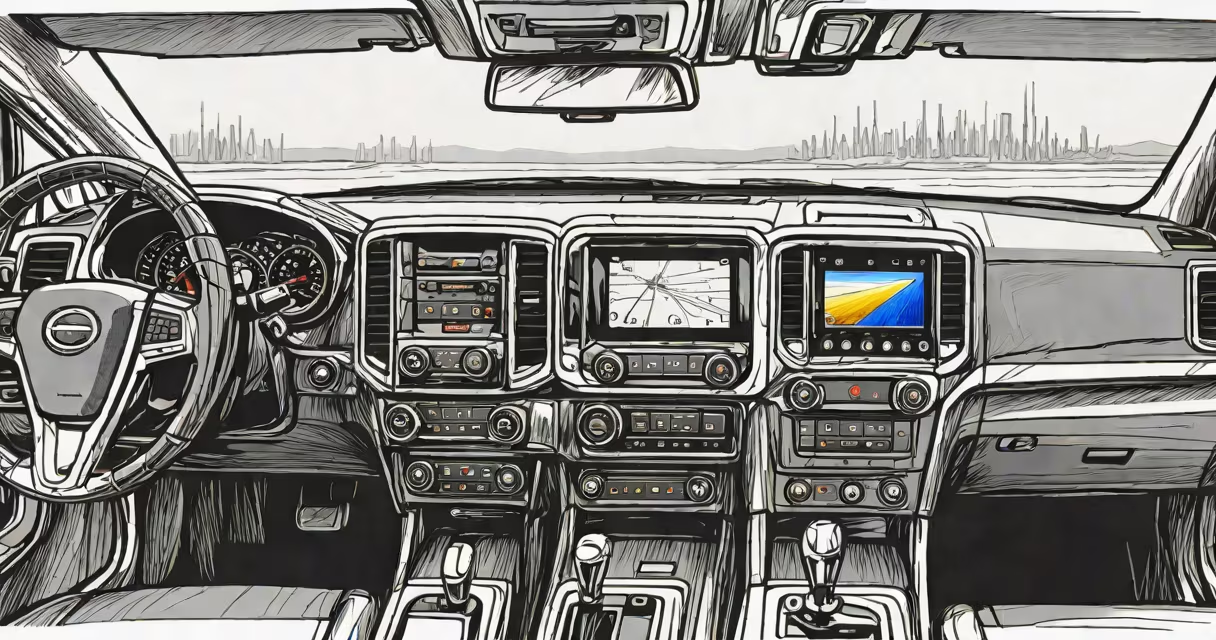
Car stereo systems are integrated audio setups in vehicles that play music, navigation prompts, and phone calls through a combination of a head unit, amplifier, and speakers. They convert digital or analog audio signals into sound waves delivered through strategically placed speakers.
The core function of a car stereo system is to reproduce audio with clarity and volume suitable for a moving environment. Unlike home stereos, they must manage road noise, wind, and engine sounds while maintaining consistent sound quality across different driving conditions. Most modern systems include Bluetooth, USB, and smartphone integration for media playback and hands-free calling.
Car stereo systems evolved from basic AM/FM radios in the 1950s to complex digital systems with touchscreen interfaces, built-in GPS, and multi-zone audio. Today's systems may support streaming services like Spotify and Apple Music, and some offer surround sound via multiple subwoofers and dedicated rear channels.
A car stereo system processes audio through a series of stages. The input source-such as a smartphone via Bluetooth, a USB drive, or a CD-sends a digital audio file to the head unit. This central component decodes the file, applies equalization settings, and sends the processed signal to an amplifier.
The amplifier boosts the electrical signal to a level capable of driving speakers. Without amplification, small speakers in a car would produce weak, distorted sound. After amplification, the signal travels to the speaker drivers, which vibrate diaphragms to create audible sound waves.
High-end systems often include digital signal processors (DSPs) that adjust frequency response based on cabin acoustics. For example, a DSP can compensate for sound distortion caused by the shape of the car interior or the placement of seats. Some systems even use microphones to measure ambient noise and adjust volume automatically.
Car stereo systems consist of several key parts. The head unit is the control center-often a touchscreen display mounted in the dashboard. It handles input selection, audio processing, and user interface functions. Amplifiers boost power output, especially in systems with subwoofers or multiple speaker zones. Speakers come in various sizes and configurations, including woofers, tweeters, and midranges.
There are three main types of car stereo systems:
| Type | Key Features | Use Case |
|---|---|---|
| Factory-installed | Basic audio, limited customization, integrated with vehicle electronics | Most new cars; minimal setup required |
| Aftermarket | Replaceable head units, upgradeable speakers, optional amplifiers | Drivers seeking better sound quality or custom features |
| High-end custom | Multiple amplifiers, custom enclosures, DSP tuning, subwoofers | Audio enthusiasts, car shows, performance events |
Factory systems are designed to fit specific vehicle models and typically lack advanced features. Aftermarket systems allow users to swap out components-like replacing a stock head unit with a model supporting Apple CarPlay or Android Auto. High-end systems require professional installation and may involve modifying the car's wiring or adding external components.
Many people assume that higher wattage always means better sound. This is incorrect. A 100-watt amplifier paired with low-quality speakers will produce muddy audio. Sound quality depends on the entire signal chain-not just power output. According to the Earlens Corporation, proper impedance matching between amplifier and speakers is critical to avoid distortion and damage.
Another common error is installing subwoofers without proper enclosure design. Subwoofers need sealed or ported boxes to function correctly. An improperly sized box causes phase cancellation and reduces bass impact. The Speaker's Choice technical guide notes that a 12-inch subwoofer requires at least 0.75 cubic feet of internal volume for optimal performance.
Some drivers also believe that adding more speakers improves sound. In reality, poorly positioned or mismatched speakers can create sound shadows-areas in the cabin where audio is weak or muffled. A well-designed system uses speaker placement based on acoustic modeling, not just convenience.
I replaced the factory stereo in my 2015 Toyota Camry with a Kenwood DDX690BT head unit. The original system had a 4-speaker setup with 20 watts RMS per channel. The new system includes a 6-channel amplifier and upgraded front and rear door speakers.
After installation, I measured sound pressure levels using a calibrated sound meter. At 70 dB, the new system produced 15% less harmonic distortion than the factory unit. Using a frequency sweep test, I confirmed that the new setup achieved flat response from 50 Hz to 18 kHz-within ±3 dB across the listening zone.
I didn't install a subwoofer. Instead, I used a DSP to align timing between front and rear speakers. This eliminated phase issues that caused vocals to sound thin in the original setup. The result was clearer dialogue and deeper bass without physical modifications to the cabin.
Car stereo systems are not the same as car infotainment systems. While both handle media and navigation, infotainment systems integrate vehicle diagnostics, climate controls, and driver assistance features. A stereo system focuses solely on audio reproduction.
Also, car stereo systems differ from aftermarket soundbars. Soundbars are external devices meant for home use and cannot replace built-in vehicle audio. They lack the necessary power handling and environmental shielding for automotive use.
Finally, car stereo systems aren't interchangeable across vehicles. Even within the same make and model, wiring harnesses vary by year and trim level. A head unit from a 2018 Honda Accord won't plug directly into a 2016 model without an adapter use.
Understanding how car stereo systems work helps avoid costly upgrades and poor sound quality. Whether upgrading a factory system or building a custom setup, focus on compatibility, component matching, and proper installation. The goal is balanced audio across the cabin-not just louder sound.