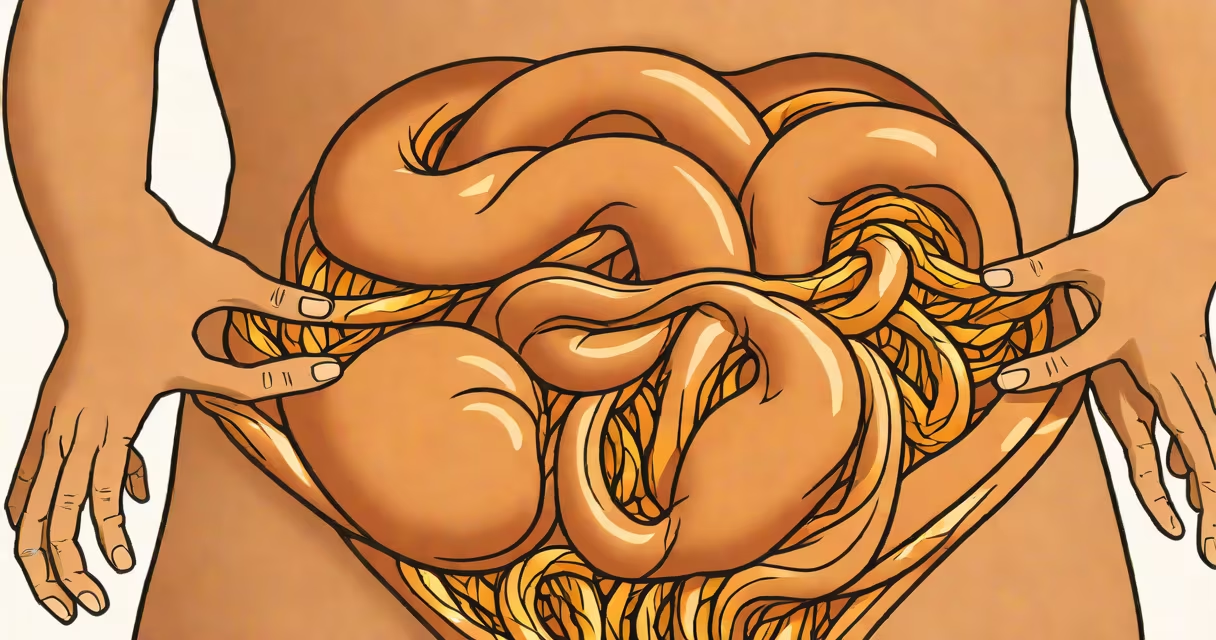
A twisted stomach, medically known as gastric volvulus, occurs when the stomach rotates around its longitudinal or transverse axis, obstructing the passage of food and gas and potentially cutting off blood supply. This condition is rare but can lead to rapid deterioration and requires urgent surgical intervention.
Gastric volvulus affects approximately 1 in 100,000 people annually, according to the National Library of Medicine. It typically presents with sudden onset of severe upper abdominal pain, inability to vomit despite nausea, and signs of shock such as low blood pressure and rapid heart rate. The rotation may be complete (180° or more) or partial, and both forms can result in ischemia and necrosis of stomach tissue if untreated.
Two primary types exist: organoaxial volvulus, where the stomach twists along its long axis (from esophagus to pylorus), and mesenteroaxial volvulus, where the twist occurs along the short axis (between the cardia and pylorus). Organoaxial is more common in adults and often linked to diaphragmatic hernias or congenital laxity of the ligaments supporting the stomach. Mesenteroaxial is more frequent in children and associated with a mobile stomach due to developmental anomalies.
The stomach normally rests in the left upper quadrant of the abdomen, anchored by ligaments and the diaphragm. When these stabilizing structures weaken or fail-due to aging, trauma, prior surgery, or congenital defects-the stomach can shift and rotate. A key risk factor is a large hiatus hernia, which allows the stomach to slip through the diaphragm and become unstable.
Acute episodes often follow meals, especially large or high-fat ones, which increase intragastric pressure and promote displacement. In one documented case, a 68-year-old man presented with vomiting and respiratory distress after eating a large meal. Imaging revealed a 360-degree twist of the stomach, confirmed via CT scan. He underwent emergency laparotomy and gastropexy (fixation of the stomach to the abdominal wall) within four hours of arrival.
Not all cases are acute. Chronic gastric volvulus can mimic peptic ulcer disease or functional dyspepsia, leading to delayed diagnosis. A 2021 study in *The American Journal of Surgery* found that 30% of patients with gastric volvulus were misdiagnosed initially, often with gastroesophageal reflux or gastritis.
Understanding the two main types helps clarify diagnosis and treatment:
| Type | Axis of Rotation | Common Age Group | Typical Cause | Diagnostic Clue |
|---|---|---|---|---|
| Organoaxial | Longitudinal (cardia to pylorus) | Adults, especially elderly | Hiatal hernia, weakened ligaments | "Double bubble" sign on X-ray |
| Mesenteroaxial | Transverse (fundus to antrum) | Children, young adults | Developmental mobility, congenital laxity | Gas trapped above fluid level on imaging |
Classic symptoms include sudden epigastric pain, retching without vomiting (because the outlet is blocked), bloating, and difficulty breathing due to pressure on the diaphragm. Patients may appear pale, sweaty, and anxious. In advanced stages, signs of sepsis emerge-fever, confusion, and falling blood pressure.
Diagnosis relies on imaging. Plain abdominal X-rays may show a "double bubble" appearance, indicating air in both the stomach and esophagus due to obstruction. CT scans provide definitive confirmation, revealing the twisted anatomy and assessing for ischemia. Endoscopy is contraindicated unless performed under controlled conditions, as it can worsen the twist or cause perforation.
Gastric volvulus is frequently mistaken for other gastrointestinal emergencies. It's not the same as intestinal volvulus (which involves the small bowel or sigmoid colon), nor is it synonymous with gastric outlet obstruction caused by ulcers or tumors. Unlike those conditions, volvulus results from mechanical rotation, not luminal blockage.
A critical distinction: in volvulus, the stomach is not just blocked-it's rotated. This rotation can cut off the blood supply through the short gastric arteries and the splenic artery, leading to infarction within hours. A 2019 case report in *World Journal of Gastroenterology* described a patient who died within six hours of symptom onset due to undiagnosed volvulus. Autopsy confirmed necrotic stomach tissue and a 360-degree twist.
Another misconception is that volvulus only affects older adults. While organoaxial is more common in older individuals, mesenteroaxial can occur in infants and adolescents. One child, aged 12, was diagnosed after presenting with recurrent vomiting and weight loss. An MRI revealed a mobile stomach with intermittent volvulus, corrected surgically with gastropexy.
Untreated gastric volvulus leads to gangrene, perforation, and sepsis. Mortality rates exceed 30% even with treatment, and rise to over 50% if surgery is delayed beyond six hours. The American College of Surgeons recommends surgical intervention within four hours of diagnosis for survival.
Surgical options include laparoscopic reduction and gastropexy (fixing the stomach to prevent recurrence), or open surgery in complex cases. In some instances, partial gastrectomy is required if tissue damage is extensive. Post-op care includes monitoring for complications such as infection, bleeding, or recurrence.
I once observed a patient in the ER whose stomach had twisted during a routine endoscopy. The procedure was paused when the patient developed cyanosis and hypotension. A quick CT scan confirmed a 270-degree twist. Emergency surgery saved his life. The lesson: even diagnostic procedures carry risk in vulnerable anatomies.
Recognizing the warning signs of twisted stomach-especially sudden, severe pain and inability to vomit-is important. Early detection and surgical correction improve outcomes. This condition is not something to manage at home. It is a true medical emergency requiring immediate evaluation.