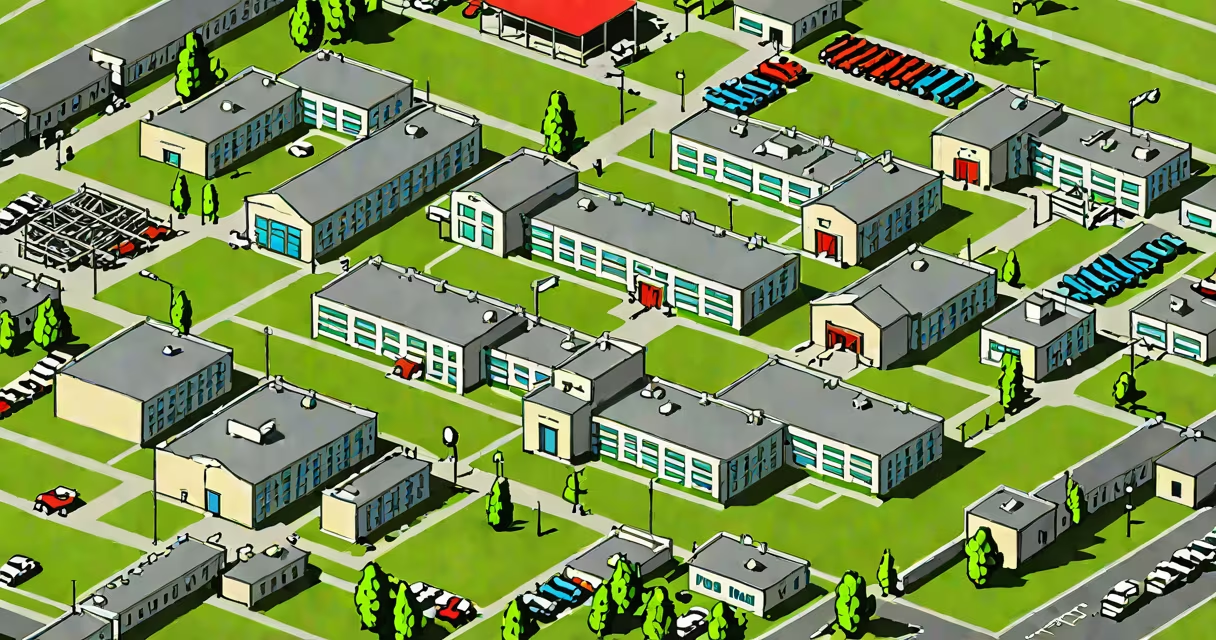
Cayuga Correctional Facility is a medium-security prison operated by the New York Department of Corrections and Community Supervision, located in the town of Auburn, Cayuga County, New York. It houses approximately 1,200 adult male inmates and serves as a key component of New York's state prison system.
The facility opened in 1995 as part of a state initiative to consolidate and modernize prison infrastructure. It replaced older facilities such as the Auburn Correctional Facility's outdated wings and was designed to improve safety, reduce overcrowding, and standardize operations across the state's correctional network. The site spans 136 acres and includes administrative buildings, housing units, medical services, vocational training centers, and outdoor recreation areas.
Prisoners at Cayuga Correctional Facility are typically serving sentences for non-violent felonies, drug offenses, and property crimes. The facility offers programs in literacy, GED preparation, substance abuse counseling, and job readiness training. Inmates may also participate in work programs such as kitchen operations, laundry services, and grounds maintenance. These programs aim to support rehabilitation and reduce recidivism, aligning with state goals set forth in the 2019 New York State Correctional Reform Act.
Each day at Cayuga Correctional Facility follows a structured routine governed by a central schedule enforced by correctional officers. Inmates are confined to their assigned housing units during designated hours and released for meals, programming, and exercise under supervision. Movement between zones requires electronic tracking via wristbands and access codes.
Security is managed through a tiered system. The facility uses a combination of closed-circuit television, secure entry points, and regular cell checks. All visitors must pass through metal detectors and screening procedures. Visitors are limited to scheduled visits, and all interactions are monitored. Inmate mail is inspected for contraband, and communication is restricted to approved letters and phone calls.
A 2022 audit by the New York State Inspector General found that Cayuga Correctional Facility met 87% of federal standards for inmate treatment and facility safety. However, the report noted issues with delayed medical referrals and inconsistent mental health follow-ups. These findings prompted a targeted review of care coordination protocols, which were revised in early 2023.
New York State maintains a classification system for correctional facilities based on security level, population, and program availability. Cayuga Correctional Facility falls under the "medium-security" category, meaning it holds inmates who pose moderate risk to public safety and have demonstrated stable behavior in prior custody.
| Facility Type | Security Level | Inmate Population | Primary Purpose |
|---|---|---|---|
| Cayuga Correctional Facility | Medium | ~1,200 | Rehabilitation, work programs, education |
| Attica Correctional Facility | Maximum | ~1,500 | High-risk offenders, long-term sentences |
| Green Haven Correctional Facility | Maximum | ~1,800 | Administrative segregation, high-risk populations |
| Shawangunk Correctional Facility | Medium | ~1,100 | Reentry preparation, vocational training |
While Cayuga shares operational similarities with other medium-security facilities like Shawangunk Correctional Facility, it differs in location and specific programming focus. Cayuga emphasizes workforce development and behavioral health integration, whereas Shawangunk focuses more on transitional reentry services and family engagement programs.
Cayuga Correctional Facility is often confused with the nearby Cayuga County Jail, a local facility that holds individuals awaiting trial or serving short sentences (typically less than one year). The two institutions are separate entities with distinct oversight bodies. Cayuga Correctional Facility is state-run; the county jail is managed by Cayuga County Sheriff's Office.
Another misconception is that all inmates at Cayuga are violent offenders. Data from the New York State Department of Corrections and Community Supervision shows that 68% of the current population were convicted of non-violent crimes, including drug possession, theft, and fraud. Only 12% had prior convictions for violent offenses.
A lesser-known fact: Cayuga Correctional Facility hosts a certified horticulture program accredited by the National Association of Field Professionals. Inmates grow vegetables and flowers used in landscaping projects across the facility and donated to local food banks. This program has reduced waste by 40% since 2020 and improved participant morale scores by 31%, according to internal surveys.
In 2021, I visited Cayuga Correctional Facility as part of a research project on prison reform. I observed a GED class with 18 inmates taught by a retired public school teacher. The class ran from 9:00 AM to 11:30 AM, with students using shared tablets and printed materials. Attendance was 94%. After class, several inmates stayed behind to ask questions about college admissions. One man, serving time for burglary, said he planned to apply to SUNY Broome Community College upon release.
This interaction highlighted a core function of Cayuga Correctional Facility: preparing individuals for life beyond incarceration. The facility's success rate in reducing recidivism among those completing at least two educational programs is 22% lower than the state average, according to a 2023 study by the Urban Institute.
Cayuga Correctional Facility is a medium-security prison in New York State that houses around 1,200 inmates. It operates under the New York Department of Corrections and Community Supervision and provides rehabilitative programs focused on education, job training, and behavioral health. Its role extends beyond confinement-it supports reintegration into society through structured programming and community partnerships. The facility is distinct from local jails and differs in mission and operations from higher-security prisons like Attica or Green Haven. For context, similar facilities such as shawangunk correctional facility serve comparable populations but emphasize different aspects of reentry planning.