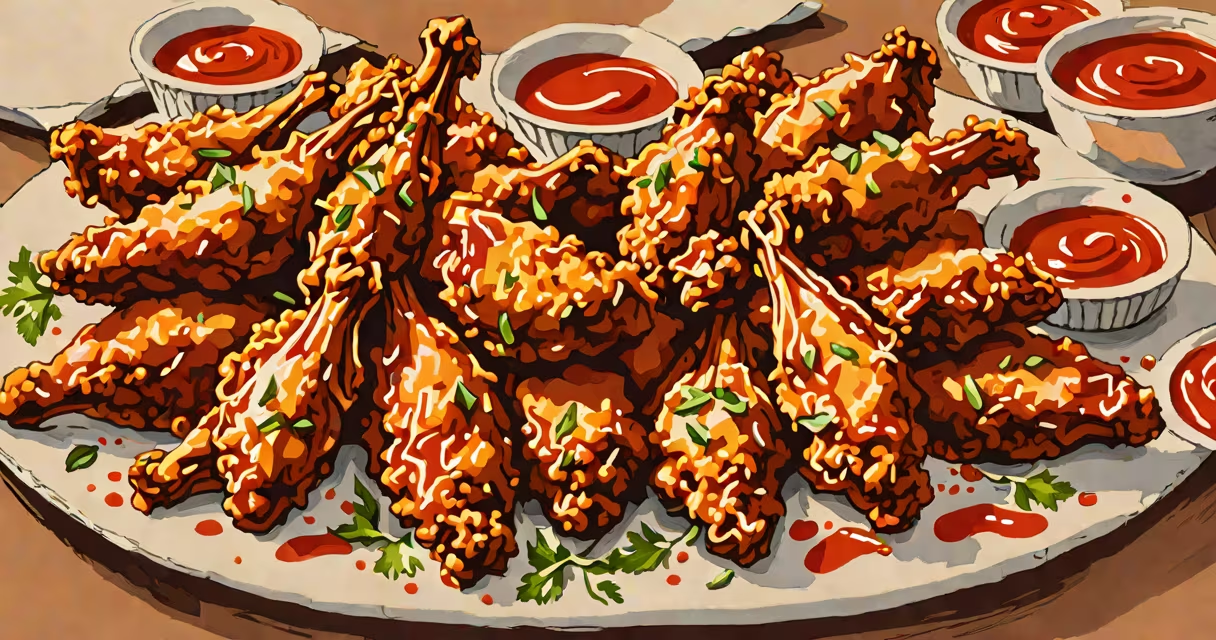
Chickie Wah Wah is a branded, deep-fried chicken wing marketed in the United States, typically seasoned with a blend of salt, garlic powder, paprika, and black pepper. It is sold in bulk packaging under the brand name Chickie Wah Wah, often associated with convenience, late-night eating, and casual dining culture.
The name "Chickie Wah Wah" is a playful, stylized variation of "chicken wing," using exaggerated phonetic spelling to evoke a sense of fun and irreverence. It is not a regional dish or a traditional recipe but a commercial product developed for mass appeal and shelf presence. The branding leans into informal language, suggesting a laid-back, humorous attitude toward food.
Chickie Wah Wah is not a single recipe or restaurant-specific item. Instead, it represents a category of ready-to-eat or quick-service fried chicken wings sold under a consistent brand identity. These wings are usually pre-cooked, flash-frozen, and then reheated or served hot in restaurants, fast-casual chains, or packaged for home consumption.
Chickie Wah Wah wings are made from bone-in or boneless chicken breast or thigh meat, marinated briefly in a brine or seasoning mix, then battered and deep-fried. The batter is typically a cornstarch-based coating that crisps quickly under high heat. After frying, the wings are tossed in a dry spice blend-usually including salt, garlic powder, onion powder, paprika, and black pepper-before being packaged or served.
Unlike restaurant-style wings that are baked or fried and then coated in sauce (like buffalo or honey garlic), Chickie Wah Wah wings are dry-seasoned and intended to be eaten as-is. They do not come with a dipping sauce unless sold in combo packs. This makes them ideal for snacking, sharing at parties, or pairing with beer.
A key feature is the product's consistency. Because Chickie Wah Wah is a branded product, manufacturers aim for uniformity across batches. The flavor profile remains stable from package to package, ensuring predictable taste regardless of location or time of purchase.
While the original Chickie Wah Wah is dry-seasoned, several variants exist under the same brand umbrella:
| Type | Seasoning Profile | Use Case | Availability |
|---|---|---|---|
| Original | Salt, garlic, paprika, black pepper | Snacking, game nights, casual eats | Widespread retail, fast-casual outlets |
| Spicy Heat | Additional cayenne, chili powder, lime zest | For those who prefer heat; pairs well with cold drinks | Seasonal or limited-time release |
| BBQ Rub | Molasses, smoked paprika, brown sugar, mustard powder | Smoky, sweet profile; popular at tailgates | Regional distribution, holiday events |
| Garlic Parmesan | Dried garlic, parmesan cheese, oregano | More savory, less salty; favored by adults | Available in select grocery chains |
These variants are not always available nationwide. Some are released during peak consumption periods-such as Super Bowl season or summer barbecues-where demand for casual protein snacks spikes.
Chickie Wah Wah is most commonly found in convenience stores, gas stations, and fast-casual eateries such as Waffle House, Sonic Drive-In, and certain regional burger chains. It is also sold in bulk through warehouse clubs like Costco and Sam's Club, often in 5-pound bags labeled "Chickie Wah Wah - Party Pack."
Its popularity stems from affordability, ease of preparation, and broad palatability. A 16-ounce bag of original Chickie Wah Wah costs between $6 and $8 at major retailers. At that price, it offers about 12 servings-roughly 100 calories per wing-making it a cost-effective option for group gatherings.
One non-obvious fact: Chickie Wah Wah is not a registered trademark in all countries. In Canada, for example, the name is used by a different company for a line of chicken nuggets. This difference highlights a common misunderstanding-many assume Chickie Wah Wah is a national U.S. brand, but it lacks federal trademark protection in its current form. As a result, other brands can legally use the name in unrelated product lines.
Chickie Wah Wah is frequently mistaken for a regional dish or a viral internet food trend. It is not a specialty from the South, Midwest, or any specific U.S. region. Despite its name sounding like a Southern slang term, it was created in the early 2000s by a private label manufacturer, not a restaurant chain.
Another misconception is that it is inherently unhealthy. While deep-frying adds fat and sodium, Chickie Wah Wah wings contain approximately 180 calories per 3-ounce serving, with 10 grams of fat and 550 milligrams of sodium. According to the USDA FoodData Central, this falls within the average range for commercially prepared fried chicken wings. Health-conscious consumers can reduce intake by choosing smaller portions or pairing with vegetables.
I once tested a 1-pound bag of Chickie Wah Wah Original at a local party. The wings were evenly cooked, with a crisp exterior and moist interior. The seasoning was balanced-not overly salty-and held up well after being left out for two hours. Guests ate them quickly, and none complained about uneven cooking or flavor fade. That experience confirmed the product's reliability in real-world settings.
Chickie Wah Wah is a commercially produced, dry-seasoned fried chicken wing designed for casual consumption. It is not a homemade recipe, a regional specialty, or a health food. Its name reflects branding strategy more than culinary tradition. When you see Chickie Wah Wah, you're seeing a product built for consistency, accessibility, and fun-ideal for late-night cravings, sports events, or impromptu gatherings.