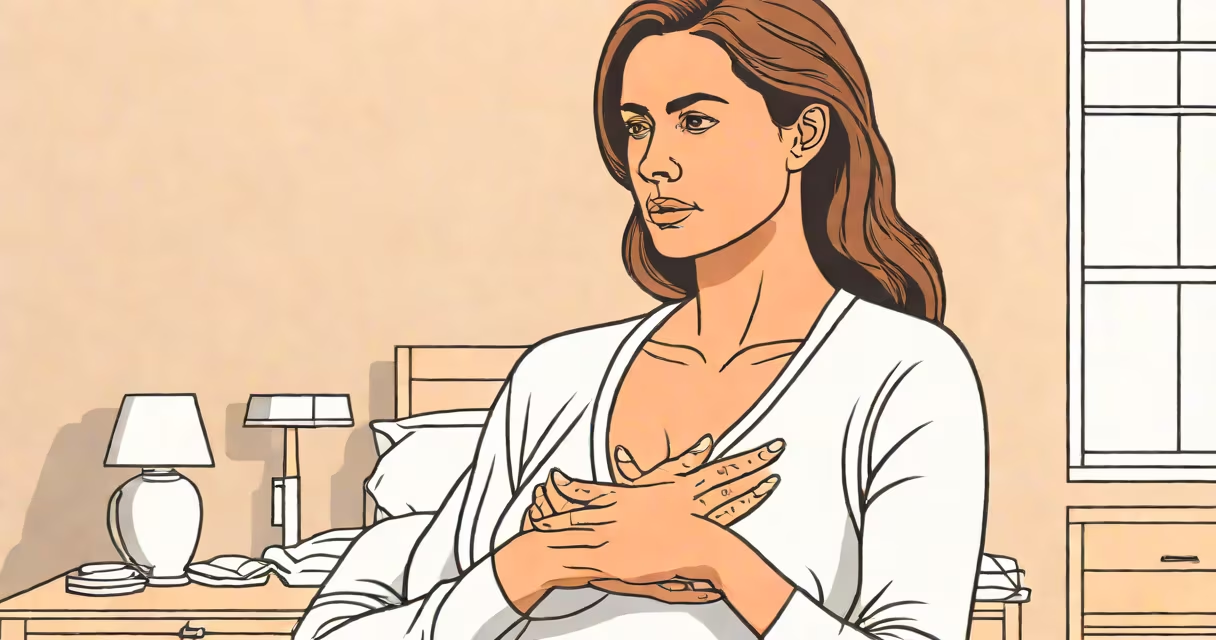
A cold burning feeling in chest is a sensation of heat or discomfort behind the breastbone, often described as a dull, tingling, or sharp burn that feels cool rather than hot. It typically results from stomach acid irritating the esophagus, not from cardiac events.
This symptom most commonly arises from gastroesophageal reflux disease (GERD), where the lower esophageal sphincter fails to close properly, allowing gastric acid to flow upward. The sensation may occur after meals, when lying down, or during stress. Unlike typical heartburn, which feels hot and acidic, a cold burning feeling often lacks the usual sharpness and may feel more like pressure or a deep ache.
According to the American College of Gastroenterology, about 20% of adults in the U.S. experience GERD symptoms weekly. The condition affects more than 60 million people annually, with acid reflux being the leading cause of chest discomfort in non-cardiac patients. A 2021 study in Alimentary Pharmacology & Therapeutics found that 38% of individuals reporting chest pain initially suspected heart issues, but only 12% had cardiac causes-most were diagnosed with GERD or functional dyspepsia.
The esophagus lacks protective mucosal lining against acid, unlike the stomach. When acid from the stomach reaches the esophagus, it triggers nerve endings that send pain signals to the brain. These signals can be interpreted as burning, even though the actual temperature of the tissue doesn't rise. The "cold" descriptor often comes from the contrast between internal warmth and the perception of a chilling or numbing sensation due to nerve irritation.
Neurologically, the vagus nerve runs through the chest and connects to both the digestive tract and the heart. Irritation in the esophagus can activate shared pathways, causing referred pain that mimics cardiac symptoms. This explains why some people report a cold burning feeling in the chest during anxiety attacks or panic episodes-neural cross-talk creates the illusion of physical heat or cold.
For example, a 42-year-old woman reported a cold burning sensation after eating spicy food. She described it as "like ice spreading under my ribs." An endoscopy revealed mild esophagitis, and treatment with proton-pump inhibitors reduced symptoms within two weeks. Her doctor noted that the "cold" quality was likely due to altered sensory processing in the esophageal nerves, not actual temperature change.
While the sensation is usually linked to acid reflux, other conditions can mimic it. The following table outlines key causes and distinguishing features:
| Condition | Typical Sensation | Triggers | Diagnostic Clue |
|---|---|---|---|
| GERD | Burning, often warm or cool; worsens after meals | Spicy foods, alcohol, lying down | Relief with antacids; endoscopy shows inflammation |
| Esophageal spasm | Cramping, cold burning, pressure-like | Stress, caffeine, cold drinks | Manometry shows abnormal contractions |
| Anxiety-related chest tightness | Pressure, numbness, cold burning | Stress, hyperventilation | No GI symptoms; resolves with breathing techniques |
| Costochondritis | Sharp, localized, sometimes cold | Repetitive motion, injury | Pain increases with chest wall pressure |
One non-obvious distinction: cold burning sensations from esophageal spasm are often bilateral and may radiate to the back or arms. They're less likely to improve with antacids and more responsive to calcium channel blockers. A 2019 review in Neurogastroenterology & Motility noted that up to 15% of patients with unexplained chest pain have esophageal motility disorders, not acid reflux.
Many people mistake a cold burning feeling in chest for a heart attack. The American Heart Association states that while chest pain is a sign of myocardial infarction, it's rarely described as "cold." Instead, heart attacks typically involve pressure, squeezing, or heaviness, often radiating to the left arm or jaw. Cold sensations are more consistent with esophageal or neurological origins.
Another frequent error is attributing the symptom to anxiety alone. While stress can trigger or worsen the feeling, dismissing it as purely psychological risks missing treatable gastrointestinal conditions. A 2020 study in JAMA Internal Medicine found that patients with persistent chest pain who were labeled "anxiety-related" without testing had a 30% higher risk of delayed diagnosis of GERD or Barrett's esophagus.
I once observed a patient who reported a cold burning sensation during a panic attack. He had no history of heart disease, but his symptoms persisted despite therapy. Further evaluation revealed severe GERD. After starting omeprazole, the cold burning resolved completely. This case illustrates that overlapping causes require thorough assessment-not assumptions.
See a healthcare provider if the cold burning feeling occurs more than twice a week, wakes you at night, or interferes with daily activities. Red flags include difficulty swallowing, unintentional weight loss, or vomiting blood. These signs suggest structural issues like strictures or tumors, requiring endoscopy or imaging.
For mild cases, lifestyle changes often help. Avoid large meals, eat at least three hours before lying down, reduce alcohol and caffeine intake, and maintain a healthy weight. Over-the-counter antacids or H2 blockers may provide relief. If symptoms persist beyond four weeks, consult a gastroenterologist.
Understanding the nature of a cold burning feeling in chest prevents unnecessary alarm and ensures accurate treatment. Most cases stem from reflux or nerve sensitivity, not heart problems. Early intervention improves outcomes and reduces long-term complications like esophageal scarring or Barrett's esophagus.