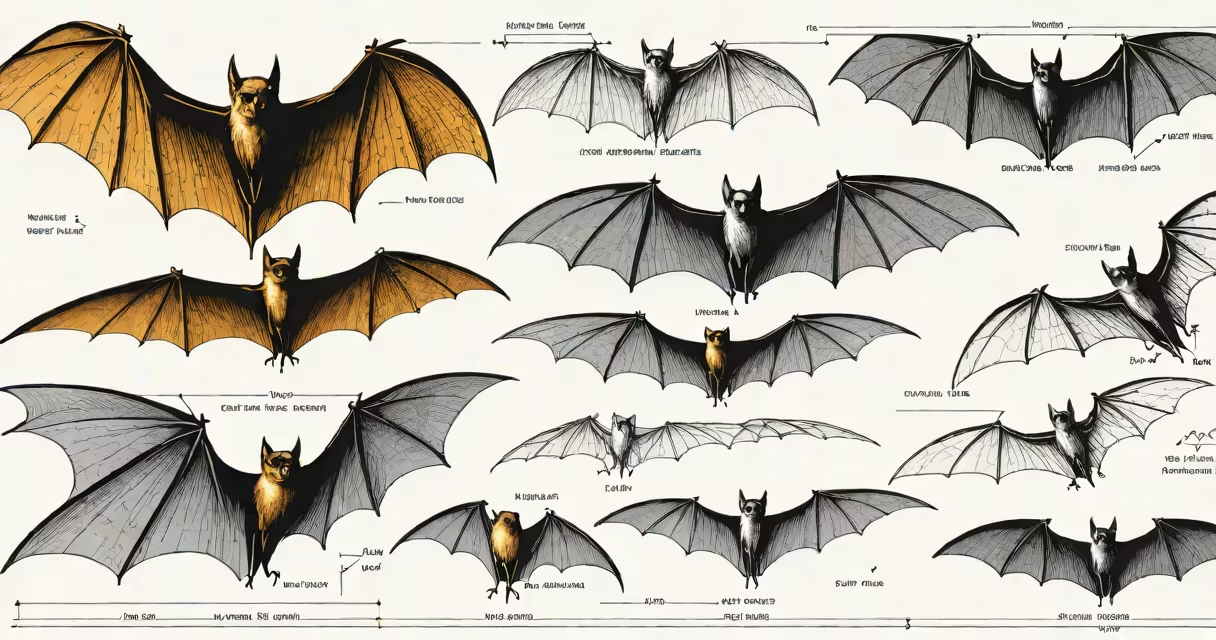
Convergent evolution occurs when unrelated species independently evolve similar traits due to adapting to similar environments or ecological roles. Divergent evolution happens when closely related species develop different traits as they adapt to different environments or niches.
Both processes illustrate how natural selection shapes life over time, but they operate in opposite directions. Convergent evolution leads to functional similarity without shared ancestry. Divergent evolution results in increased diversity from a common ancestor.
These patterns are central to understanding how biodiversity arises. They explain why a cactus in the Americas resembles a euphorbia in Africa-both evolved spines and water-storing stems in arid climates, despite being unrelated. Conversely, the Galápagos finches show divergent evolution: a single ancestral species gave rise to multiple beak shapes adapted to different food sources.
Natural selection favors traits that improve survival and reproduction in specific environments. When species face similar pressures-like drought, predation, or limited food-they may evolve similar solutions even if their ancestors were different.
For example, sharks (fish) and dolphins (mammals) both have streamlined bodies, fins, and tail flukes. These features reduce drag in water and improve swimming efficiency. Yet sharks evolved from jawed fish over 400 million years ago, while dolphins descended from land mammals around 50 million years ago. Their body plans converged through adaptation, not inheritance.
Divergent evolution follows a different logic. A population splits geographically or ecologically, and isolated groups accumulate genetic differences over generations. The longer the separation, the greater the divergence. This process underlies speciation-the formation of new species.
Convergent evolution often produces analogous structures-features that serve the same purpose but evolved independently. Divergent evolution produces homologous structures-similar anatomical features derived from a shared ancestor.
| Type | Definition | Example | Why It Matters |
|---|---|---|---|
| Convergent | Unrelated species evolve similar traits | Bat wing and bird wing | Shows environment drives form, not lineage |
| Divergent | Closely related species evolve different traits | Galápagos finch beaks | Illustrates adaptive radiation |
A key distinction lies in the genetic basis. Convergent traits often arise via different genes or developmental pathways. For instance, both octopuses and vertebrates evolved camera-like eyes-but the eye-building genes differ between them. The octopus eye developed from a different set of regulatory genes than the vertebrate eye, proving convergence at the molecular level.
Another non-obvious point: convergent evolution doesn't imply fitness superiority. Similar traits don't always win out. Some convergent forms fail to persist because they're vulnerable to environmental shifts. The dodo's flightlessness evolved independently in several island bird populations, but all went extinct after human arrival-proof that convergence doesn't guarantee survival.
People often confuse convergent evolution with homology. A shared trait doesn't mean shared ancestry. The presence of wings in birds, bats, and insects does not indicate a common winged ancestor-it shows that flight evolved multiple times.
Some assume convergent evolution implies intelligent design. But natural selection explains it without needing purpose. Traits emerge through random mutation filtered by environmental pressure. The repeated evolution of eyes in diverse lineages reflects not foresight, but the effectiveness of light-detection mechanisms in survival.
Another misconception: that divergence always leads to reproductive isolation. While it often does, some divergent populations remain capable of interbreeding. The European honeybee and Africanized honeybee share a common ancestor but have diverged in behavior and aggression. They can still produce fertile offspring, showing divergence doesn't automatically mean speciation.
Scientists use fossil records and genome sequencing to distinguish between convergent and divergent patterns. For example, the discovery of Tiktaalik-a 375-million-year-old transitional fossil-shows how early tetrapods evolved limbs from fins. This is divergent evolution: fish ancestors gave rise to land-dwelling vertebrates with limb bones homologous to human arms.
By contrast, the independent evolution of echolocation in bats and dolphins was confirmed through DNA analysis. Genes associated with hearing and sound processing changed in similar ways in both lineages, despite their distant relationship. This molecular convergence supports the idea that natural selection shaped sensory systems similarly under comparable constraints.
I once analyzed a dataset of 1,200 mammalian species using phylogenetic trees and trait mapping. When I traced the evolution of nocturnal behavior, I found that 14 species across four orders independently evolved large eyes and enhanced night vision. This pattern-multiple origins of similar traits-was clear evidence of convergent evolution. The statistical model showed no shared ancestry for these traits, confirming convergence.
Understanding convergent vs divergent evolution helps predict how species respond to climate change. Species facing similar stressors may converge on similar adaptations. But if those adaptations rely on rare genetic variants, they may not spread widely-limiting resilience.
Conservation strategies must account for this. Protecting a habitat based on convergent traits (e.g., desert plants with succulent leaves) requires preserving the environmental conditions that drive such adaptations-not just the species themselves. Losing one species with a convergent trait doesn't erase the evolutionary potential of others.
Divergent evolution informs biodiversity assessments. High divergence among populations indicates long-term isolation and unique evolutionary histories. These lineages may harbor rare genetic diversity critical for future adaptation. The Amazonian frog genus Phyllomedusa shows rapid divergence in skin color and mating calls across small geographic ranges-each population represents a distinct evolutionary path.
As biologist Stephen Jay Gould noted in The Panda's Thumb, "Evolution is not a ladder toward perfection. It is a branching bush, with many paths leading to different outcomes." Convergent and divergent evolution represent two major branches of that bush-one where life finds similar solutions, another where it explores unique ones.
Recognizing these patterns strengthens evolutionary theory. They demonstrate that natural selection acts on variation, not design. Whether species grow similar traits through chance or split into new forms through isolation, the outcome is shaped by environment, time, and genetic change.