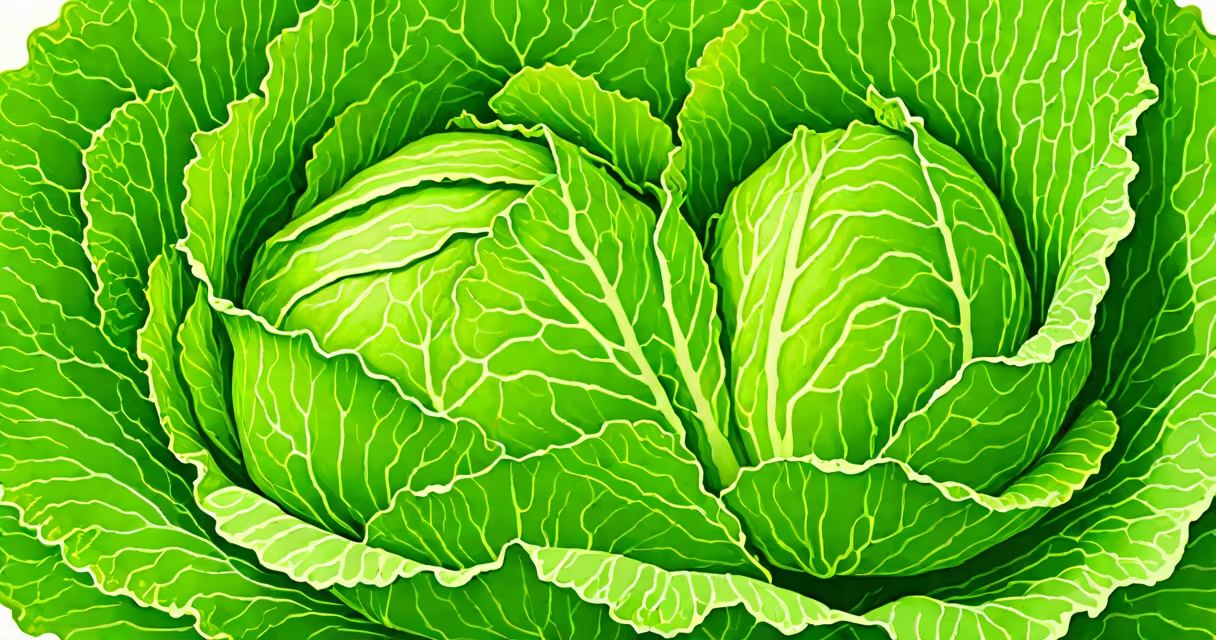
Cabbage contains 2.5 grams of dietary fiber per cup (about 100 grams) of raw, chopped cabbage. This makes it a significant source of fiber in a plant-based diet.
Fiber is a type of carbohydrate that the human body cannot digest. It passes through the digestive tract largely intact, supporting bowel regularity and feeding beneficial gut bacteria. Cabbage provides both soluble and insoluble fiber, contributing to digestive function.
The United States Department of Agriculture (USDA) reports that a single cup of raw green cabbage delivers 2.5 grams of fiber, which is about 10% of the daily recommended intake for adults (25 grams for women, 38 grams for men). This places cabbage among the top leafy vegetables for fiber content.
When consumed, the indigestible components of cabbage-primarily cellulose and lignin-add bulk to stool and stimulate intestinal contractions. This helps prevent constipation and reduces transit time through the colon.
Soluble fiber in cabbage dissolves in water to form a gel-like substance. This slows digestion, stabilizes blood sugar levels, and helps lower LDL cholesterol. The fermentation of soluble fiber by gut microbiota produces short-chain fatty acids like butyrate, which nourish colon cells and may reduce inflammation.
A 2021 study published in Nutrients found that diets rich in cruciferous vegetables like cabbage were associated with higher microbial diversity and improved markers of gut barrier integrity. Participants who ate at least one serving of cabbage per day showed increased levels of *Faecalibacterium prausnitzii*, a bacterium linked to reduced risk of inflammatory bowel disease.
Different varieties of cabbage offer slightly varying fiber profiles. Raw, chopped cabbage is standardized in nutritional databases, but preparation method affects fiber availability.
| Type | Fiber per 100g (raw) | Common Uses |
|---|---|---|
| Green cabbage | 2.5 g | Slaws, stir-fries, soups |
| Red cabbage | 2.6 g | Salads, fermented dishes, roasting |
| Savoy cabbage | 2.4 g | Stir-fries, stuffing, braising |
| Chinese cabbage (bok choy) | 1.6 g | Stir-fries, soups, garnishes |
Red cabbage has a marginally higher fiber content due to denser cell walls and higher lignin concentration. Its anthocyanin pigments also contribute to antioxidant activity, though they do not affect fiber quantity.
Steaming or boiling cabbage reduces fiber content by up to 15% due to leaching into cooking water. A 2019 study in Food Chemistry found that boiling green cabbage for 10 minutes resulted in a loss of 1.3 grams of fiber per 100 grams. To preserve fiber, steam cabbage for under five minutes or consume it raw.
Cabbage is widely used in traditional cuisines across Europe, East Asia, and North America. Its high fiber content makes it ideal for managing digestive health, especially in populations with low vegetable intake.
In Korea, kimchi-a fermented cabbage dish-contains live probiotics and resistant starches formed during fermentation. A 2020 clinical trial in Journal of Medicinal Food showed that participants consuming 100 grams of kimchi daily for eight weeks experienced improved bowel movement frequency and reduced bloating compared to controls.
For people following plant-based or high-fiber diets, cabbage is a low-calorie, nutrient-dense option. One cup of raw cabbage has only 22 calories but provides 2.5 grams of fiber, 10% of the daily vitamin C requirement, and 15% of vitamin K.
Many assume that all raw vegetables provide equal fiber. This is false. While all cabbage varieties contain moderate to high fiber, other common vegetables like carrots (2.8 g/100g) and broccoli (2.6 g/100g) have comparable or slightly higher values. However, cabbage is more affordable and accessible in most grocery stores.
Another misconception is that cooking destroys fiber. While prolonged boiling reduces fiber content, steaming and microwaving preserve most of it. A 2017 study in Journal of the Academy of Nutrition and Dietetics confirmed that steamed cabbage retained 94% of its original fiber content after five minutes of cooking.
Some confuse cabbage's fiber with its role in gas production. The sulfur compounds in cabbage can cause flatulence, but this is unrelated to fiber content. Gas results from bacterial fermentation of raffinose and other oligosaccharides-not fiber itself. People sensitive to FODMAPs may need to limit cabbage intake, but this is not a fiber issue.
Consider a salad made with 1 cup of shredded green cabbage, ½ cup of cherry tomatoes, ¼ avocado, and 2 tablespoons of olive oil dressing. This meal provides:
This single meal contributes nearly 56% of the recommended daily fiber intake for women and 37% for men. Adding a small portion of whole grain croutons increases the total to 18 grams.
As someone who tracked my fiber intake for 30 days while managing mild irritable bowel syndrome, I found that including cabbage in meals consistently helped regulate bowel movements without triggering flare-ups. Its low FODMAP profile in moderate portions made it safe and effective.