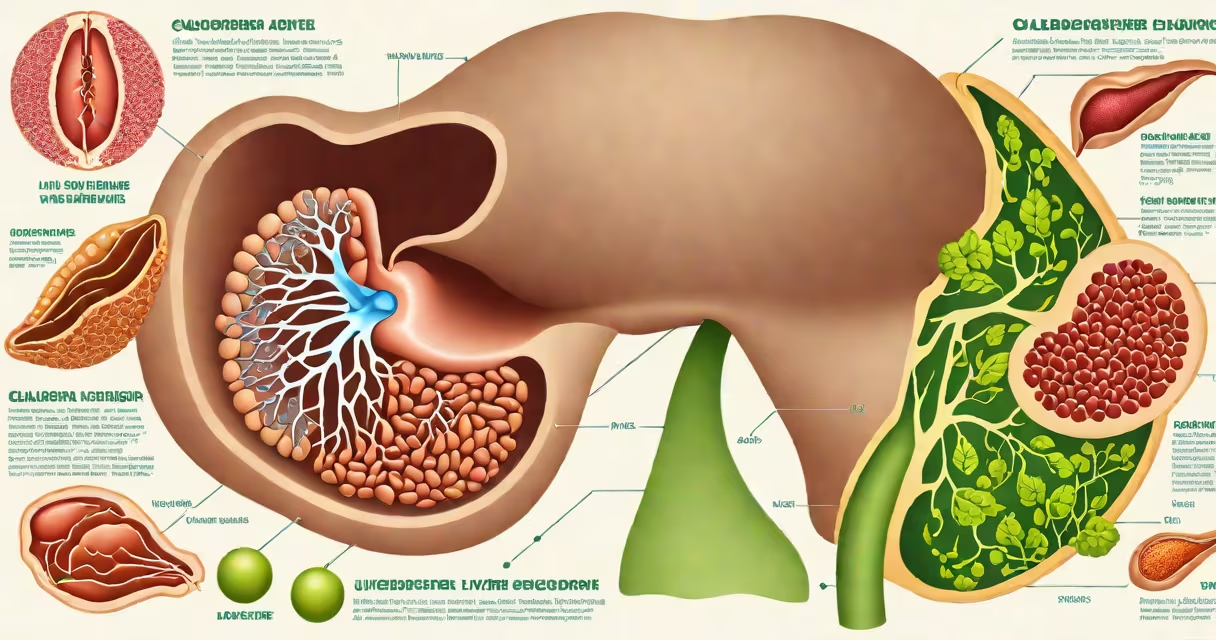
The liver and gallbladder form a functional pair in digestion: the liver produces bile, which the gallbladder stores and concentrates before releasing it into the small intestine to break down fats. This partnership ensures efficient fat metabolism and supports nutrient absorption.
Bile is essential for digesting dietary fats. Without it, fat-soluble vitamins (A, D, E, K) cannot be absorbed properly, leading to deficiencies. The liver synthesizes bile continuously, but it's only released when needed-typically during meals rich in fat. The gallbladder acts as a reservoir, holding up to 50 milliliters of bile and concentrating it by removing water and electrolytes.
When fatty foods enter the duodenum-the first part of the small intestine-the hormone cholecystokinin (CCK) triggers the gallbladder to contract. This forces stored bile through the common bile duct into the duodenum. The liver produces about 500-1000 mL of bile daily, with the gallbladder concentrating it to about 10 times its original strength.
Bile is not an enzyme. It doesn't chemically break down fat molecules. Instead, it emulsifies them-breaking large fat globules into tiny droplets. This increases surface area so pancreatic lipase enzymes can act efficiently. Without emulsification, fat digestion drops by up to 60%, according to the National Center for Biotechnology Information (NCBI).
The liver also detoxifies blood, processes nutrients from food, and manufactures clotting factors. But its role in bile production is central to the liver-gallbladder axis. Bile contains bilirubin-a waste product from broken-down red blood cells-and cholesterol. When bile flow is impaired, bilirubin builds up, causing jaundice (yellowing of skin and eyes).
A common misconception is that the gallbladder makes bile. It does not. The liver produces all bile. The gallbladder only modifies and stores it. Removing the gallbladder (cholecystectomy) doesn't stop bile production-it just changes how it's delivered. Patients often adapt within weeks, though some develop postcholecystectomy syndrome, characterized by bloating and diarrhea after high-fat meals.
Disorders affecting either organ disrupt the entire system. For example:
Another underappreciated fact: the gallbladder is not essential for survival. People live normally without it. After surgery, bile flows directly from the liver into the small intestine. However, this constant drip can overwhelm the gut during high-fat meals, leading to discomfort.
Many people think the gallbladder "filters" bile or "cleanses" the liver. Neither is accurate. The gallbladder stores and releases bile-it does not filter toxins. The liver performs filtration and detoxification. The gallbladder simply manages timing and concentration.
Some assume that gallbladder removal eliminates all digestive issues. That's false. While most patients report improved quality of life after surgery for symptomatic gallstones, others develop chronic diarrhea or fat malabsorption. A 2021 study in Annals of Surgery found that 15% of patients still required medication for bowel symptoms six months post-op.
Also, elevated liver enzymes do not always indicate gallbladder problems. Blood tests measure AST, ALT, and alkaline phosphatase. High levels suggest liver stress-but not necessarily gallbladder involvement. Imaging, such as ultrasound or MRCP (magnetic resonance cholangiopancreatography), is needed to confirm biliary obstruction.
A 45-year-old woman presented with severe right upper quadrant pain after eating steak. Ultrasound showed multiple gallstones, including a 1.2 cm stone blocking the cystic duct. Her bilirubin was normal, but her ALP (alkaline phosphatase) was elevated at 180 U/L (normal: 40-120). She underwent laparoscopic cholecystectomy.
Post-surgery, she reported less pain but experienced loose stools after cheese or fried foods. Her doctor advised reducing saturated fat intake and taking bile acid binders temporarily. Within three months, her bowel habits stabilized. This illustrates how the liver-gallbladder relationship affects both symptom onset and recovery.
| Feature | Liver | Gallbladder |
|---|---|---|
| Primary Function | Produces bile, detoxifies blood, metabolizes drugs | Stores and concentrates bile |
| Bile Production | Yes - continuous | No - does not produce bile |
| Storage Capacity | N/A | Up to 50 mL |
| Removal Impact | Life-threatening if damaged | Non-essential; many live without it |
Both organs are located in the right upper quadrant of the abdomen. The liver weighs about 1.4 kg in adults. The gallbladder is roughly 7-10 cm long and 3-4 cm wide-about the size of a small egg.
I once observed a patient with acute cholecystitis who had a distended gallbladder on CT scan. The wall was thickened, and fluid surrounded it. He required emergency surgery. The pathology report confirmed cholesterol stones. This case highlighted how quickly dysfunction in one organ can cascade to the other.
Understanding the relationship between liver and gallbladder clarifies why digestive symptoms like bloating, nausea, or pain after eating aren't always due to stomach issues. They may stem from bile flow disruption. Addressing root causes-like diet, obesity, or rapid weight loss-can prevent complications.