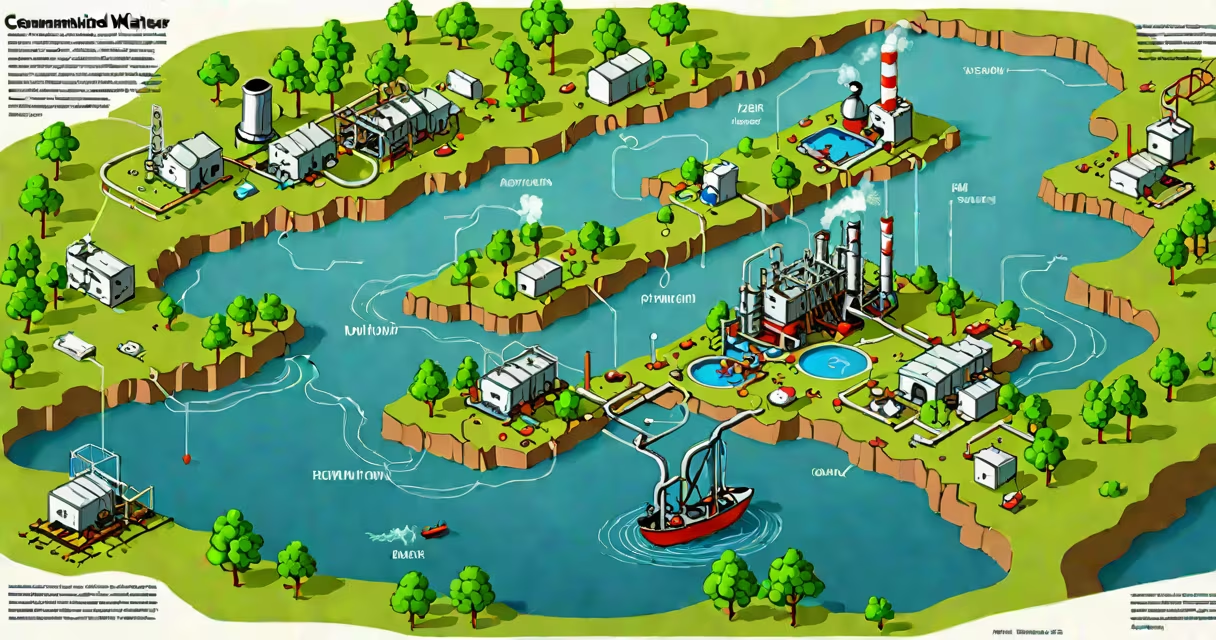
Contaminated water introduces harmful substances-chemicals, pathogens, heavy metals, and nutrients-into aquatic systems, disrupting ecosystems, killing wildlife, and degrading natural resources. These impacts ripple through food chains and compromise long-term environmental stability.
When pollutants enter rivers, lakes, or oceans, they alter water chemistry. Nutrient overload from agricultural runoff triggers algal blooms that deplete oxygen, creating dead zones where fish and invertebrates suffocate. Industrial discharges release toxic compounds like mercury and lead, which bioaccumulate in predators such as birds and large fish. Pathogens from untreated sewage cause disease outbreaks in wildlife and can spread to humans through contact or consumption of contaminated seafood.
The U.S. Environmental Protection Agency (EPA) identifies water pollution as a leading cause of habitat degradation in freshwater systems. A 2021 EPA report found that 60% of assessed river miles in the U.S. failed to meet basic water quality standards due to contamination. The World Health Organization (WHO) estimates that 80% of global wastewater flows untreated into ecosystems, amplifying environmental harm worldwide.
Waterborne contaminants don't act in isolation. They trigger cascading effects across species and habitats. For example, nitrogen and phosphorus from fertilizers stimulate rapid algae growth. When algae die, their decomposition consumes dissolved oxygen. This process, known as eutrophication, reduces oxygen levels below what aquatic life can tolerate.
A well-documented case occurred in the Gulf of Mexico's "Dead Zone," which spans over 6,000 square miles annually. This hypoxic area forms each summer due to nutrient runoff from the Mississippi River basin. Fish, shrimp, and crabs either die or flee, collapsing local fisheries and reducing biodiversity. The National Oceanic and Atmospheric Administration (NOAA) tracks this zone yearly and confirms its expansion correlates directly with fertilizer use upstream.
Heavy metals like cadmium and arsenic enter waterways through mining runoff and improper disposal of electronic waste. These elements bind to sediments and persist for decades. Aquatic organisms absorb them through gills or ingestion. As predators consume contaminated prey, metal concentrations increase up the food chain-a process called biomagnification. Top predators, including ospreys and otters, suffer reproductive failure and neurological damage.
Contaminants fall into several categories, each with distinct environmental outcomes:
| Type | Common Sources | Environmental Impact |
|---|---|---|
| Organic pollutants | Domestic sewage, animal waste | Deplete oxygen; promote pathogen growth |
| Nutrients (nitrogen, phosphorus) | Fertilizers, detergents | Trigger algal blooms; create dead zones |
| Heavy metals | Mining, electronics, batteries | Bioaccumulate; poison wildlife |
| Plastics and microplastics | Single-use packaging, textiles | Block digestive tracts; leach toxins |
| Pharmaceuticals and endocrine disruptors | Hospital discharge, personal care products | Alter hormone systems; affect reproduction |
Microplastics-fragments smaller than 5mm-are especially insidious. They originate from synthetic fabrics, degraded plastic bottles, and tire wear. Marine animals ingest them, mistaking them for food. A 2020 study published in *Science* found microplastics in 90% of sampled fish from major commercial fisheries. These particles carry adsorbed toxins and can transfer chemicals into tissues, altering behavior and reducing survival rates.
Many assume that only visibly dirty or foul-smelling water is dangerous. But contamination often occurs silently. Water may appear clear yet contain high levels of pesticides, nitrates, or radioactive isotopes. The Flint, Michigan water crisis (2014-2015) revealed that lead leached into tap water from aging pipes-water that looked clean but caused widespread poisoning, particularly in children.
Another misconception is that natural dilution always neutralizes pollution. In reality, many pollutants do not break down easily. Polychlorinated biphenyls (PCBs), banned since 1979, still persist in sediment and food webs. A 2022 study in *Environmental Science & Technology* detected PCBs in Arctic seals, proving long-range transport via ocean currents and atmospheric deposition.
Contaminated water is not synonymous with polluted water in everyday language. Pollution implies human-caused degradation. Natural events like volcanic ash or wildfires can introduce particulates into water, but these are temporary and rarely classified as contamination unless they carry toxic compounds.
In June 1969, the Cuyahoga River in Cleveland, Ohio, caught fire due to oil and chemical waste floating on its surface. The incident shocked the nation and became a symbol of unchecked industrial pollution. The river had been heavily contaminated for decades by steel mills, paper plants, and untreated sewage.
After the fire, public pressure led to federal action. The Clean Water Act of 1972 established national standards for pollutant discharge and funded infrastructure upgrades. Today, the Cuyahoga supports fish populations and migratory birds. Its recovery demonstrates that while contamination causes severe damage, targeted regulation and cleanup can reverse environmental harm.
I witnessed the river's transformation firsthand during a 2018 field visit. Where once black sludge oozed from storm drains, now native mussels and spawning trout returned. The shift wasn't instantaneous. It took over 40 years of enforcement, monitoring, and community involvement to restore ecological function.
Contaminated water doesn't just harm nature-it undermines human health, food security, and economic stability. When fish die, fishing communities lose income. When crops are irrigated with polluted water, soil fertility declines and food becomes unsafe. The United Nations reports that water-related diseases cost low-income countries $260 billion annually in lost productivity.
Prevention requires tracking sources, enforcing regulations, and investing in treatment. Advanced filtration systems can remove 99.9% of pathogens and heavy metals. Green infrastructure-like constructed wetlands and permeable pavements-reduces runoff and filters pollutants before they reach water bodies.
Understanding the effects of contaminated water on the environment enables better policy, smarter urban planning, and informed consumer choices. It's not just about cleaner rivers-it's about preserving the interconnected web of life that sustains us all.