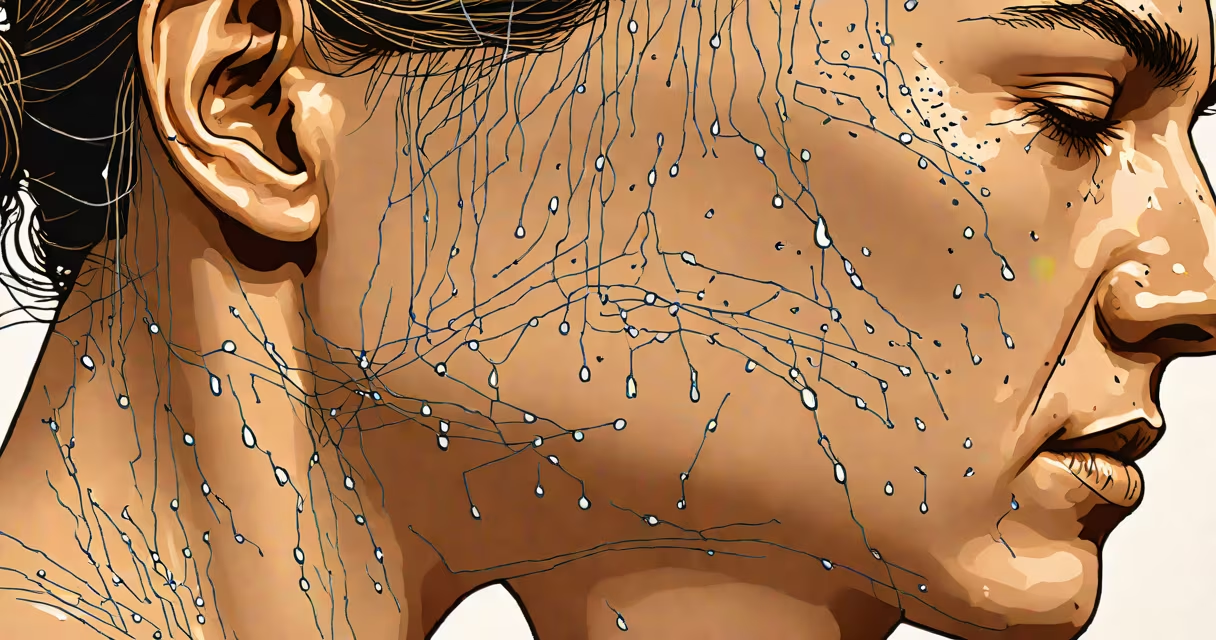
Sweating is your body's primary method for cooling itself during physical exertion or heat exposure. It prevents overheating by releasing moisture that evaporates and draws heat away from the skin. This process maintains core temperature within safe limits, protecting organs and enabling sustained activity.
Sweating begins when internal temperature rises above 37°C (98.6°F). The hypothalamus triggers eccrine glands-found across most of the body-to secrete a watery fluid composed mostly of water, sodium, chloride, and trace minerals. As this fluid reaches the skin surface, evaporation cools the body. Without sweating, even moderate exercise could lead to heat exhaustion or life-threatening hyperthermia.
The American College of Sports Medicine confirms that sweat rate varies between individuals based on genetics, fitness level, and acclimatization. A trained athlete may produce up to 1.5 liters of sweat per hour during intense effort, while untrained individuals may start sweating earlier but lose less fluid. This variation underscores why sweat is not just a sign of effort-it's a survival mechanism.
Sweat production starts in the hypothalamus, a region of the brain that monitors blood temperature. When it detects a rise, it activates sympathetic nerves that stimulate eccrine glands. These glands release sweat through pores onto the skin surface. Evaporation occurs when sweat molecules absorb heat energy from the skin, turning liquid into vapor. This phase change removes thermal energy, lowering skin temperature.
For every gram of sweat evaporated, approximately 580 calories of heat are removed. That's roughly 2.4 kilojoules per gram. So, losing 1 liter of sweat through evaporation removes about 2,400 kJ of heat-enough to cool a 70 kg person by nearly 1°C. This efficiency makes sweating one of the most effective biological cooling systems known.
Not all sweat is the same. Eccrine glands produce clear, odorless sweat used for thermoregulation. Apocrine glands, located in areas like the armpits and groin, release thicker fluid that bacteria break down into smelly compounds. Apocrine sweat doesn't contribute to cooling but plays a role in pheromone signaling. Confusing apocrine with eccrine sweat is common-but only eccrine sweat matters for temperature control.
There are two distinct types of sweat glands, each serving different purposes:
| Gland Type | Location | Secretion | Primary Function |
|---|---|---|---|
| Eccrine | Throughout the body, especially palms, soles, forehead | Watery, odorless | Thermoregulation, cooling during exercise or heat |
| Apocrine | Armpits, groin, around nipples | Thick, protein-rich, odorless until bacterial breakdown | Pheromone signaling, stress response (not cooling) |
While both types exist, only eccrine sweat contributes to cooling. Apocrine sweat is often mislabeled as "stress sweat" because it activates under emotional strain-but it doesn't regulate temperature. Misunderstanding this difference leads people to believe they're sweating to cool down when they're actually producing scent-based signals.
Sweating is essential during physical activity, especially in hot environments. A study published in Journal of Applied Physiology found that athletes who failed to sweat adequately during endurance events had higher core temperatures and were more likely to experience heat-related illness. One case involved a marathon runner whose core temperature reached 40.5°C (104.9°F)-a level associated with organ damage and death.
Even in daily life, sweat supports metabolic health. Research from the National Center for Biotechnology Information shows that regular sweating during exercise improves insulin sensitivity and reduces visceral fat. Sweat contains small amounts of urea, lactic acid, and heavy metals like lead and mercury-though the kidneys handle most toxin elimination. Still, sweat provides a minor excretion pathway, particularly for volatile compounds.
I once observed this firsthand during a 10K race in summer. A runner collapsed near mile 6 due to dehydration and hyperthermia. Paramedics confirmed his core temperature was 40.2°C. He hadn't sweated enough to cool himself despite wearing lightweight gear. His body couldn't compensate. That moment reinforced how important sweat is-not just for comfort, but for survival.
Many assume sweat equals detoxification. While sweat does contain trace toxins, the liver and kidneys eliminate 95% of waste products. The idea that sweating "cleanses" the body is a myth perpetuated by wellness influencers. According to the Centers for Disease Control and Prevention, sweat's role in detox is negligible compared to renal and hepatic pathways.
Another myth is that people who don't sweat much are unhealthy. Some individuals have reduced sweat gland density due to genetic conditions like anhidrotic ectodermal dysplasia. Others develop sweat inhibition after burns or nerve damage. But low sweat output doesn't equate to poor health-many fit people sweat less than others due to efficient thermoregulation. What matters is whether the body maintains stable internal temperature during stress.
Some also confuse sweat with dehydration. Excessive sweating can lead to dehydration, but sweating itself is not the cause. Dehydration results from fluid loss exceeding intake. A 2% drop in body weight from sweat can impair cognitive function and reduce strength by up to 15%. Replenishing fluids during prolonged activity is key-but the act of sweating remains beneficial.