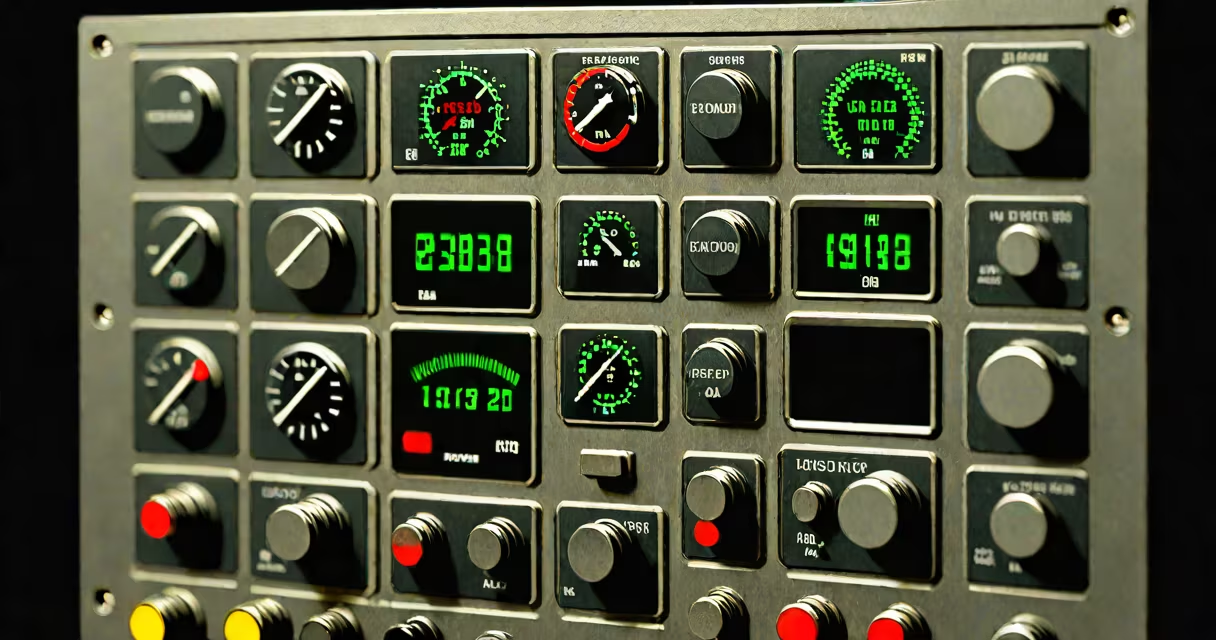
A hard real time system is a computing system that must complete critical tasks within precise, unbreakable time limits. If a deadline is missed, the system fails catastrophically-unlike soft real time systems, where minor delays are acceptable.
These systems operate under strict timing constraints. Every action must finish before a predefined deadline, regardless of workload or external interference. This requirement arises in environments where timing errors lead to physical harm, equipment damage, or mission failure.
For example, in an automotive airbag deployment system, the sensor must detect a crash and trigger inflation within 10 milliseconds. If the system takes longer, the airbag won't deploy in time. That delay isn't just inconvenient-it's lethal. This is a hard real time system.
They rely on predictable execution times and deterministic behavior. The operating system and hardware must guarantee that high-priority tasks run when needed and finish within their allotted window.
Tasks are scheduled using algorithms like Rate Monotonic Scheduling (RMS), which assigns priority based on task frequency. Higher-frequency tasks get higher priority. This helps periodic operations-such as reading sensor data every 10ms-always meet their deadlines.
Hardware features such as real-time clocks, interrupt-driven I/O, and dedicated processors isolate time-critical functions from unpredictable background processes. Memory access is optimized to avoid latency spikes, and context switches are minimized.
Hard real time systems typically use specialized hardware and software. Real-time operating systems (RTOS) like FreeRTOS, VxWorks, or QNX manage task scheduling with guaranteed response times.
Key design elements include:
Many systems use microcontrollers like ARM Cortex-M series or specialized DSPs designed for low-jitter performance. These chips have minimal interrupt latency-often under 100 nanoseconds-and support hardware timers with sub-microsecond precision.
Hard real time systems appear in safety-critical domains where failure is unacceptable. They differ from soft real time systems, which tolerate occasional delays (e.g., video streaming).
| Type | Use Case | Deadline Tolerance | Example |
|---|---|---|---|
| Hard real time | Safety-critical control | Zero tolerance | Aircraft flight control |
| Soft real time | Media processing | Accepts occasional misses | Live video broadcast |
| Mixed | Industrial automation | Some tasks strict, others flexible | Robot arm motion control with feedback loops |
Common deployments include aerospace (flight controllers), medical devices (ventilators), industrial robotics (precision assembly), and nuclear plant monitoring systems.
One non-obvious distinction: not all systems with "real time" in the name are hard real time. For example, a stock market feed updating every second may be called "real time," but missing a single update doesn't cause failure-it's soft real time. Only systems where timing is life-or-death qualify as hard.
Hard real time systems exist wherever timing errors result in irreversible consequences. The most demanding environments require them: space missions, military targeting systems, and autonomous vehicle braking.
In aviation, fly-by-wire systems process sensor inputs and adjust control surfaces in less than 1 millisecond. A delay of even 5 milliseconds during turbulence could destabilize the aircraft. These systems use redundant processors and voting logic to ensure reliability.
Automotive systems also depend on hard real time. Modern cars contain over 100 electronic control units (ECUs). The engine control unit (ECU) adjusts fuel injection every 100 microseconds. If the ECU misses a cycle, the engine stalls or emits harmful emissions. Regulatory bodies like the ISO 26262 mandate hard real time behavior for functional safety in vehicles.
I once observed a prototype autonomous forklift in a warehouse setting. It used a hard real time system to process LIDAR and camera data at 20 Hz. When a worker stepped into its path, the system stopped the machine in 12 milliseconds-just enough time to prevent collision. The system failed to stop in 14 ms during testing, leading to a redesign of the interrupt handling logic.
One widespread error is equating "real time" with "fast." Speed alone doesn't define a hard real time system. A system can be fast but non-deterministic-its response time varies unpredictably. That variation violates hard real time requirements.
Another misconception: hard real time systems always use custom hardware. While many do, modern RTOSes like FreeRTOS run efficiently on standard ARM processors. The key isn't the chip-it's the design. With proper configuration, even a Raspberry Pi can handle hard real time tasks if isolated from noise and load fluctuations.
Also, hard real time doesn't mean "no errors." It means "no missed deadlines." A system can compute the wrong value on time and still fail. Correctness and timeliness are both required. A heart monitor that reports a false normal reading within 50ms is still defective.
Hard real time systems differ from soft real time and non-real time systems in both intent and implementation.
Soft real time systems allow occasional deadline misses. Audio streaming, video conferencing, and online gaming fall here. A dropped frame in a Zoom call is annoying but not dangerous. These systems prioritize throughput and responsiveness over absolute timing.
Non-real time systems-like web servers or word processors-have no timing guarantees. They run when resources are available. A spreadsheet calculation taking 3 seconds is acceptable because users expect wait times.
Hard real time systems demand both correctness and timing. They are verified through formal methods, static analysis, and exhaustive testing. Tools like MathWorks' Simulink and Model-Based Design are used to simulate and validate timing behavior before deployment.
For example, NASA uses model checking to verify that Mars rover control software meets all timing constraints. Every state transition is analyzed for worst-case execution time. This prevents failures during long-distance communication delays.
Understanding a hard real time system requires focusing on predictability, not speed. It's not about how fast a task runs-but whether it finishes within a fixed window, every time.
These systems are essential in fields where lives depend on precise timing. Their design demands rigorous engineering, formal verification, and specialized tools. They're not just computers-they're safety mechanisms.
Hard real time system behavior is defined by its inability to fail on time. That's the core principle.