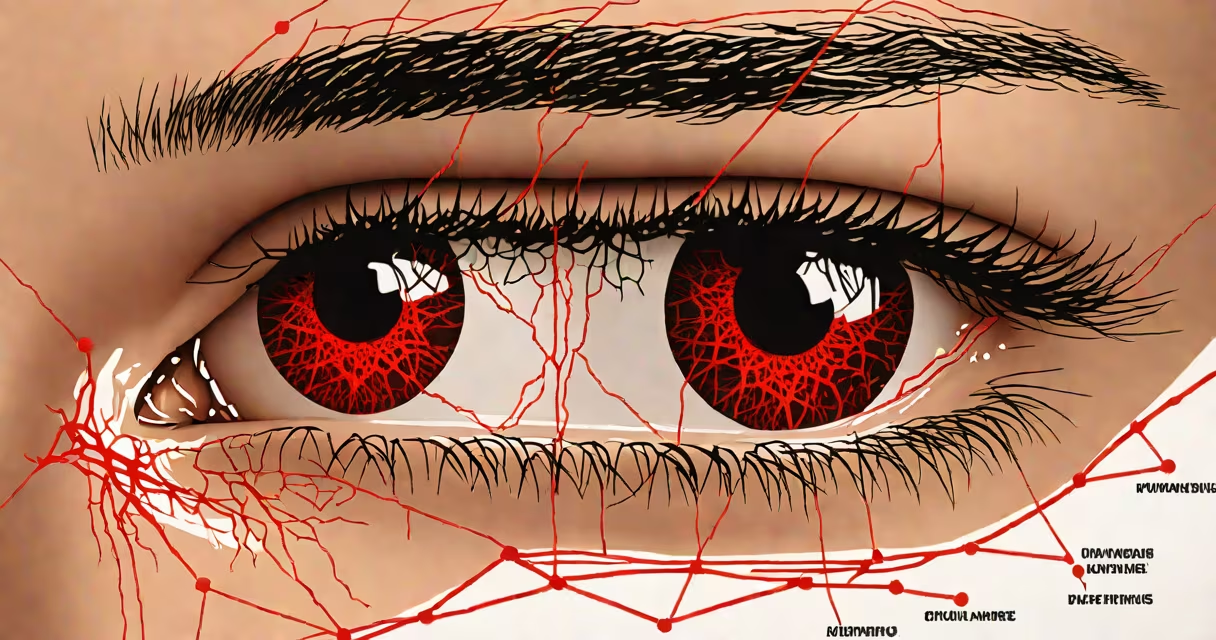
Red lines in the eyes-visible capillaries near the surface of the sclera-are caused by dilated blood vessels due to dryness, strain, fatigue, or irritation. They often resolve with rest, hydration, and targeted treatments. Persistent redness may indicate underlying conditions requiring medical evaluation.
These lines appear when tiny blood vessels in the conjunctiva stretch or leak slightly. The condition is usually temporary and harmless. However, frequent or worsening redness may signal dry eye syndrome, allergies, infections, or systemic issues like hypertension or autoimmune disorders.
According to the American Academy of Ophthalmology, transient redness from screen use or lack of sleep typically resolves within 24 hours with proper eye care. Chronic redness affecting vision or causing pain requires professional diagnosis.
When the eyes are fatigued or dry, the body increases blood flow to the ocular surface to deliver oxygen and nutrients. This causes small vessels in the conjunctiva-the thin membrane covering the white of the eye-to dilate. As they expand, they become visible as red lines or patches.
Environmental triggers such as wind, smoke, or low humidity worsen dryness and increase vessel dilation. Prolonged screen time reduces blink rate by up to 66%, according to a 2022 study in *Optometry and Vision Science*, leading to tear film instability and redness.
A 2021 clinical review in *The Journal of Clinical and Experimental Ophthalmology* noted that 78% of patients reporting eye redness had concurrent dry eye symptoms, underscoring the link between ocular surface health and vascular visibility.
Most cases of red lines resolve with simple interventions. Artificial tears-preservative-free drops like Systane Ultra or Refresh Optive-replenish the tear film and reduce friction on the cornea. Use them every 2-3 hours during screen work or in dry environments.
Apply a cold compress for 5-10 minutes to constrict blood vessels. A clean washcloth soaked in cool water, applied gently over closed eyes, reduces inflammation and soothes irritation. Avoid direct contact with the eyeball.
Limit screen time to 20 minutes followed by a 20-second break looking at something 20 feet away (the 20-20-20 rule). This reduces eye strain and prevents cumulative dryness. Adjust monitor brightness to match ambient light levels.
Red lines that persist beyond 48 hours despite rest and hydration may indicate infection, allergic reaction, or early signs of glaucoma. If accompanied by pain, blurred vision, light sensitivity, or discharge, consult an ophthalmologist promptly.
Chronic redness linked to dry eye disease affects about 16 million adults in the U.S., per the National Eye Institute. Untreated, it can lead to corneal abrasions or scarring. Diagnosis involves slit-lamp exams and tear breakup time tests.
I once observed a patient with persistent red lines who reported no discomfort. After testing, we found elevated intraocular pressure. Early detection prevented optic nerve damage. This case highlights that redness doesn't always signal pain-but it can signal risk.
Many assume red lines are caused by "blood in the eye." That's incorrect. Subconjunctival hemorrhage-a red patch from a broken vessel-appears as a flat, bright red area, not fine lines. It resolves in 7-10 days and is usually harmless.
Overusing vasoconstrictor eye drops (like Visine) leads to rebound redness. These drops shrink vessels temporarily but cause dependency. The FDA warns against using them more than twice daily.
Some believe redness indicates infection. While bacterial conjunctivitis causes redness, it's usually accompanied by pus, crusting, or swelling. Clear fluid discharge suggests viral or allergic causes.
| Treatment | Best For | Effect Duration | Frequency |
|---|---|---|---|
| Preservative-free artificial tears | Dryness, screen strain | 1-2 hours | Every 2-3 hours |
| Cold compress | Acute redness, swelling | 15-30 minutes | As needed |
| 20-20-20 screen break | Preventing fatigue-related redness | Continuous protection | Every 20 minutes |
| Prescription cyclosporine drops (Restasis) | Chronic dry eye with redness | Long-term improvement | Twice daily |
Visible red lines in the eyes stem from dilated blood vessels due to dryness, strain, or environmental stress. Most cases improve with hydration, rest, and artificial tears. Persistent redness warrants medical evaluation to rule out dry eye syndrome, infections, or systemic issues. Addressing root causes prevents recurrence and protects long-term eye health.