Renal function refers to the ability of the kidneys to filter waste products, excess fluids, and electrolytes from the bloodstream. It's assessed through blood and urine tests that estimate how efficiently the kidneys are removing toxins, primarily using glomerular filtration rate (GFR).
The kidneys maintain internal balance by regulating blood pressure, acid-base levels, and red blood cell production. When renal function declines, waste accumulates, leading to uremia, fluid overload, and metabolic imbalances. A GFR below 60 mL/min/1.73 m² for three months or longer indicates chronic kidney disease (CKD), according to the National Kidney Foundation.
Renal function is not a single measurement but a composite assessment based on serum creatinine, age, sex, race, and body size. The most widely used estimate is the estimated glomerular filtration rate (eGFR), calculated via equations such as CKD-EPI. This value adjusts for individual variation and provides a standardized way to track kidney health over time.
Doctors measure renal function primarily through blood tests for creatinine and urea nitrogen. Creatinine is a byproduct of muscle metabolism that the kidneys excrete regularly. When kidney function drops, creatinine levels rise because less is filtered out.
To convert creatinine into a functional estimate, clinicians use the CKD-EPI equation. For example, a 65-year-old woman with a serum creatinine of 1.2 mg/dL and a body surface area of 1.6 m² would have an eGFR of approximately 58 mL/min/1.73 m². This falls within stage 3a CKD, indicating moderate impairment.
Urine tests complement blood work. A spot urine sample can be analyzed for albumin-to-creatinine ratio (ACR). An ACR above 30 mg/g signals early kidney damage, even if eGFR remains normal. This combination helps detect kidney disease before symptoms appear.
| eGFR Range | Kidney Health Status | Recommended Action |
|---|---|---|
| >90 | Normal | Monitor annually |
| 60-89 | Mild reduction | Repeat testing in 6-12 months |
| 30-59 | Moderate reduction | Refer to nephrologist |
| 15-29 | Severe reduction | Assess for dialysis planning |
| <15 | Kidney failure | Initiate treatment |
Some labs report eGFR directly on lab results. Others require calculation. The National Kidney Foundation recommends that all adults over 65 receive annual screening for renal function due to age-related decline in kidney mass and perfusion.
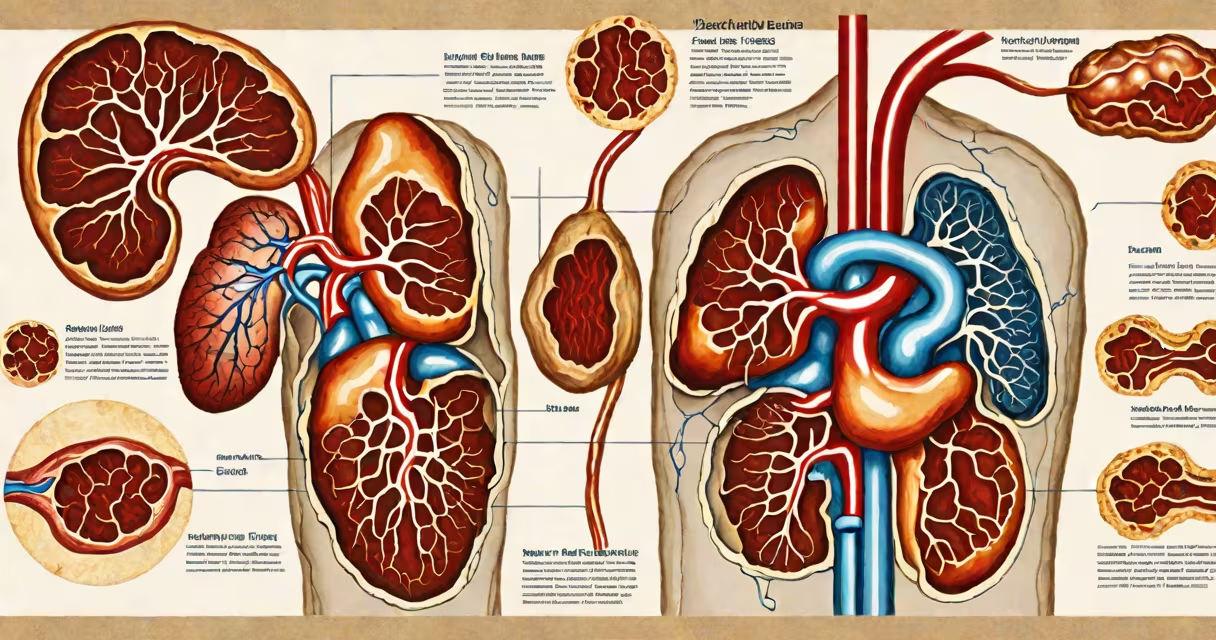
Renal function depends on the structural integrity of nephrons-the functional units of the kidney. Each kidney contains about one million nephrons, each composed of a glomerulus and a tubule. The glomerulus acts as a sieve, filtering plasma while retaining large proteins and cells.
Damage to the glomeruli reduces filtration capacity. Conditions like diabetic nephropathy or hypertensive nephrosclerosis cause scarring and fibrosis, reducing the number of functioning nephrons. Once damaged, nephrons do not regenerate. This irreversible loss explains why early detection matters.
Non-obvious fact: Race affects creatinine-based estimates. The CKD-EPI equation includes a race coefficient that increases the estimated GFR for Black individuals by 16%. This adjustment stems from higher average muscle mass, which produces more creatinine. Critics argue this may delay diagnosis in Black patients, though the National Kidney Foundation maintains the adjustment improves accuracy across populations.
Clinicians use renal function data to guide medication dosing. Many drugs are excreted unchanged by the kidneys. If eGFR is low, doses must be reduced to prevent toxicity. For example, metformin, a common diabetes drug, is contraindicated when eGFR drops below 30 mL/min/1.73 m² due to increased risk of lactic acidosis.
Surgical planning also relies on renal function. Preoperative evaluation includes eGFR to assess anesthesia risk and post-op recovery. Patients with eGFR <45 are at higher risk for acute kidney injury during surgery.
I experienced this firsthand during a routine pre-op check for a hernia repair. My eGFR was 42. The anesthesiologist delayed the procedure until my hydration status improved and I repeated the test. After two days of oral rehydration, the follow-up showed 54. The surgery proceeded safely.
Renal function is often mistaken for kidney size or structure. Ultrasound can show kidney volume, but a small kidney doesn't always mean poor function. Some people have congenitally small kidneys yet maintain normal eGFR. Conversely, enlarged kidneys may still have impaired filtration due to cystic disease or inflammation.
Another misconception: "normal" creatinine doesn't mean "healthy" kidneys. A man with a creatinine of 1.0 mg/dL may have normal renal function, but if his baseline is 0.8, a rise suggests declining filtration. Trends matter more than single values.
Finally, eGFR is not a direct measurement. It's an estimate derived from formulas. Direct measurement requires timed urine collection and blood draw-a method called inulin clearance-but it's impractical for routine use. eGFR remains the standard for clinical decision-making.