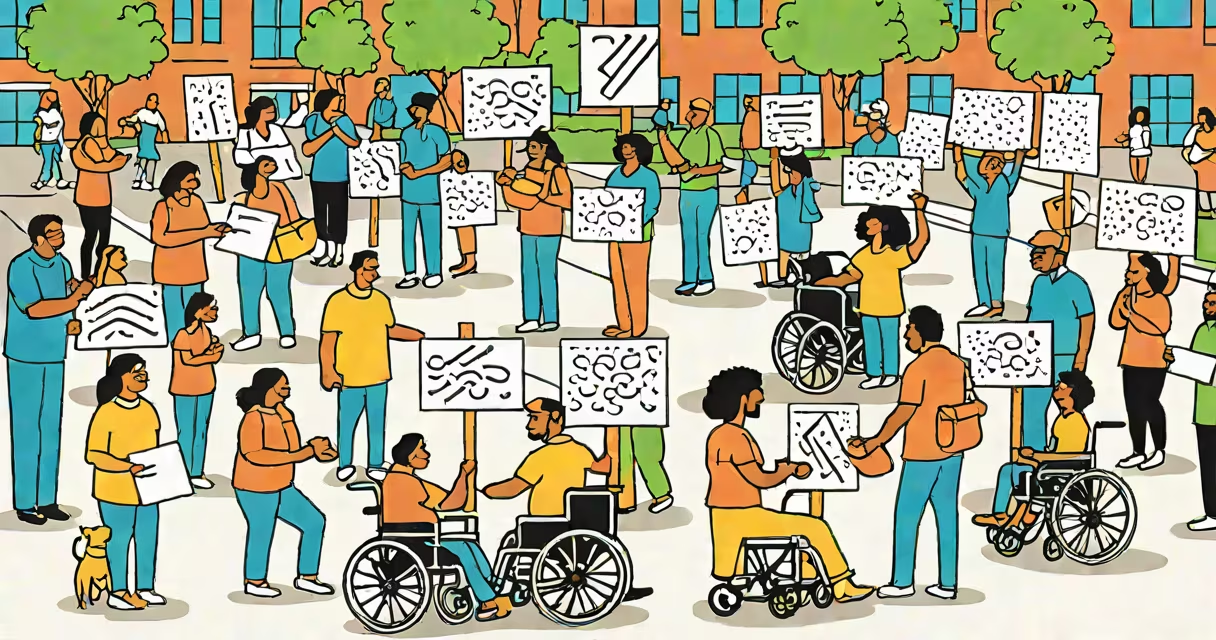
The International Day of Disability 2026 is observed annually on December 3, 2026, as a United Nations-led initiative to advance the rights and well-being of persons with disabilities globally. It promotes inclusive societies, accessibility, and equal participation in all aspects of life.
This day was established by the UN General Assembly in 2007 through Resolution 61/185, following the adoption of the Convention on the Rights of Persons with Disabilities (CRPD). The date, December 3, was chosen to show the importance of accessibility and inclusion. It serves as a call to action for governments, organizations, and individuals to remove barriers and ensure full societal engagement for people with disabilities.
Each year, the UN designates a theme to focus attention on specific challenges or progress areas. For 2026, the official theme is "Accessible Futures: Innovation for Inclusion." This emphasizes emerging technologies, assistive devices, and policy reforms that enable greater independence and opportunity. The theme aligns with the CRPD's Article 9, which mandates accessible transportation, communication, and public services.
International Day of Disability 2026 is marked through coordinated efforts across 193 UN member states. National governments issue official statements, host public forums, and launch campaigns. Local civil society groups organize events such as film screenings, art exhibits, and workshops on accessibility standards.
UN agencies like UNESCO, UNICEF, and the World Health Organization (WHO) publish reports and toolkits. These resources guide educators, urban planners, and employers on implementing inclusive practices. For example, WHO's 2025 Global Report on Disability noted that 1.3 billion people live with some form of disability, yet only 34% have access to essential assistive technology.
Private sector partners often join national campaigns. Companies may release new products designed with universal design principles-such as smartphone features for low-vision users or voice-controlled home systems. In 2024, Microsoft launched a free AI-powered captioning tool for video conferencing, adopted by over 120 countries during their 2024 observance.
Events vary by region. In Japan, schools hold "Access Week" programs where students learn sign language and build tactile models of classrooms. In Kenya, the Ministry of Health hosts mobile clinics offering free hearing and vision screenings in rural areas. In Canada, Parliament hosts a special session on disability employment statistics, with data released from Statistics Canada's 2025 survey showing a 12% increase in formal employment among disabled workers since 2020.
A key distinction often missed is that this day is not a holiday in most countries. It is a designated awareness and advocacy day. Unlike national holidays such as Independence Day or Labor Day, it does not grant time off work or school. However, many institutions choose to observe it through training sessions or internal policy reviews.
| Region | Common Activity | Impact Metric (2024) |
|---|---|---|
| Germany | Public transit accessibility audit | 94% of subway stations now have audio announcements |
| Brazil | National youth forum on disability rights | Over 15,000 students participated in online debates |
| South Africa | Disability-focused job fair in Johannesburg | 2,300 job placements reported in 2024 |
One non-obvious fact: the UN does not fund local events directly. Instead, it provides guidelines and templates. Countries must secure funding through domestic budgets or partner with NGOs. This means observance quality varies widely. A 2023 study by the Global Disability Rights Network found that 68% of low-income nations had no public-facing event due to budget constraints.
"International Day of Disability" is sometimes mistaken for "World Autism Awareness Day," observed on April 2. While both focus on neurodiversity, they differ in scope. World Autism Awareness Day targets autism spectrum disorders specifically. International Day of Disability 2026 includes all forms of disability-physical, sensory, intellectual, mental health-related, and chronic conditions.
Another frequent error is assuming the day celebrates people with disabilities. It does not. The focus is on systemic change-removing structural barriers, ensuring legal protections, and promoting dignity. Celebrating individuals is part of broader disability culture events, but not the core purpose of this UN-designated day.
I observed a community event in Portland, Oregon, during the 2023 observance. A local nonprofit installed tactile maps in a public park. These were raised-line diagrams for blind visitors. The project took six months to complete, involving input from 14 visually impaired residents. The result was a permanent installation used by over 4,000 people in its first year. That level of community-driven design reflects the spirit of the 2026 theme: innovation rooted in lived experience.
By 2026, climate change and digital transformation will reshape access. Extreme weather events disrupt mobility for people with physical disabilities. Remote work increases demand for screen-reader compatibility and closed-captioning tools. The 2026 observance will emphasize resilience planning and digital equity.
According to the World Bank, 80% of people with disabilities in developing regions lack formal identification documents. Without ID, they cannot access banking, healthcare, or voting. The UN's 2026 campaign will push for biometric registration systems that support multiple formats-audio, braille, large print-to ensure no one is excluded.
As the 2026 observance approaches, the goal remains clear: to move beyond awareness toward measurable change. The day is not about pity or charity. It is about justice, equity, and shared responsibility. When systems are designed with everyone in mind, progress benefits all.
International Day of Disability 2026 is not a single event. It is a global movement to build a world where disability is not a barrier to full citizenship. The date-December 3-will be remembered not for spectacle, but for the quiet, persistent work of inclusion that follows.