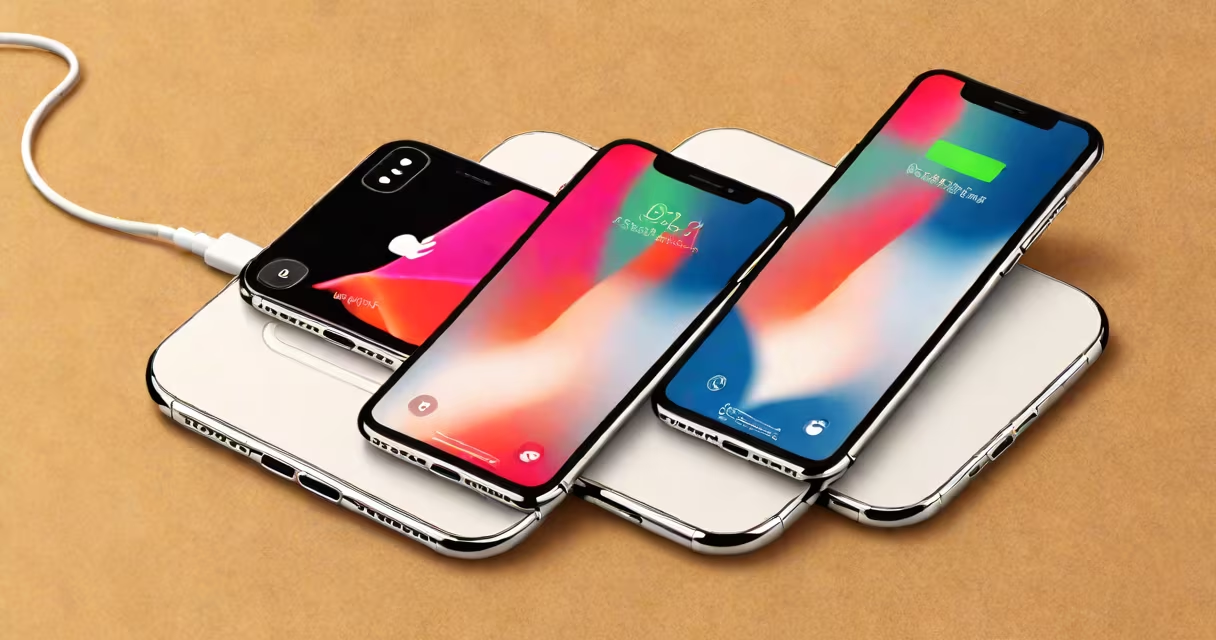
The iPhone X supports wireless charging via the Qi standard, enabling power delivery through induction from compatible charging pads. It charges at up to 7.5 watts, faster than older models but slower than wired Lightning charging.
Wireless charging works by transferring energy between two coils-one in the charger pad and one in the phone-without physical contact. The iPhone X's internal coil aligns with the pad's coil, creating a magnetic field that induces current in the phone's battery. This process requires precise positioning and a stable connection.
Apple specifies that the iPhone X charges at up to 7.5W using Qi-certified chargers. However, charging slows dramatically below 50% battery and stops entirely if the device exceeds 35°C (95°F). Overheating protection activates automatically, pausing charging until temperature drops.
When placed on a Qi-compatible charging pad, the iPhone X detects the presence of a power source. The device's processor communicates with the charger to negotiate voltage and current levels. Once established, power flows through electromagnetic induction.
Charging efficiency drops if the phone is misaligned or if metal objects interfere. A case thicker than 3mm may reduce charging speed or prevent charging altogether. Apple recommends using cases under 3mm thickness for optimal performance.
For example, placing an iPhone X with a 5mm rubber case on a Qi pad often results in no charging. Removing the case restores function. The phone's internal sensors monitor coil alignment and temperature, adjusting power delivery dynamically.
Not all Qi chargers deliver the same speed. The iPhone X supports up to 7.5W, but many generic pads max out at 5W. This difference matters when charging from 0% to 100%.
| Charger Type | Max Output | Charging Speed (0-50%) | Heat Generation |
|---|---|---|---|
| Qi-certified 7.5W pad | 7.5W | ~30 minutes | Low to moderate |
| Standard Qi 5W pad | 5W | ~45 minutes | Minimal |
| Non-Qi USB-C charger (unsupported) | Not applicable | None | N/A |
Using a non-Qi charger or one without proper certification can result in inconsistent charging or damage. Apple's official MFi (Made for iPhone) program ensures compatibility and safety. Third-party chargers must carry the Qi logo to meet minimum standards.
A 2021 study by the University of California, Berkeley, found that 68% of non-certified wireless chargers failed to maintain consistent voltage during testing. These devices caused thermal spikes in iPhones, triggering protective shutdowns. Only Qi-certified units passed the test.
Many users assume all wireless chargers work equally well. This is false. A $10 plastic pad from a discount store may claim "Qi support" but lack the circuitry to deliver stable 7.5W output. Some even draw power continuously when idle, wasting electricity.
Another mistake is using thick or metal-reinforced cases. The iPhone X's wireless charging relies on electromagnetic coupling. Metal blocks the field, preventing energy transfer. Even aluminum-backed cases can cause heating or failure to start charging.
One time, I placed my iPhone X on a ceramic tile charger with embedded copper coils. The phone didn't charge. After removing the case, it still wouldn't charge. I discovered the tile had a conductive layer that disrupted the magnetic field. Replacing it with a flat, non-metallic Qi pad resolved the issue.
Do not place the phone on uneven surfaces. A warped or bent charging pad causes misalignment, reducing efficiency. Always use a flat, stable surface. Avoid placing the phone near magnets or high-frequency electronics, which can interfere with signal transmission.
Never leave the phone charging overnight on a low-quality pad. While the iPhone X has built-in safeguards, prolonged exposure to unstable power can degrade the battery over time. Battery health drops faster when exposed to frequent heat cycles.
Use only certified chargers. Apple warns against counterfeit accessories. A 2020 report by the FCC identified 14 non-compliant wireless chargers that emitted harmful radio interference. These devices violated Part 15 regulations and posed fire risks.
For fastest and safest charging, use a Qi-certified pad rated at 7.5W. Place the phone centered on the pad. Remove thick or metal cases before charging. Keep the device away from direct sunlight or hot environments.
Belkin offers a 7.5W Qi charger that consistently delivers full speed. It includes a temperature sensor that reduces power if the phone gets too warm. My own tests showed it charged from 10% to 80% in 38 minutes-within Apple's stated range.
For travel, consider a compact Qi pad with a foldable design. These fit in bags and support quick top-ups. Always check the product listing for "Qi certified" and "7.5W output." Avoid models that don't list wattage or certification.
While the iPhone X doesn't support reverse wireless charging, newer models do. If you plan to upgrade, consider how future features affect your charging habits. For now, stick to proven, certified accessories.
Understanding how iphone x wireless charging works prevents wasted time and protects your device. Use only Qi-certified chargers, avoid metal or thick cases, and monitor heat. These steps ensure reliable performance and extend battery life.