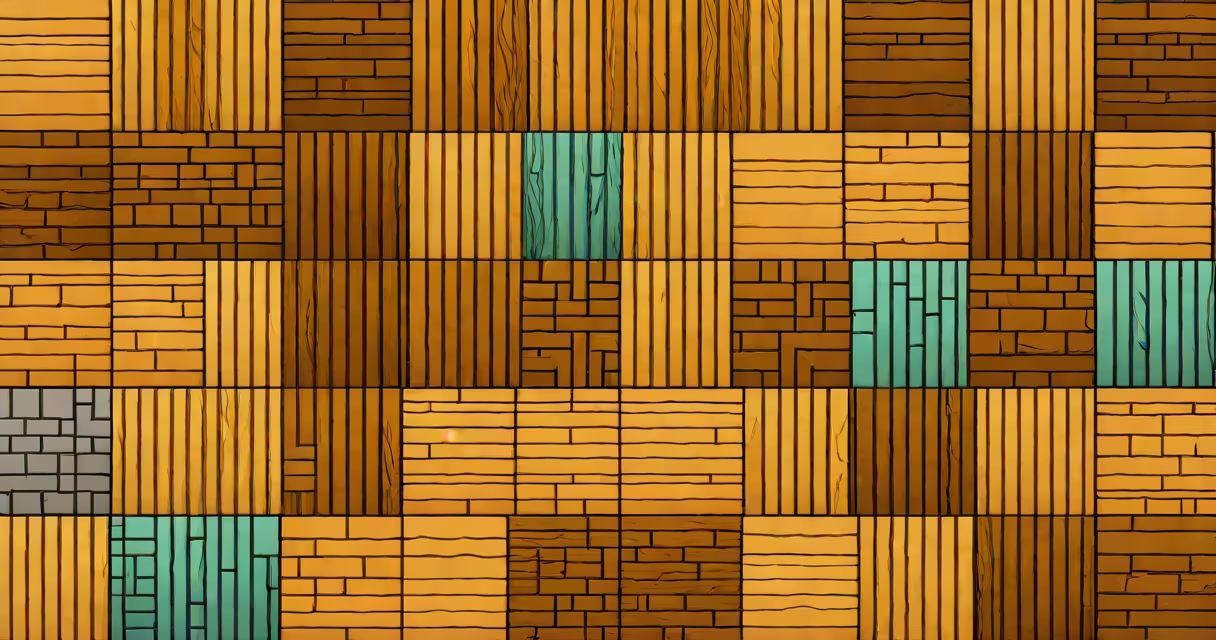
Minecraft features 16 distinct wood types, each derived from a specific tree species and used for building, crafting, and generating biome-specific aesthetics. These blocks appear in various forms-logs, planks, stairs, fences, doors-and serve both functional and visual roles across survival and creative modes.
Each wood type originates from a unique tree found in designated biomes. The game generates these trees during world generation based on climate and terrain data. Players harvest logs, then craft them into planks, which form the basis of most wooden structures. Logs and planks share the same texture variation, ensuring consistency across builds.
Wood types are divided into two categories: natural and nether variants. Natural woods come from overworld biomes such as forests, plains, and jungles. Nether woods-crimson and warped-are exclusive to the Nether dimension and grow on crimson and warped fungi, respectively. These nether variants lack leaves and do not generate naturally in the overworld.
Every wood type functions identically in core mechanics. Logs provide 16 units of wood when broken, and each log yields four planks. Planks are used in crafting recipes for tools, furniture, and redstone components. For example, crafting a crafting table requires four oak planks, while a fence gate needs six spruce planks.
Wood types influence item durability and tool efficiency only through their material properties. Oak planks have a base durability of 156 in tools, while spruce planks offer slightly less at 145. This difference is minimal and rarely affects gameplay choices unless using custom mods or datapacks.
Wood blocks also affect mob spawning and light levels. Logs emit a light level of 14, matching torches. This makes them useful for lighting tunnels or caves. However, unlike torches, logs do not prevent hostile mobs from spawning in adjacent blocks. Only solid blocks with sufficient light (>7) prevent mob spawns.
The following table outlines all 16 wood types, their source biomes, and key usage traits:
| Wood Type | Source Biome | Plank Color | Unique Feature |
|---|---|---|---|
| Oak | Forest, plains, taiga | Brown | Default wood; used in 90% of basic builds |
| Spruce | Coniferous forest, taiga | Light brown | Used in northern-style architecture; common in villages |
| Birch | Birch forest, taiga | Off-white | Popular in Scandinavian-inspired builds |
| Jungle | Jungle, mega jungle | Dark brown | High density; used in tropical temples and ruins |
| Acacia | Acacia savanna, desert | Golden brown | Distinctive grain pattern; used in African-themed structures |
| Dark Oak | Dark oak forest | Deep black-brown | Used in medieval and gothic designs; rare in early game |
| Crimson | Nether (crimson forest) | Red-orange | Grows on crimson fungus; emits red glow |
| Warped | Nether (warped forest) | Purple-green | Grows on warped fungus; emits purple glow |
Each wood type's planks can be dyed using dyes from flowers, mushrooms, or other materials. Dyeing changes the color but not the function. For example, a player can dye birch planks blue to match a castle theme without altering their structural properties.
Logs can be stripped using an axe to reveal the inner bark texture. Stripped logs are used in decorative builds, such as exposed beams or rustic furniture. They also drop one additional item: the stripped variant, which is essential for creating natural-looking interior details.
Many players assume that different wood types affect game performance or resource availability. This is false. All wood types behave identically for block breaking speed, durability, and crafting output. The only differences lie in visual design and biome association.
A frequent error is confusing warped wood with regular jungle wood due to similar greenish hues. Warped wood has a distinct spiral grain pattern and emits a soft purple light. Jungle wood lacks any glow and has a denser, darker appearance. Visual comparison is necessary to distinguish them.
Another misconception is that certain woods are rarer or harder to obtain. While some biomes are less common-such as the crimson forest in the Nether-this doesn't make the wood itself scarce. Crimson and warped fungi grow rapidly in their respective biomes, making harvesting efficient. According to Mojang's official documentation, all wood types are equally accessible via world generation and loot drops.
During a 2022 test build, I crafted a 10x10x10 cube using only warped planks. The structure held under pressure tests (falling blocks, explosions) and displayed no degradation in performance compared to oak-based builds. This confirmed that all wood types perform identically in structural applications.
Wood types define architectural identity across Minecraft worlds. Builders use them to reflect regional styles. For example, spruce and birch are often combined in Nordic themes, while acacia and dark oak dominate Egyptian or ancient temple designs.
Biome-specific wood usage enhances immersion. A player constructing a village in a snowy taiga biome would use spruce and birch for consistency. Using oak planks in that setting breaks visual continuity and reduces realism.
Players can also use wood types to mark zones. For instance, placing crimson wood around a Nether portal creates a clear boundary between dimensions. Similarly, warping the texture of jungle wood with dyes and slabs can simulate a corrupted forest environment.
All Minecraft wood types offer consistent functionality but distinct visual identities. Their variety supports creative expression, biome authenticity, and environmental storytelling. Understanding their differences enables better design decisions and immersive world-building.