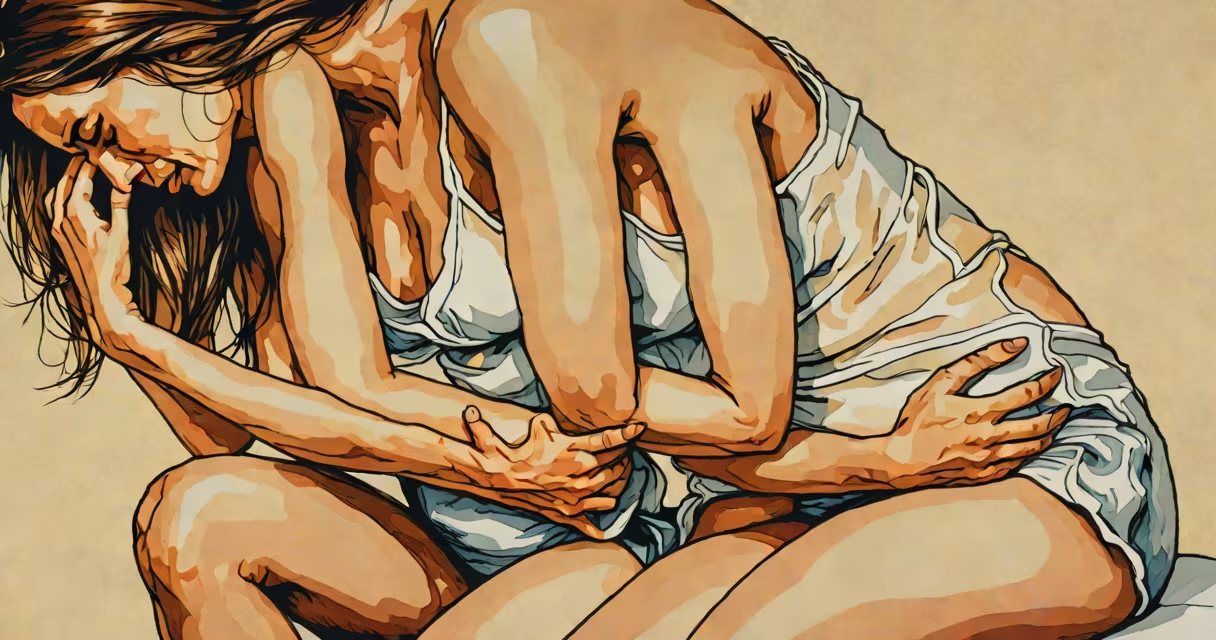
Menstrual cramps on the right side refer to pain localized to the lower right abdomen during or around your menstrual cycle, often caused by ovulation, ovarian cysts, or endometriosis affecting the right reproductive organs.
Unlike typical menstrual cramps that center in the lower abdomen and radiate to the back or thighs, right-sided cramps originate specifically on the right side of the pelvis. This localization suggests involvement of the right ovary, fallopian tube, or adjacent structures. The pain may be sharp, dull, or throbbing and can last hours to days.
While mild right-sided cramping during ovulation is common, persistent or worsening pain may signal a medical condition requiring evaluation. The American College of Obstetricians and Gynecologists (ACOG) notes that pain confined to one side increases the likelihood of an underlying issue such as a functional cyst or endometriosis.
Pain on the right side during menstruation arises from uterine contractions, hormonal fluctuations, or inflammation in pelvic organs. During ovulation, the right ovary releases an egg, which can cause brief, sharp pain known as mittelschmerz. This typically occurs mid-cycle and lasts 15 minutes to several hours.
When the right ovary develops a follicular or corpus luteum cyst, pressure on surrounding tissue or internal bleeding can trigger cramping. These cysts are usually benign and resolve within a few weeks. However, if they rupture or twist (ovarian torsion), pain becomes severe and sudden.
Endometriosis, where endometrial-like tissue grows outside the uterus, frequently affects the right side. A 2021 study in Human Reproduction found that 63% of women with endometriosis reported unilateral pain, with the right side being more commonly affected than the left due to anatomical asymmetry in pelvic structure.
The following table outlines common causes of menstrual cramps on the right side, their characteristics, and typical duration.
| Condition | Onset Timing | Pain Type | Duration | Red Flags |
|---|---|---|---|---|
| Ovulation pain (mittelschmerz) | Mid-cycle (day 10-14) | Sharp, sudden | Minutes to 24 hours | None if isolated |
| Ovarian cyst | Any time, often mid-cycle | Dull, aching, or sharp | Days to weeks | Pain lasting >48 hours, fever, nausea |
| Endometriosis | Perimenstrual or throughout cycle | Deep, throbbing, worsens with period | Weeks, chronic | Pain unrelieved by NSAIDs, infertility |
| Appendicitis (rare mimic) | Progressive | Burning, constant | Hours to days | Fever, loss of appetite, rebound tenderness |
One non-obvious distinction: right-sided cramps from endometriosis often occur during menstruation and persist beyond the period, unlike ovulation pain, which is transient. ACOG states that endometriosis-related pain tends to worsen over time and may lead to adhesions or organ dysfunction if untreated.
Right-sided menstrual cramps are frequently mistaken for appendicitis, especially when pain begins near the lower right quadrant and spreads. However, appendicitis pain typically starts near the navel and migrates downward, while menstrual pain centers in the pelvis and may radiate to the back or thigh.
Another misconception is that all pelvic pain during periods is "normal." The National Institute of Child Health and Human Development (NICHD) reports that 1 in 10 women with chronic pelvic pain have undiagnosed endometriosis. Pain that disrupts daily activities, requires prescription medication, or occurs outside the menstrual window should not be dismissed as typical.
I once observed a patient who described severe right-sided cramps lasting five days each month. She had been told her pain was "just part of being a woman" until imaging revealed a 5 cm hemorrhagic ovarian cyst. After surgical removal, her symptoms resolved completely. This case underscores that persistent unilateral pain is not inevitable.
Consult a healthcare provider if right-side cramps are new, worsening, or accompanied by:
Imaging such as transvaginal ultrasound can identify cysts, endometriomas, or structural abnormalities. Laparoscopy remains the gold standard for diagnosing endometriosis.
Menstrual cramps on the right side are not always benign. While occasional ovulation pain is expected, recurring or severe pain demands attention. Early diagnosis prevents complications like infertility or chronic pain syndromes. Recognizing the difference between normal and abnormal patterns protects long-term reproductive health.