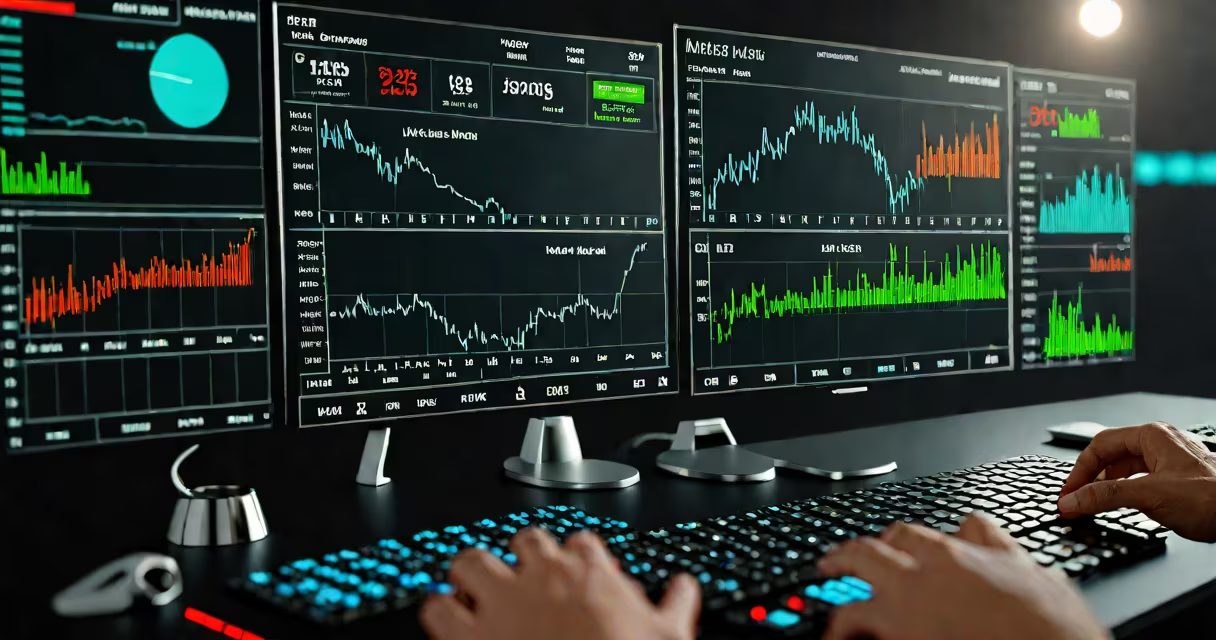
An investing in stocks simulator is a digital platform that replicates real stock market conditions, allowing users to buy and sell virtual stocks using simulated money. It mimics live market data, price fluctuations, and trading mechanics without financial risk. This tool enables learners to test investment strategies, understand market dynamics, and build confidence before committing real capital.
These simulators run on real-time or delayed market data from exchanges like the NYSE and NASDAQ. Users create accounts, fund them with virtual cash (often $100,000 or similar), and execute trades based on current stock prices. The system tracks performance through metrics like portfolio value, returns, and risk-adjusted performance. Some platforms include news feeds, economic indicators, and social features to replicate the full investor environment.
For example, Investopedia's Stock Simulator offers $100,000 in virtual cash and uses real-time data from major U.S. exchanges. A user can short Tesla stock during a volatility spike, monitor the position, and close it if the price moves against them-all without losing actual funds. The platform records every action, calculates gains/losses, and provides detailed reports on strategy effectiveness.
Investing in stocks simulator operates on a closed-loop model. The user inputs a trade-buy, sell, or hold-based on research, technical analysis, or gut instinct. The system checks the current market price, applies transaction fees (simulated), updates the portfolio balance, and logs the event. All changes reflect in real time or near real time, depending on the platform's data feed.
Behind the scenes, the simulator connects to a financial data provider such as Alpha Vantage, Polygon, or Yahoo Finance. These services supply historical and live stock prices, volume data, and company fundamentals. The simulator then processes this data to calculate portfolio values and simulate market reactions. For instance, if a user buys 10 shares of Apple at $180.50, the system deducts $1,805 from their virtual account and adds the shares to their holdings.
Some simulators include advanced features like margin trading, options, and dividend tracking. Others limit actions to basic equity trades. The level of complexity varies by platform. The key difference between a simulator and a real brokerage is the absence of regulatory compliance, tax implications, or settlement delays-features that don't affect the simulation's core function.
Platforms differ in design, audience, and functionality. Here's a breakdown of common types:
| Type | Target Audience | Key Features | Example |
|---|---|---|---|
| Beginner-Focused | High school students, new investors | Simple interface, educational guides, basic tools | Yahoo Finance Stock Simulator |
| Advanced Practice | Aspiring traders, finance students | Real-time data, technical analysis tools, paper trading | TradingSim Pro |
| Academic & Institutional | University courses, business schools | Classroom management, leaderboards, curriculum integration | Wall Street Survivor (used in over 500 colleges) |
| Community-Based | Enthusiasts, social investors | Leaderboards, chat rooms, shared portfolios | StockTwits Paper Trading |
Each type serves a distinct purpose. Beginner platforms emphasize learning over results. Academic ones track progress across semesters. Community-based systems add peer pressure and motivation, which can improve engagement but may encourage risky behavior due to social comparison.
Investing in stocks simulator is primarily used for education and skill development. According to the National Endowment for Financial Education (NEFE), 78% of high school students who used a simulator reported greater confidence in managing personal finances. The U.S. Securities and Exchange Commission (SEC) recommends simulators as a low-risk way to learn about markets before investing real money.
A common misunderstanding is that simulators predict real-world outcomes. They do not. While they use accurate market data, they lack behavioral variables like panic selling, liquidity crunches, or black swan events. A user might win a simulation by timing a tech stock rally perfectly-but that doesn't guarantee success in real life, where emotions and external shocks play a role.
Another misconception is that simulators teach long-term investing. Most focus on short-term trading because the feedback loop is faster. A user can make 10 trades in a day and see immediate results. But this reinforces quick decision-making rather than patience, diversification, or compound growth-core principles of successful investing.
Investing in stocks simulator is not a substitute for real investing. It lacks consequences. There's no emotional stress, no fear of loss, and no impact on credit or net worth. A user can lose $50,000 in a simulator and still feel no pain. That disconnect limits the transfer of discipline to real accounts.
It's also not a financial advisor. Simulators provide data and tools, but not personalized advice. They don't assess risk tolerance, income level, or tax situation. A 65-year-old retiree using a simulator might adopt a speculative strategy suitable for a 25-year-old trader-without understanding the mismatch.
One non-obvious fact: many simulators use delayed data (15 minutes behind real time) to reduce server load and avoid legal liability. This means users can't trade on breaking news. For example, if a company announces a product recall at 9:05 AM, the simulator may not update until 9:20 AM. This delay affects accuracy and realism, especially for day traders.
I once ran a six-week investing in stocks simulator challenge with a group of college students. We gave each participant $100,000 in virtual cash and required weekly journal entries. The goal was to beat the S&P 500 index return over the period. Two students outperformed the benchmark. Both used diversified portfolios and avoided momentum chasing. One held a mix of energy, healthcare, and tech stocks. The other focused on dividend-paying firms with stable earnings.
By contrast, the top three losers all concentrated in single stocks-especially meme stocks. Their portfolios dropped 40% or more during a market correction. The lesson wasn't about picking winners-it was about risk control. The simulator exposed poor habits early, before any real money was lost.
Investing in stocks simulator is not a shortcut to wealth. It's a training ground. It teaches how markets behave, how decisions compound, and how emotions distort judgment. When used correctly, it builds foundational skills. When misused, it creates false confidence. The most effective users treat it as a lab-not a game.