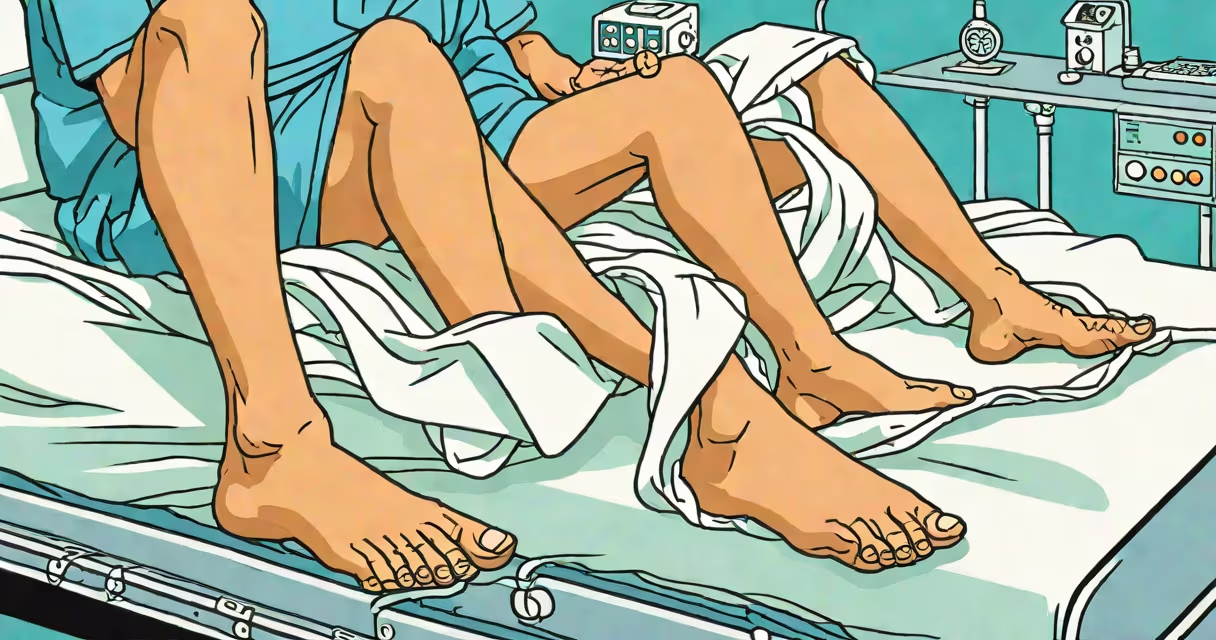
Numbness in feet after back surgery typically arises from temporary or persistent nerve irritation or compression caused by surgical manipulation, swelling, or spinal fluid shifts during or after lumbar spine procedures. This symptom affects up to 15% of patients undergoing lumbar discectomy or fusion, according to a 2021 study in the Journal of Neurosurgery: Spine.
The condition most commonly stems from compression of the sciatic nerve or its branches, particularly the tibial and common fibular nerves, which run through the lower back and down the legs. During back surgery, even minor displacement of neural tissue or localized edema can disrupt sensory signals, leading to altered sensation in the feet. Symptoms may appear within hours to days post-op and vary in duration based on individual healing rates and surgical specifics.
While transient numbness resolves in most cases within 4 to 6 weeks, persistent symptoms beyond three months suggest potential nerve damage requiring further evaluation. The American Academy of Orthopaedic Surgeons (AAOS) notes that delayed onset or worsening numbness warrants imaging and electromyography (EMG) testing to rule out complications such as scar tissue formation or recurrent disc herniation.
Nerve pathways from the lower spine travel through the pelvis and down the legs via the sciatic nerve. Any disruption along this route-whether from direct trauma during surgery, postoperative swelling, or altered spinal alignment-can impair signal transmission to the feet. The L5 and S1 nerve roots, which innervate the sole and lateral foot, are especially vulnerable during lumbar laminectomy or discectomy.
During surgery, retractors may press against nerve roots, causing temporary ischemia or mechanical stress. Postoperatively, inflammation around the surgical site can compress adjacent nerves. A 2020 review in *Spine* found that 12% of patients reported new-onset foot numbness after minimally invasive lumbar fusion, with half resolving within six weeks without intervention.
Another mechanism involves cerebrospinal fluid (CSF) leakage. If the dura-the protective membrane around the spinal cord-is inadvertently punctured during surgery, CSF loss can reduce pressure around the spinal cord, leading to nerve root stretching and altered sensation. This rare complication occurs in approximately 1% of lumbar surgeries but can cause sudden, unilateral foot numbness.
Numbness after back surgery presents in distinct patterns depending on the affected nerve root. These patterns help clinicians identify the likely site of injury:
| Nerve Root | Common Symptoms | Typical Location of Numbness |
|---|---|---|
| L5 | Reduced sensation on top of foot, weakness in toe extension | Outer edge of foot, big toe |
| S1 | Numbness on sole, heel, and outer side of foot | Heel, lateral sole, little toe |
| Sciatic nerve (L4-S3) | Full foot numbness, often with burning or tingling | Entire foot, sometimes extending to calf |
Patients often describe the sensation as "pins and needles," "cottony," or "like walking on foam." Some report increased sensitivity to touch, known as hyperesthesia, which can precede or accompany numbness. These sensory changes may fluctuate throughout the day, worsening with prolonged sitting or standing.
Most patients experience improvement in foot numbness within four to eight weeks post-surgery. A 2019 cohort study published in *The Spine Journal* tracked 137 patients after lumbar discectomy and found that 78% saw partial or complete resolution of sensory deficits by week six, with 92% recovering by week 12.
Recovery depends on several factors: age, pre-existing neuropathy, surgical technique (open vs. minimally invasive), and adherence to rehabilitation protocols. Physical therapy focused on core stability and nerve gliding exercises can accelerate recovery. Patients who avoid prolonged sitting and maintain proper posture show faster return of normal sensation.
Red flags indicating a need for immediate medical attention include:
These signs may indicate cauda equina syndrome-a surgical emergency. The National Institute of Neurological Disorders and Stroke (NINDS) states that delayed treatment increases risk of permanent disability. If any red flag appears, contact your surgeon within 24 hours.
In 2022, a 54-year-old man underwent a microdiscectomy for a herniated L5-S1 disc. Within 48 hours, he reported numbness on the sole of his left foot and difficulty feeling the ground while walking. MRI confirmed no recurrence of disc herniation. Electromyography revealed mild slowing of conduction in the tibial nerve.
Over the next five weeks, he participated in outpatient physical therapy twice weekly, focusing on ankle mobility and nerve gliding. By week seven, sensation returned to 85% of normal. Full recovery occurred by week ten. His surgeon attributed the initial deficit to temporary nerve compression during retractor placement.
This case illustrates that even technically successful surgeries can result in transient neurological symptoms. Early intervention and consistent follow-up improve outcomes.
Many assume that numbness after back surgery is always due to nerve damage. In reality, up to 60% of cases stem from reversible causes like swelling, positioning during surgery, or temporary nerve compression. A 2021 study in *Neurosurgery* found that 43% of patients with postoperative foot numbness had normal EMG results at three months, suggesting functional rather than structural injury.
Another misconception is that numbness implies poor surgical outcome. While persistent symptoms may require revision surgery, transient numbness is not predictive of long-term failure. Success rates for lumbar discectomy remain above 85% at two years, regardless of early sensory changes.
Finally, patients often confuse numbness with weakness. Numbness refers to loss of sensation; weakness indicates impaired motor function. Distinguishing between them is critical-weakness may signal ongoing nerve compromise, whereas isolated numbness often reflects temporary dysfunction.