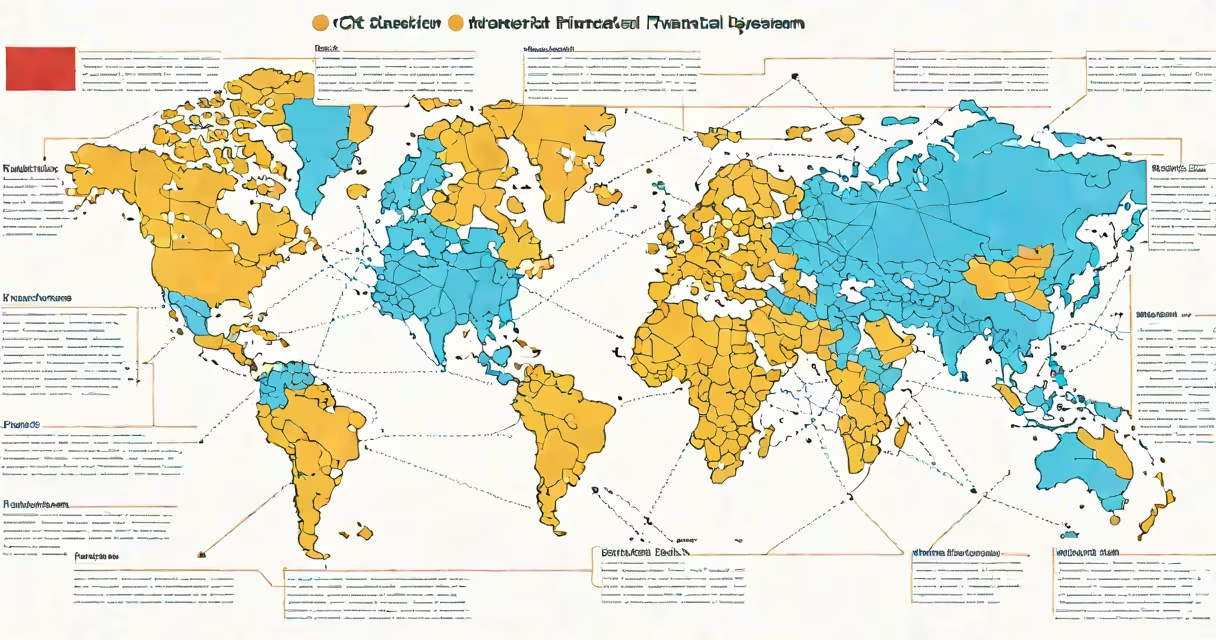
The Common Reporting Standard (CRS) and Foreign Account Tax Compliance Act (FATCA) are international frameworks that require financial institutions to automatically report account holder information to tax authorities in the country of residence. These systems aim to reduce offshore tax evasion by enabling governments to verify whether individuals are declaring all their worldwide income.
CRS is a global standard developed by the OECD and adopted by over 100 jurisdictions. It mandates annual exchange of financial account details-including balances, interest, dividends, and capital gains-for accounts held by residents of participating countries. FATCA, enacted by the U.S. Congress in 2010, requires foreign financial institutions to report U.S. person holdings to the IRS, with penalties for non-compliance. Both systems operate independently but often align in practice.
Financial institutions collect taxpayer identification numbers (TINs), names, addresses, dates of birth, and account details. They then submit reports to local tax agencies, which forward them to the relevant foreign tax authority via secure channels. The process runs annually, typically by March 31, covering the prior calendar year.
While FATCA applies only to U.S. persons and U.S.-based financial institutions, CRS covers a broader group of countries. A resident of Germany with a bank account in Singapore would have their data reported under CRS. If that same individual also holds U.S. citizenship, their account may also be subject to FATCA reporting, creating dual obligations.
For example, a Canadian citizen living in Switzerland who owns a brokerage account with a Swiss bank must have their account details shared under CRS. The Swiss tax authority sends the data to Canada's CRA. If the individual also has a U.S. Social Security Number, the same institution may report the account to the IRS under FATCA. This dual reporting ensures no single jurisdiction can hide financial activity through offshore accounts.
Both systems rely on self-certification forms. When opening an account, clients must complete a form declaring their country(ies) of tax residence. Institutions use this to determine reporting obligations. Failure to provide accurate information can result in account restrictions or penalties.
Financial institutions report specific data fields based on account type and jurisdiction. The following table outlines key categories:
| Information Type | CRS Reporting | FATCA Reporting |
|---|---|---|
| Account Holder Name | Yes | Yes |
| Address and Tax ID | Yes | Yes |
| Account Balance (Year-End) | Yes | Yes |
| Interest, Dividends, Capital Gains | Yes | Yes |
| Account Number and Institution Details | Yes | Yes |
| Beneficial Ownership (for trusts, entities) | Yes | Yes |
Reporting timelines differ slightly. CRS submissions occur annually by March 31. FATCA filings follow a different schedule-Form 8938 is due with the taxpayer's annual tax return, while Form 8966 is filed by financial institutions by June 30.
Many assume CRS FATCA means all personal financial data is exposed globally. That's incorrect. Only data relevant to tax residency and account activity is shared. No access to transaction history beyond income types is granted. Privacy protections remain intact under data handling laws such as GDPR in Europe and PIPEDA in Canada.
A frequent error is confusing CRS with FATCA as interchangeable. While both involve cross-border data sharing, they serve different purposes. FATCA targets U.S. taxpayers and U.S. persons regardless of where they live. CRS focuses on residents of participating countries and operates on a mutual exchange basis. For example, India joined CRS in 2018 but is not subject to FATCA unless a person holds U.S. citizenship or green card status.
Another misunderstanding: that CRS FATCA affects only high-net-worth individuals. In reality, any account exceeding $50,000 in value triggers reporting. A U.S. citizen with a $10,000 savings account in a German bank still falls under FATCA if the account is held in their name. The threshold is not based on wealth level but on account ownership and tax residence.
Consider Maria Lopez, a Spanish citizen working in Dubai. She opens a savings account with a UAE-based bank. The bank collects her Spanish tax ID, full name, address, date of birth, and account details. Under CRS, the UAE tax authority receives the data and forwards it to Spain's Agencia Tributaria. Spain then checks whether Maria declared the account on her tax return.
If Maria failed to report the account, she could face penalties. The Spanish tax authority uses the data to identify discrepancies. The UAE bank did not need to know Maria's tax status-it only needed to verify her declaration during onboarding. This process happens automatically across 100+ countries.
Now suppose Maria also holds a U.S. passport. Her account becomes subject to FATCA. The UAE bank must file Form 8966 with the IRS, even though she lives abroad. The IRS receives the data and may flag her for review. This dual reporting is standard for individuals with multiple tax jurisdictions.
For individuals, CRS FATCA increases transparency. It reduces opportunities for hiding income offshore. According to the OECD, over 50 million accounts were reported under CRS between 2017 and 2022, leading to the recovery of €1.8 billion in unpaid taxes globally.
Financial institutions face strict compliance requirements. Non-reporting can lead to fines of up to 10% of gross revenue in some jurisdictions. Banks must invest in automated systems to validate declarations, detect red flags, and generate reports. Some institutions have shut down services for high-risk clients to avoid liability.
I once observed a small private bank in Luxembourg suspend onboarding for new clients from non-CRS countries after a regulatory audit revealed gaps in documentation. The bank had to retrain staff and upgrade software to meet reporting deadlines. This illustrates how deeply the systems affect operations-even for institutions not based in major economies.
What is CRS FATCA? It is a coordinated global effort to close tax loopholes by requiring financial institutions to automatically share account data with tax authorities based on the account holder's country of tax residence. The combination of CRS and FATCA helps individuals cannot evade taxes simply by moving money across borders. This system strengthens trust in national tax systems and supports fair competition among jurisdictions.