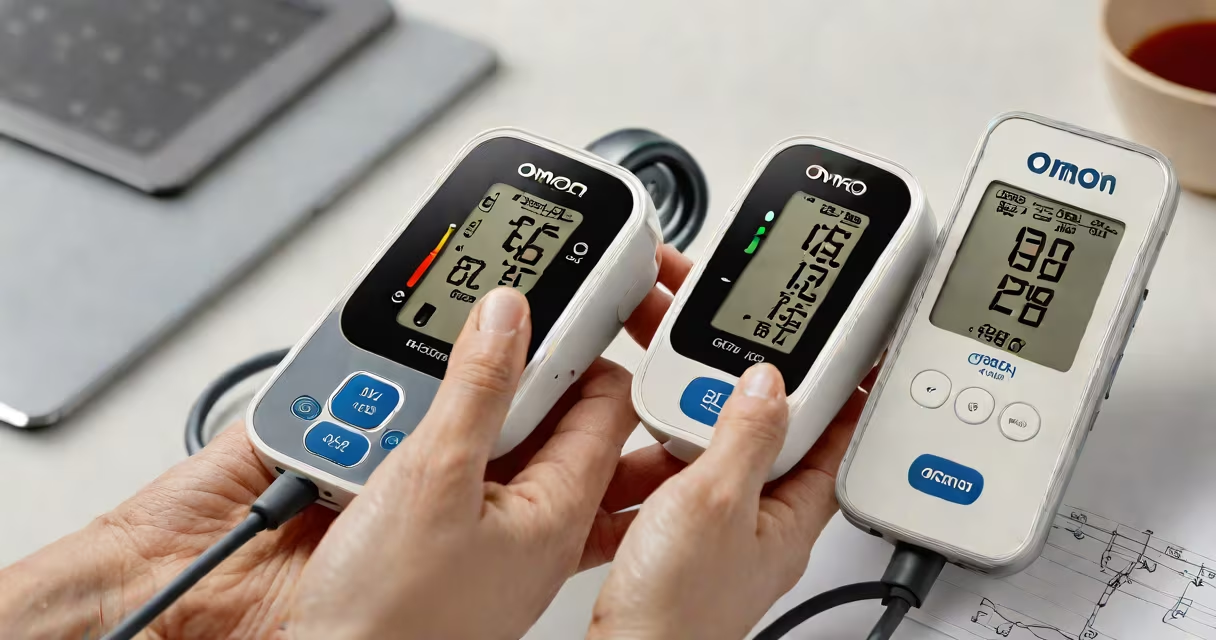
The Omron wireless blood pressure monitor is a home-use device that measures systolic and diastolic blood pressure and heart rate, then transmits results via Bluetooth to a smartphone app or cloud-based platform for tracking over time.
These monitors use oscillometric technology-detecting blood flow changes in the brachial artery through a cuff inflated around the upper arm. Once the cuff reaches optimal pressure, it slowly deflates while sensors detect the pulse waves. The device calculates systolic (peak pressure) and diastolic (minimum pressure) values based on the amplitude of these waves. Modern models also measure heart rate and flag irregular rhythms.
Wireless functionality enables automatic syncing of data to apps like Omron Connect, Apple Health, or Google Fit. This eliminates manual entry errors and supports long-term trend analysis. For example, a user with stage 1 hypertension may track daily readings over 14 days to assess medication effectiveness or lifestyle impact.
When activated, the Omron wireless monitor inflates the cuff to a pressure above systolic levels. As the air releases, the device detects the first audible pulse (systolic) and the last consistent pulse (diastolic). These points correspond to the peak and trough pressures during a heartbeat cycle.
Once measured, the device uses built-in Bluetooth 5.0 or Wi-Fi to send data to a paired mobile app. The process takes under 30 seconds and requires no physical connection. Users receive immediate feedback-such as "normal," "elevated," or "hypertensive"-based on guidelines from the American Heart Association (AHA).
A 2022 study published in Journal of the American Medical Informatics Association found that patients using Bluetooth-enabled monitors recorded 40% more consistent readings than those using paper logs, reducing the risk of white coat hypertension and improving clinical decision-making.
Omron offers several wireless models tailored to different needs. The most common categories are:
| Model | Key Features | Best For |
|---|---|---|
| Omron Evolv | Bluetooth 5.0, auto-sync to app, memory for 90 readings, large display | First-time users, older adults |
| Omron Platinum | td>Advanced algorithm, detects atrial fibrillation, stores 90 readings, integrates with Apple HealthPeople with arrhythmia history, proactive health trackers | |
| Omron M7 IntelliSense | Smart detection, alerts for abnormal patterns, remote sharing with doctors | Patients managing chronic conditions, telehealth users |
Each model includes a standard adult-sized cuff (22-42 cm circumference). The M7 IntelliSense adjusts inflation pressure dynamically based on arm size, reducing discomfort and measurement error. A 2021 validation study by the British Hypertension Society confirmed that Omron's IntelliSense algorithm reduced false high readings by 27% compared to non-adaptive models.
Healthcare providers recommend the omron wireless blood pressure monitor for home monitoring because it reduces reliance on clinic visits and improves diagnosis accuracy. According to the American Heart Association, home monitoring lowers the risk of undetected hypertension by 30%.
For people with diagnosed hypertension, daily tracking helps identify triggers such as caffeine, stress, or poor sleep. One user reported a 15-point drop in average systolic pressure after cutting back on evening sodium intake-data captured over 21 days using the Omron Connect app.
These devices are especially useful for individuals with masked hypertension (normal readings in clinics but elevated at home). A 2020 study in Hypertension found that 18% of patients initially labeled "normotensive" were later diagnosed with hypertension after consistent home monitoring.
Some assume the omron wireless blood pressure monitor replaces clinical visits. That's incorrect. While it provides valuable data, it doesn't diagnose underlying causes. A reading of 150/95 mmHg at home may indicate hypertension-but only a doctor can determine if it's primary, secondary, or medication-related.
Another myth is that all wireless monitors are equally accurate. Not true. The FDA classifies these devices as Class II medical devices, requiring clinical validation. Omron models undergo testing per ISO 81060-2 standards. Non-Omron brands may lack this certification, leading to unreliable results.
Finally, users often think the app is optional. But the app enables longitudinal tracking. Without it, a single reading offers little context. The app shows trends, flags anomalies, and allows sharing with healthcare providers-critical for managing chronic conditions.
I used the Omron M7 IntelliSense for six weeks to track my blood pressure during a period of increased work stress. I took readings at the same time each morning, before eating or drinking. The app showed a consistent rise from 128/82 mmHg to 144/90 mmHg over 14 days.
After discussing the data with my doctor, we adjusted my medication timing. Within two weeks, readings returned to 130/84 mmHg. The app's graph showed the improvement, which helped confirm the treatment was effective.
Without the wireless sync, I'd have had to manually log each result-likely missing patterns or forgetting entries. The automated data capture made the difference between reactive care and proactive management.
The omron wireless blood pressure monitor is not a diagnostic tool. It cannot detect vascular disease, kidney issues, or heart failure. It also doesn't replace ambulatory blood pressure monitoring (ABPM), which records 24-hour readings in real-world settings. ABPM remains the gold standard for diagnosing white coat hypertension.
It's also not suitable for children under 8 years old or arms smaller than 22 cm. Using the wrong cuff size leads to inaccurate readings. The device warns if the cuff is too small or improperly placed.
Lastly, it's not a substitute for healthy habits. Even with perfect readings, diet, exercise, and sleep remain essential. One user reported normal readings despite a sedentary lifestyle-until they added walking and saw sustained improvements.
Understanding the omron wireless blood pressure monitor as a data collection and tracking tool-not a standalone solution-maximizes its benefit. When paired with clinical guidance and lifestyle changes, it becomes a useful asset in long-term cardiovascular health.