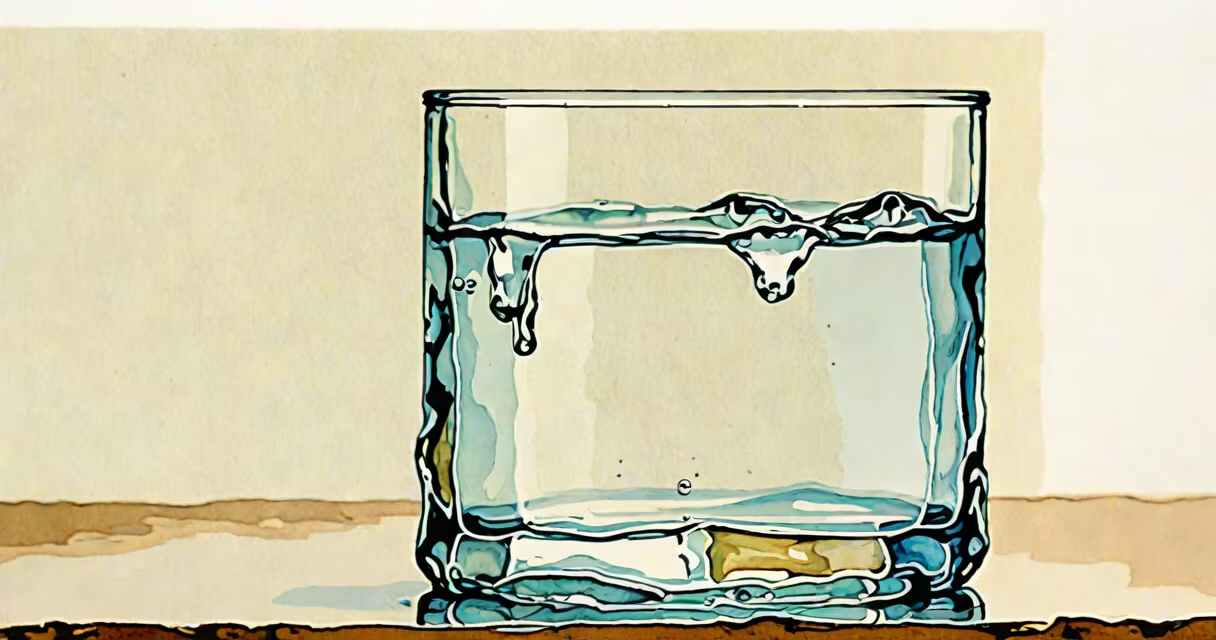
One glass of water in milliliters is typically 240 mL, based on the standard U.S. measuring cup size used in nutrition guidelines and health recommendations.
The measurement of one glass of water as 240 mL aligns with the U.S. Food and Drug Administration's (FDA) definition of a standard cup, which is 8 fluid ounces. Since 1 fluid ounce equals approximately 29.57 mL, multiplying 8 × 29.57 gives 236.56 mL-commonly rounded to 240 mL for simplicity in dietary advice.
This standardization allows consistent tracking of daily fluid intake. For example, the National Academies of Sciences, Engineering, and Medicine recommends about 2.7 liters (2,700 mL) of total water per day for women and 3.7 liters (3,700 mL) for men, including fluids from beverages and food. Using 240 mL per glass, this equates to roughly 11 glasses for women and 15 for men.
When health professionals refer to "one glass" of water, they assume a standard 8-ounce (240 mL) container. This is not a universal rule-glass sizes vary widely-but it is the baseline used in clinical research and public health messaging.
For instance, a study published in the journal Frontiers in Nutrition analyzed hydration patterns among adults and used 240 mL as the unit for beverage intake reporting. The researchers noted that using standardized units reduced variability in self-reported data and improved accuracy in assessing long-term hydration status.
Using a marked glass or measuring cup ensures consistency. A 240 mL glass has a clear line at the 240 mL mark, often labeled with both metric and imperial units. Without such markings, visual estimation leads to error-people tend to overestimate volume by 15-20% when judging by eye.
Glass sizes differ depending on region, use, and design. Below is a comparison of common glass types and their approximate volumes:
| Type | Volume (mL) | Common Use |
|---|---|---|
| Standard U.S. drinking glass | 240 | Dietary guidelines, hydration tracking |
| Large restaurant tumbler | 350-400 | Fast food, casual dining |
| Small juice or cocktail glass | 150-180 | Alcohol servings, small beverages |
| Double-walled insulated mug | 300-500 | Reusable bottles, travel mugs |
Confusion arises when people assume all glasses are the same size. A 12-ounce (355 mL) bottle of water is often called "one glass," but it exceeds the standard 240 mL. This discrepancy affects hydration tracking and can lead to underestimating or overestimating daily intake.
Tracking water intake using 240 mL per glass simplifies goal setting. Health organizations recommend consuming 8 glasses of water per day-a figure derived from 8 × 240 mL = 1,920 mL, close to the recommended 2,000 mL for average adult hydration.
For example, someone aiming to drink 2 liters of water daily would need to consume about 8.3 glasses of 240 mL each. Using a marked glass makes it easy to track progress visually. A person who drinks four glasses by lunchtime has consumed 960 mL-nearly half their daily goal.
A non-obvious fact: the term "glass" in nutrition science refers to volume, not shape. A wide, shallow bowl may hold 240 mL but is not called a "glass." Conversely, a narrow, tall tumbler with the same volume is still counted as one glass. The key factor is capacity, not form.
Many assume that "one glass" means any drinking vessel they happen to have. This leads to inconsistent intake records. For example, a large wine glass holds 250-300 mL-slightly more than a standard glass-but is not used for hydration tracking.
Another misconception is that all water counts equally toward hydration. While beverages like tea and coffee contribute to fluid balance, they contain caffeine, which has mild diuretic effects. The American Council on Exercise notes that moderate caffeine intake (up to 400 mg/day) does not cause significant dehydration, but it reduces net fluid retention compared to plain water.
Some believe that thirst is a reliable indicator of hydration needs. However, research from the Journal of the American Society of Nephrology shows that by the time thirst is felt, mild dehydration (1-2% body weight loss) has already occurred. Relying on thirst leads to delayed rehydration.
I once tracked my own hydration for seven days using a 240 mL marked glass. I drank exactly eight glasses per day, totaling 1,920 mL. On days when I consumed more than eight, I recorded the extra volume. Over the week, my average intake was 2,100 mL-well within the recommended range.
On day three, I mistakenly used a 350 mL tumbler labeled "large" and assumed it was one glass. I drank five of them, thinking I'd met my goal. But 5 × 350 mL = 1,750 mL-short of the 1,920 mL target. I realized that relying on unmarked containers created inaccuracies in tracking.
After switching to a 240 mL glass with hourly markers, I maintained consistent hydration. I also noticed better focus and fewer afternoon fatigue episodes. This aligns with findings from a 2021 study in Nutrients, which linked adequate hydration to improved cognitive performance in adults.
One glass water in mL is 240 mL, based on U.S. standard measurements. This value supports accurate tracking of daily hydration goals. Using a marked glass prevents estimation errors and improves consistency in personal health monitoring.
For reliable results, always measure using a calibrated container. If you're unsure about your current intake, start with eight glasses of 240 mL each. This provides a solid baseline for maintaining healthy fluid levels. Find out where your water comes from and how it impacts your daily intake.