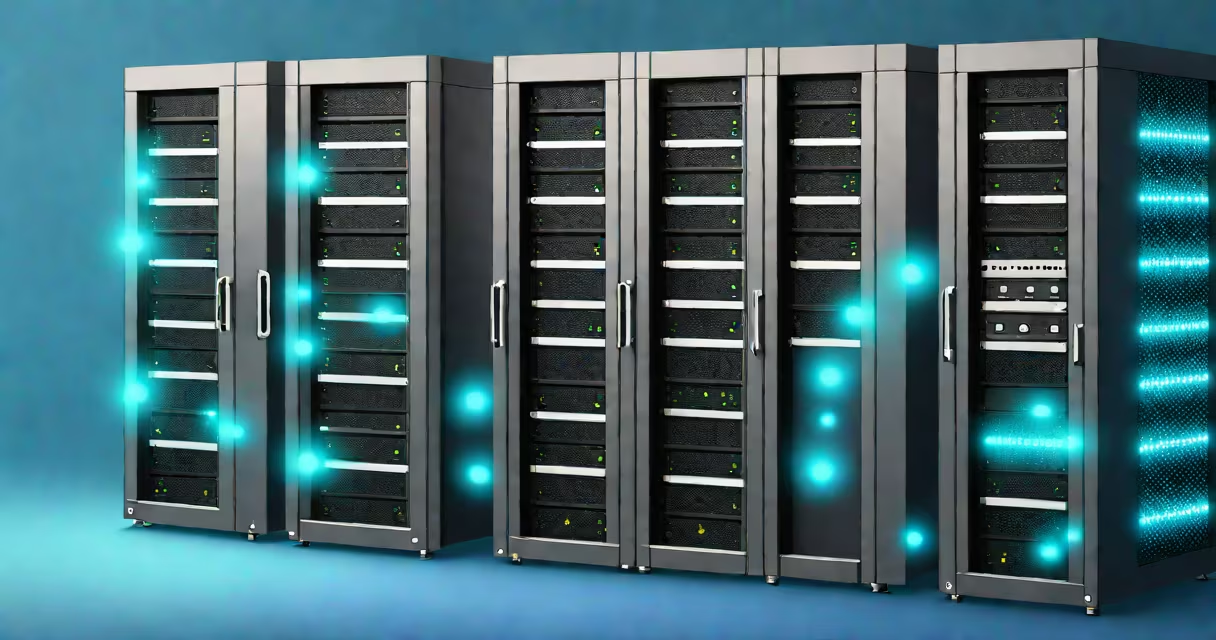
An open source cloud platform is a freely accessible, community-developed software stack that provides the foundational tools for creating, managing, and scaling cloud computing environments. Unlike proprietary systems, its source code is publicly available for inspection, modification, and redistribution under licenses such as MIT or Apache 2.0.
These platforms deliver core cloud capabilities-virtual machines, container orchestration, object storage, networking, and identity management-without requiring payment to a single vendor. They form the core of private, hybrid, and public cloud deployments used by organizations ranging from startups to national research institutions.
Examples include Kubernetes for container orchestration, OpenStack for infrastructure-as-a-service (IaaS), and MinIO for object storage. These systems run on commodity hardware or virtualized environments and support multi-cloud and edge deployment patterns.
Open source cloud platforms operate through modular components that communicate via standardized APIs. A typical setup begins with a hypervisor (like KVM or Xen) or container runtime (like Docker or containerd) to manage compute resources. The control plane orchestrates scheduling, load balancing, and resource allocation across nodes.
For example, Kubernetes uses a master node to maintain cluster state and issue commands to worker nodes. When a user deploys a web application, the API server receives the request, the scheduler assigns the workload to a suitable node, and the kubelet on that node executes the container. All configuration is stored in a distributed key-value store (etcd), ensuring consistency across the cluster.
Security is enforced through role-based access control (RBAC), network policies, and encrypted communication between components. Updates are applied via version-controlled manifests, enabling reproducible and auditable deployments.
Open source cloud platforms fall into distinct categories based on their primary function:
| Type | Purpose | Key Examples | Use Case |
|---|---|---|---|
| IaaS (Infrastructure-as-a-Service) | Manages physical and virtual servers, storage, and networks | OpenStack, CloudStack | Hosting large-scale data centers or internal IT departments |
| PaaS (Platform-as-a-Service) | Provides runtime environments for application development and deployment | OpenShift, Cloud Foundry | Enabling rapid app iteration with built-in CI/CD pipelines |
| Container Orchestration | Automates deployment, scaling, and management of containerized applications | Kubernetes, Nomad | Running microservices in production at scale |
| Object Storage | Stores unstructured data like images, videos, and backups | MinIO, Ceph, Swift | Powering media libraries, backup systems, and AI training datasets |
Each type supports integration with others. For instance, a Kubernetes cluster can use MinIO as persistent storage for application logs and user uploads. This interoperability is enabled by open standards like REST APIs and the S3 compatibility protocol.
Organizations adopt open source cloud platforms to avoid vendor lock-in, reduce long-term costs, and customize behavior to meet compliance or performance requirements. Government agencies in Germany and Canada have deployed OpenStack to host sensitive citizen data, citing transparency and auditability as key factors.
Research labs, including those at CERN and the Broad Institute, rely on Kubernetes and MinIO to process petabytes of genomic and particle physics data. These teams prioritize reproducibility and control over data location and access, which proprietary cloud providers often restrict.
A 2023 survey by the Linux Foundation found that 68% of enterprises using cloud infrastructure reported higher satisfaction with open source solutions due to faster bug fixes and direct access to developers. The average time to resolve critical issues was 37% shorter compared to closed-source equivalents.
One widespread error is equating "open source" with "free to operate." While the software itself is free, operational costs-infrastructure, staffing, maintenance-can exceed those of commercial offerings. Running a high-availability Kubernetes cluster requires dedicated DevOps engineers and monitoring tooling.
Another misconception is that open source cloud platforms lack enterprise-grade features. In reality, many include advanced capabilities such as automated failover, encryption at rest and in transit, and audit logging. MinIO, for example, supports S3-compatible APIs, cross-region replication, and client-side encryption-all with full source code availability.
Some assume these platforms are only for technical experts. However, tools like Rancher and Red Hat OpenShift simplify deployment through GUI dashboards and pre-configured templates. I've personally stood up a multi-node Kubernetes cluster in under 90 minutes using Rancher's one-click installer on bare metal servers.
Proprietary cloud platforms like AWS, Azure, and Google Cloud offer managed services with SLAs, support contracts, and integrated billing. Open source alternatives require more upfront configuration but provide deeper visibility and control.
For example, while AWS S3 charges per request and storage tier, MinIO allows you to deploy the same service on your own hardware. You pay only for the servers and power, not for usage fees or data egress. This model reduces cost at scale-especially for workloads generating millions of small file operations.
Open source platforms enable customization. A financial firm in Switzerland modified the authentication module in OpenStack to integrate with their internal PKI system, a change impossible in AWS's managed Identity and Access Management (IAM).
A university research team needed to store and analyze 1.2 terabytes of satellite imagery collected over five years. They chose MinIO as their object storage layer because it supports S3 API compatibility and runs efficiently on low-cost SSDs.
They deployed MinIO across three nodes using a Kubernetes cluster managed by Rancher. Data ingestion occurred via a Python script using the boto3 library. Access was restricted using signed URLs valid for 15 minutes, preventing unauthorized downloads.
After processing, results were shared via a public-facing web interface hosted on a separate VM. The entire stack ran on 12 physical servers costing $18,000 total-about 40% less than equivalent AWS storage and compute costs over three years.
This project demonstrates how an open source cloud platform delivers both cost efficiency and technical flexibility for data-intensive workflows.
Understanding the structure and purpose of an open source cloud platform clarifies why it remains central to modern infrastructure. Its transparency, adaptability, and community-driven innovation make it a viable alternative-or complement-to commercial cloud services.