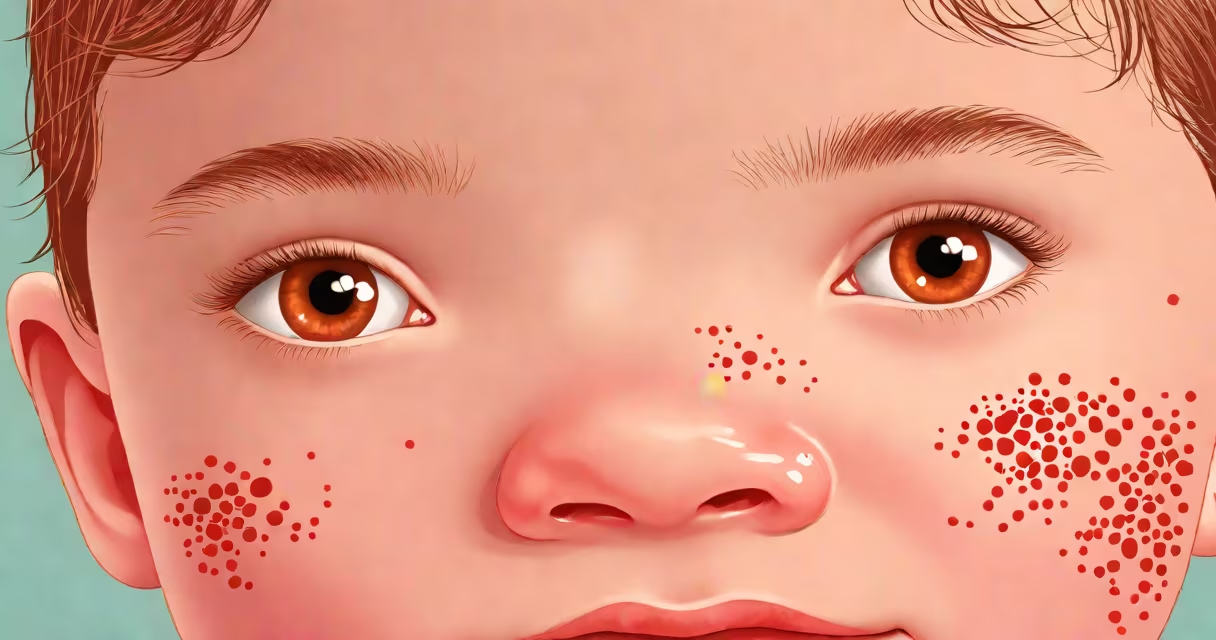
The slap cheek virus, medically known as erythema infectiosum, causes a distinctive bright red rash on both cheeks that resembles a recent slap. This viral infection is caused by human parvovirus B19 and primarily affects children aged 5 to 15. The rash typically appears after a mild fever, runny nose, or sore throat, and may be accompanied by joint pain in adults.
Parvovirus B19 spreads through respiratory droplets, making it common in schools and daycare centers during winter and spring. The initial phase includes flu-like symptoms lasting 1-3 days. After this, the sign rash emerges-intense redness on both cheeks, often described as "slapped" in appearance. The rash usually spares the area around the mouth, creating a sharp contrast between the red cheeks and pale skin nearby.
Within 1-2 days after the facial rash appears, a lacy, reticular rash develops on the arms, legs, and sometimes the trunk. This patterned rash fades and reappears with changes in temperature or sunlight exposure. The rash may last 1-3 weeks, though it rarely causes itching or discomfort. In most cases, recovery is complete within a week, even without treatment.
The evolution of the slap cheek rash follows a predictable sequence. Day 1-3: low-grade fever, fatigue, headache, and mild cold symptoms. Day 4-5: the bright red facial rash appears suddenly, often without warning. Parents may notice their child's cheeks look unusually flushed, almost as if blushing intensely. This stage is highly recognizable and often prompts a visit to a healthcare provider.
Day 6-7: the lacy rash begins on the extremities. It appears as a network of thin lines or web-like patterns, often pink or red. The rash may spread to the buttocks and upper back. It can fade and reappear with heat, exercise, or sun exposure-this fluctuation is normal and not a sign of worsening illness.
Day 10+: the rash gradually fades. The lacy pattern disappears over several days, leaving no scarring. Some children report mild joint stiffness, especially in the hands and knees, but this resolves quickly. The entire illness typically lasts 7-10 days, with the rash being the longest-lasting symptom.
While the classic presentation is well-documented, variations exist. In fair-skinned children, the facial rash can appear almost purple or dark red. In darker skin tones, the redness may manifest as a purplish hue or grayish discoloration rather than vivid red. The rash may also be less intense in older adolescents or adults.
| Rash Type | Appearance | Common in | Notes |
|---|---|---|---|
| Classic slap cheek | Bright red, symmetrical on both cheeks | Children 5-15 years | Most common presentation |
| Lacy limb rash | Net-like, pink/red pattern on arms and legs | All ages | May come and go with temperature changes |
| Atypical facial rash | Purplish or grayish discoloration | Darker skin tones | Can be mistaken for bruising or other rashes |
| Chronic rash | Persistent lacy rash beyond 3 weeks | Adults, immunocompromised individuals | Requires medical evaluation |
A non-obvious fact: the rash often appears *after* the infectious period ends. A child with slap cheek virus is no longer contagious once the rash appears. This timing confuses many parents who assume the rash means the illness is still spreading. According to the Centers for Disease Control and Prevention (CDC), transmission occurs primarily during the prodromal phase, before the rash develops.
Slap cheek virus is frequently mistaken for other childhood rashes due to overlapping features. It is often confused with scarlet fever, which presents with a sandpaper-textured rash and a strawberry tongue. Unlike scarlet fever, slap cheek virus lacks sore throat, high fever, or swollen lymph nodes. The CDC notes that misdiagnosis rates for viral rashes are high in primary care settings due to reliance on visual cues alone.
For adults, the rash can resemble lupus or rheumatoid arthritis flare-ups, especially when joint pain accompanies the rash. However, parvovirus B19 infection in adults is typically mild and short-lived. Persistent joint symptoms beyond two weeks warrant further investigation, such as blood tests for autoantibodies.
In a pediatric clinic in Portland, Oregon, a 7-year-old girl presented with a 3-day history of low-grade fever and fatigue. Her mother reported she had been playing with friends at school, where two classmates had recently had "red cheeks." On examination, the child had striking bilateral facial redness, sparing the perioral area. The rash was warm to touch but not painful. Within 48 hours, a lacy rash appeared on her forearms and lower legs.
Testing confirmed IgM antibodies to parvovirus B19. The child was advised to rest, stay hydrated, and avoid contact sports due to rare risk of transient aplastic crisis in those with underlying hemoglobinopathies. Her symptoms resolved completely in 10 days. The rash faded without treatment. This case illustrates the typical progression and diagnostic clarity when clinical signs align.
Most cases of slap cheek virus require no medical intervention. However, seek care if the rash is accompanied by severe joint swelling, difficulty breathing, or signs of dehydration. Children with sickle cell disease or other chronic anemias are at risk for transient aplastic crisis-a temporary halt in red blood cell production triggered by the virus. This condition can lead to severe anemia and requires urgent evaluation.
I've seen a 12-year-old boy with sickle cell trait develop pallor and fatigue two days after the rash appeared. His hemoglobin dropped from 12.5 g/dL to 7.8 g/dL within 48 hours. He required a blood transfusion and hospital observation. This highlights why recognizing the virus matters-not just for diagnosis, but for managing complications in vulnerable populations.
Understanding what slap cheek virus looks like helps reduce unnecessary visits and anxiety. The bright red cheeks and lacy limb rash are pathognomonic signs. With accurate recognition, families can manage the illness confidently and know when to seek help.