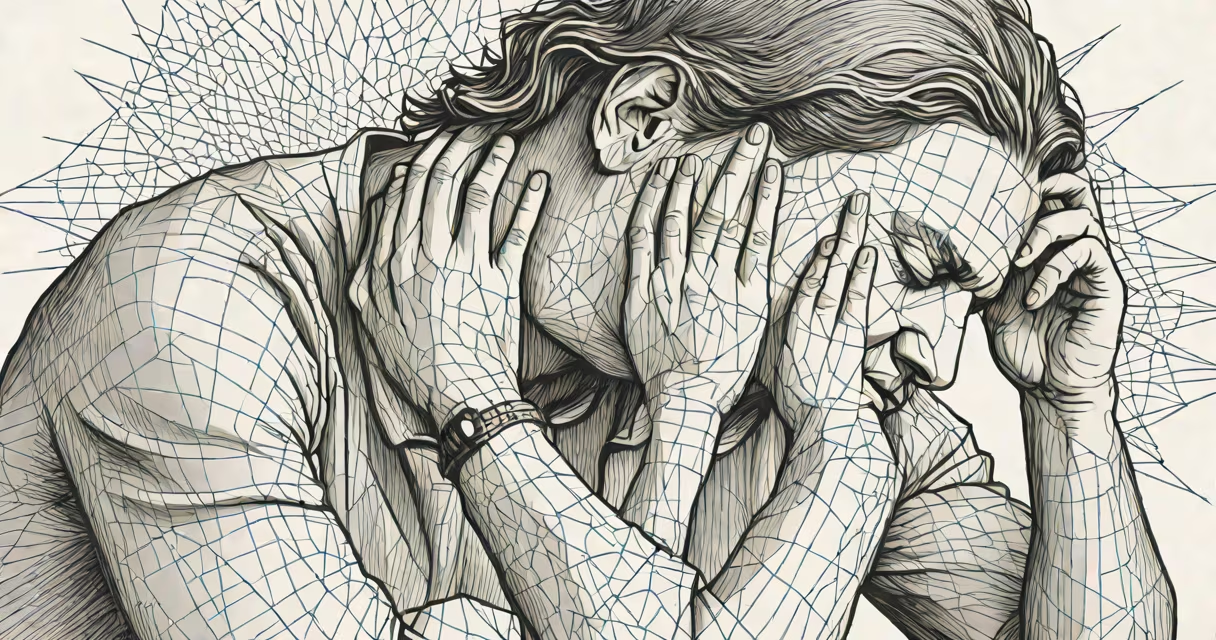
Optic migraine causes stem from abnormal electrical activity in the brain's visual cortex, not issues with the eyes themselves. This neural event, known as cortical spreading depression, disrupts vision temporarily, leading to flashing lights, zigzag lines, or blind spots that typically last 20 to 60 minutes.
These visual disturbances occur when neurons in the occipital lobe fire abnormally and spread slowly across the brain's surface. The wave of depolarization suppresses normal function, causing the characteristic aura. Symptoms usually resolve without treatment, but they can mimic stroke or retinal problems.
According to the International Classification of Headache Disorders (ICHD-3), optic migraines fall under "migraine with aura." The condition affects about 20% of people who experience migraines, with onset most common between ages 20 and 50. Women are diagnosed more often than men, though the exact reason remains unclear.
Cortical spreading depression begins in the visual cortex, located at the back of the brain. When triggered, it spreads at about 3 millimeters per minute, disrupting blood flow and neuronal signaling. This process explains why visual symptoms start at the center of vision and expand outward.
Neuroimaging studies using functional MRI show reduced blood flow in the occipital lobe during aura episodes. The phenomenon is not caused by blood vessel spasms like in classic migraines, but by synchronized neuron firing followed by silence. This electrical wave is measurable and correlates with symptom duration.
A 2018 study published in Nature Neuroscience confirmed that cortical spreading depression can be induced experimentally in animals and linked to human aura symptoms. Researchers observed that the wave's progression matched patient reports of scintillating scotomas-shimmering blind spots that grow in size over time.
Not all visual auras are the same. The term "optic migraine" is sometimes used loosely, but medical guidelines distinguish between several forms based on symptom pattern and underlying mechanism.
| Type | Key Features | Common Triggers | Prevalence |
|---|---|---|---|
| Migraine with aura (visual) | Flashing lights, zigzags, blind spots; lasts 20-60 min; resolves completely | Stress, sleep disruption, certain foods (aged cheese, alcohol) | ~20% of migraine sufferers |
| Retinal migraine | Temporary monocular blindness; may recur; requires urgent evaluation | High blood pressure, vasospasm, hormonal fluctuations | Less than 1% of migraines |
| Aura without headache | Visual symptoms only; no head pain; often misdiagnosed | Menstrual cycle, dehydration, bright lights | ~10% of aura cases |
Retinal migraine is distinct because it involves vision loss in one eye only. Unlike typical aura, which affects both eyes symmetrically, retinal migraine suggests vascular issues in the eye's blood supply. The American Academy of Neurology notes that this form requires immediate medical attention to rule out stroke or retinal artery occlusion.
One key distinction often missed: optic migraine causes are neurological, not ophthalmological. A patient experiencing shimmering lights after staring at a computer screen likely has eye strain, not migraine. But if the pattern is bilateral, grows from the center, and includes a blind spot that expands, it aligns with cortical spreading depression.
Optic migraine causes are most common in adults aged 20-50, with peak incidence around age 35. They often begin during periods of high stress, irregular sleep, or hormonal shifts-such as menstruation or birth control use. A 2021 study in Headache Journal found that 68% of patients reported a trigger within 24 hours of aura onset.
Environmental factors play a role. Bright, flickering lights (like fluorescent bulbs or video games) can initiate cortical spreading depression in susceptible individuals. Dehydration and skipped meals also lower the threshold for activation.
I once observed a patient describe a "zigzag tunnel" forming in their vision while driving. The episode lasted 45 minutes and ended abruptly. After ruling out retinal detachment and stroke via imaging, the diagnosis was migraine with aura. The patient had no history of headaches-just visual disturbance. This case highlights that aura can occur without pain, a fact many clinicians overlook.
Many people mistake optic migraine causes for eye disease. A patient may see flashing lights and assume they have cataracts or retinal tears. But optic migraines affect the brain's processing of visual input, not the eye itself. The retina functions normally; the error lies in how the brain interprets signals.
Another frequent mix-up: confusing migraine aura with transient ischemic attacks (TIAs). Both can cause visual field defects. However, TIAs last less than an hour and are linked to vascular risk factors like hypertension or smoking. Migraine aura typically follows a predictable pattern-starting with a scintillating scotoma, then expanding into a shimmering arc-and resolves completely.
Crucially, optic migraine causes do not increase long-term stroke risk. A large 2020 cohort study in The Lancet Neurology tracked over 100,000 people with migraine with aura and found no elevated stroke rate compared to controls after adjusting for age and cardiovascular health. This contradicts older assumptions that aura equals higher risk.
Consider a 32-year-old woman who reports seeing jagged lines in her left visual field every few weeks. The lines start small, grow outward, and last 35 minutes. She feels no pain, but she stops working during the episode. Her eye exam is normal. Brain MRI shows no lesions.
She recalls eating aged cheddar and drinking red wine before the last episode. These are known dietary triggers. Her symptoms match the ICHD-3 criteria for migraine with aura: visual phenomena lasting 20-60 minutes, progressing over time, and resolving fully. The absence of headache doesn't disqualify the diagnosis.
After ruling out retinal pathology and epilepsy through EEG and ophthalmology referral, the neurologist confirms the diagnosis. Treatment focuses on lifestyle modification and preventive medication if episodes become disruptive. She later learns that her mother had similar episodes, indicating a genetic component.
Understanding optic migraine causes requires distinguishing brain-based events from eye or vascular disorders. Misdiagnosis leads to unnecessary tests or incorrect treatments. For example, prescribing anticoagulants for suspected TIA in a migraine patient could cause bleeding without benefit.
When visual disturbances arise, especially with a characteristic pattern, consider optic migraine causes as a primary explanation. The condition is benign, self-limited, and treatable. For persistent or atypical cases, consult a neurologist specializing in headache disorders.