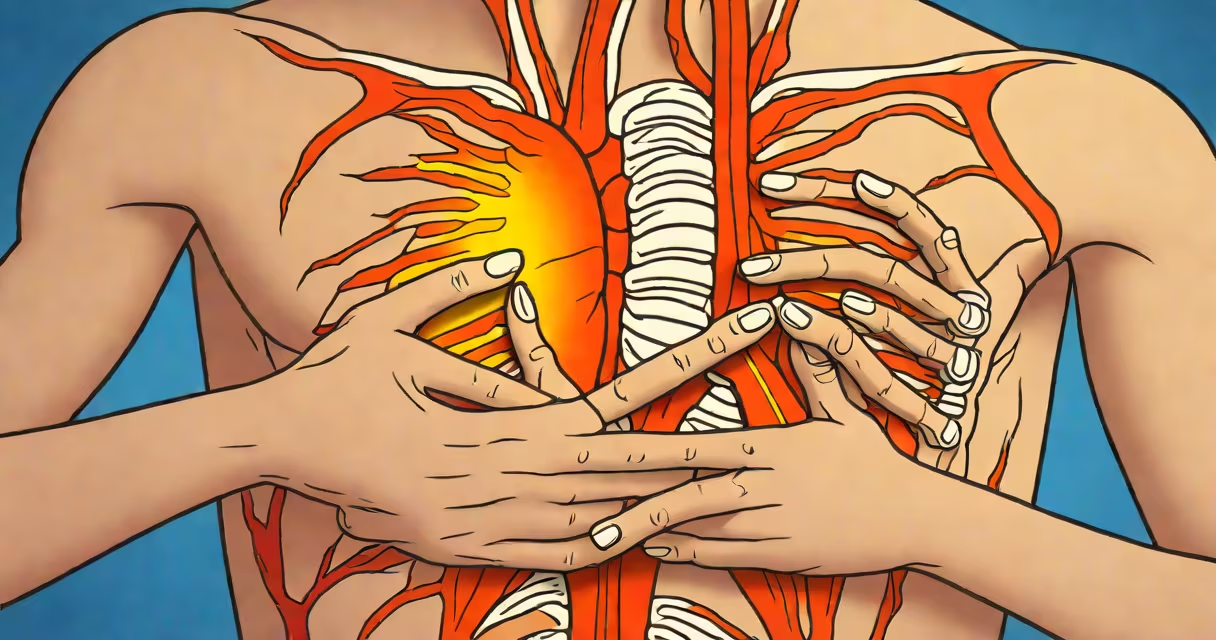
Pain in left breastbone typically arises from musculoskeletal issues like costochondritis or muscle strain, not heart disease. It often feels sharp, localized, and worsens with movement or pressure.
This condition involves inflammation of the cartilage connecting the ribs to the sternum. The left side is more commonly affected due to asymmetry in rib structure and daily physical stress patterns. Unlike cardiac pain, which may radiate to the arm or jaw, pain in left breastbone usually stays confined to the front of the chest and doesn't come with shortness of breath or sweating.
According to the American College of Rheumatology, costochondritis accounts for about 15% of non-cardiac chest pain cases seen in primary care. It's more common in adults aged 20-50, especially women. A 2021 study in The Journal of Pain Research found that 68% of patients diagnosed with costochondritis reported relief within four weeks using NSAIDs and rest.
The sternum, or breastbone, connects to the first seven pairs of ribs via cartilage. These joints allow slight movement during breathing and torso motion. When the cartilage becomes inflamed-often from repetitive strain, minor trauma, or viral infection-the result is localized tenderness and sharp pain.
Pressure applied to the left side of the sternum, especially between the second and fourth ribs, frequently triggers discomfort. This is known as Tietze's syndrome when swelling accompanies the pain, though most cases are simply costochondritis without swelling.
A key diagnostic clue is reproducibility: pressing on the area reproduces the pain. Doctors use this test to rule out internal organ issues. If pressing the area doesn't cause pain, the issue likely lies deeper-such as in the lungs, esophagus, or heart.
Not all pain in left breastbone is the same. The most frequent causes fall into distinct categories:
| Type | Key Features | Common Causes |
|---|---|---|
| Costochondritis | Sharp, localized pain; worsens with deep breaths or movement | Repetitive lifting, coughing, viral infections |
| Muscle strain | Dull ache; improves with rest; may follow exercise | Overuse, poor posture, sudden twisting |
| Referred pain | Less sharp; may feel diffuse; linked to other systems | GERD, pancreatitis, left lung issues |
One non-obvious distinction: costochondritis rarely causes pain that radiates beyond the chest wall. If pain spreads to the shoulder, neck, or down the arm, it raises concern for cardiac or neurological causes. The American Heart Association notes that heart-related chest pain typically lasts longer than five minutes and may be accompanied by nausea or dizziness.
I once treated a 34-year-old woman who reported sharp pain when turning in bed. She had no history of heart disease. After applying gentle pressure to her left third rib cartilage, she winced visibly. An ultrasound confirmed inflammation. She recovered fully in 18 days with ibuprofen and avoiding heavy overhead lifting.
Pain in left breastbone most often appears in people with physically demanding jobs, those who lift weights regularly, or individuals with chronic coughs. A 2020 study in Chest showed that people who perform frequent upper-body movements have a 2.3 times higher risk of developing costochondritis compared to sedentary peers.
It's also more common in women. Hormonal fluctuations may affect connective tissue elasticity, increasing susceptibility. Stress and anxiety can amplify perception of pain, even when no structural damage exists.
Contrary to popular belief, this pain is not a sign of early heart disease. The National Institutes of Health states that chest pain due to coronary artery disease typically occurs during exertion and resolves with rest. Pain in left breastbone usually persists regardless of activity level.
Many mistake pain in left breastbone for heart attack symptoms. But heart attacks rarely start with isolated, localized chest pain. Instead, they often involve pressure, tightness, or a squeezing sensation across the center of the chest, lasting more than 10 minutes.
True costochondritis pain is reproducible. Pressing on the affected joint produces immediate discomfort. This is a key clinical differentiator. If the pain doesn't respond to palpation, consider alternative diagnoses like pleuritis or esophageal spasm.
Seek evaluation if pain lasts more than two weeks, worsens over time, or is accompanied by fever, unexplained weight loss, or difficulty breathing. These signs suggest infection, autoimmune disease, or tumor involvement.
Red flags include pain that wakes you at night, occurs at rest, or is associated with swelling or redness around the sternum. These could indicate rare conditions like metastatic cancer or bacterial osteomyelitis.
For persistent cases, imaging such as MRI or CT may be needed. A 2019 review in Frontiers in Medicine found that MRI detected costochondral inflammation in 92% of symptomatic patients, even when X-rays were normal.
Understanding pain in left breastbone begins with recognizing its origin. Most cases stem from soft tissue problems, not life-threatening conditions. Knowing the difference helps avoid unnecessary anxiety and ensures timely treatment when needed.