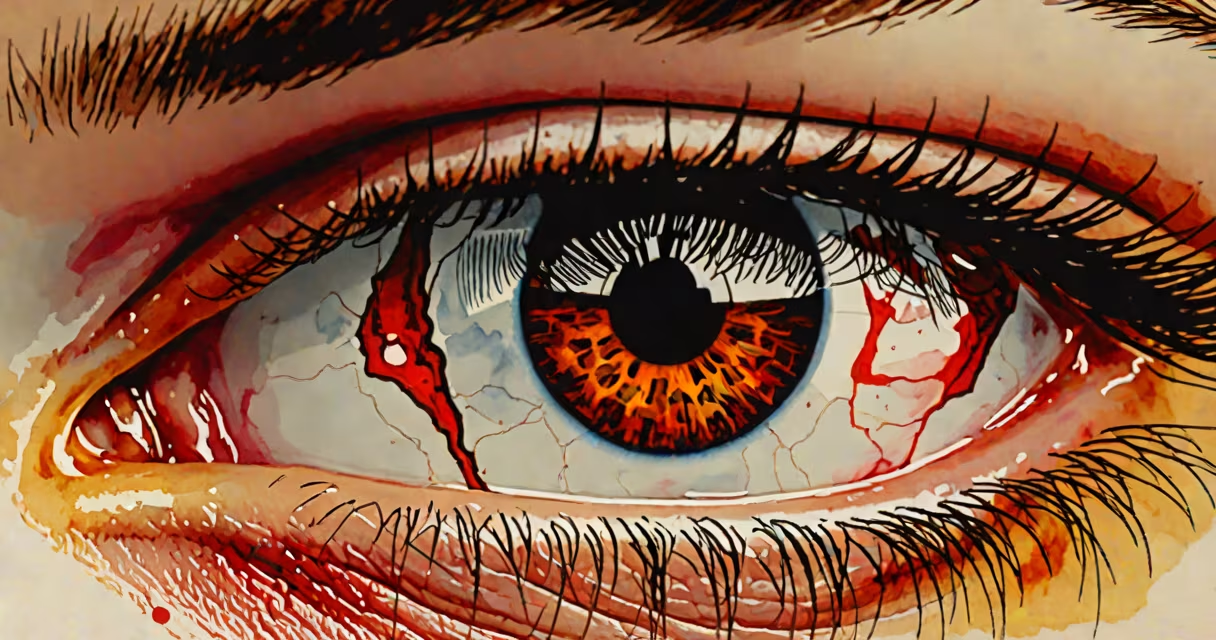
An eye that is tender to touch and visibly red signals inflammation of the conjunctiva or surrounding tissues, commonly caused by infection, allergy, or injury. This condition may indicate conjunctivitis, uveitis, or corneal abrasion, requiring prompt evaluation to rule out serious causes.
Redness and tenderness arise when blood vessels dilate in response to irritation or immune activation. The eye's surface is highly sensitive due to dense nerve endings in the cornea and conjunctiva. Any disruption-whether microbial, chemical, or mechanical-triggers pain upon contact. A gentle touch to the eyelid or globe elicits discomfort because pressure increases intraocular or periorbital pressure, exacerbating inflamed tissue.
According to the American Academy of Ophthalmology, 80% of red eye cases stem from non-serious causes like viral conjunctivitis or dry eye. However, 5% involve sight-threatening conditions such as acute angle-closure glaucoma or scleritis. Early differentiation prevents permanent vision loss. Symptoms like photophobia, blurred vision, or severe pain require immediate ophthalmic assessment.
Inflammation begins when immune cells detect pathogens, allergens, or physical trauma. Histamine and prostaglandins released during this process cause vasodilation and increased vascular permeability. Blood vessels in the conjunctiva expand, making the white of the eye appear reddish or bloodshot. Nerve endings in the cornea respond to even slight pressure, sending pain signals via the trigeminal nerve.
For example, a patient with bacterial conjunctivitis may report waking with crusted eyelids and a gritty sensation. Touching the eyelid produces sharp pain due to swollen follicles and edema. The condition spreads rapidly through contact with contaminated surfaces, with incubation periods as short as 12 hours. In contrast, allergic conjunctivitis causes bilateral redness and intense itching, but minimal pain unless secondary infection occurs.
Corneal abrasions-tiny scratches on the eye's surface-trigger disproportionate pain. Even light blinking causes discomfort because the cornea contains over 700,000 nerve endings per square millimeter. A foreign particle like dust or sand can lead to abrasion within seconds. Without treatment, the risk of infection rises, potentially leading to corneal ulceration.
Redness and tenderness vary by underlying cause. Viral and bacterial infections dominate outpatient clinics, while autoimmune disorders and trauma account for rarer presentations.
| Type | Key Features | Common Triggers | Typical Duration |
|---|---|---|---|
| Viral conjunctivitis | Bilateral redness, watery discharge, mild pain | Adenovirus, herpes simplex | 5-14 days |
| Bacterial conjunctivitis | Purulent discharge, eyelids stuck together, pain with touch | Staphylococcus aureus, Streptococcus pneumoniae | 3-7 days with antibiotics |
| Allergic conjunctivitis | Itching, tearing, bilateral involvement, minimal pain | Pollen, dust mites, pet dander | Chronic if exposure continues |
| Corneal abrasion | Severe pain, photophobia, tearing, sensitivity to touch | Foreign body, fingernail scratch, contact lens misuse | 1-3 days with proper care |
One non-obvious distinction: redness from conjunctivitis typically spares the area near the iris (the colored part), whereas uveitis affects the anterior chamber and causes central redness. This difference helps clinicians differentiate between superficial and deeper ocular inflammation.
During a routine exam, I once observed a patient with a red, painful eye who reported no recent trauma. Upon slit-lamp examination, a small corneal foreign body was visible under fluorescein staining. Removing it resolved pain within 24 hours. This case highlights that even minor injuries can cause significant discomfort and misdiagnosis if not properly assessed.
Red eyes occur most frequently in children and young adults due to higher exposure to infectious agents in schools and daycare centers. Adults with dry eye syndrome-especially those using prolonged screen time-report chronic redness and irritation. Contact lens wearers face elevated risks of corneal abrasions and microbial keratitis, particularly when lenses are worn overnight.
A common misconception is equating "pink eye" with all red, painful eyes. While "pink eye" often refers to viral conjunctivitis, it is not synonymous with eye pain. Bacterial conjunctivitis may cause more severe pain and purulent discharge, yet still be labeled "pink eye" in casual conversation. Conversely, a red, painful eye due to glaucoma may be missed if patients assume it's just "eye strain."
Another error: assuming that redness always indicates infection. Allergies, dryness, and even systemic diseases like lupus can mimic infectious conjunctivitis. The National Eye Institute notes that up to 15% of red eye cases in primary care settings are misdiagnosed initially due to overlapping symptoms.
Seek immediate medical attention if redness and pain are accompanied by vision changes, light sensitivity, or nausea. These signs suggest acute angle-closure glaucoma-a medical emergency. Delayed treatment can result in irreversible vision loss within hours.
For less urgent cases, consult a healthcare provider if symptoms persist beyond 48 hours, worsen, or affect both eyes. A visit to an ophthalmologist allows for slit-lamp evaluation, fluorescein staining, and tonometry to measure intraocular pressure. These tools distinguish between benign and serious causes.
Self-treatment with over-the-counter eye drops may delay diagnosis. Antihistamine drops work for allergies but worsen bacterial infections. Steroid drops reduce inflammation but increase infection risk if used without prescription. Always confirm the cause before treatment.