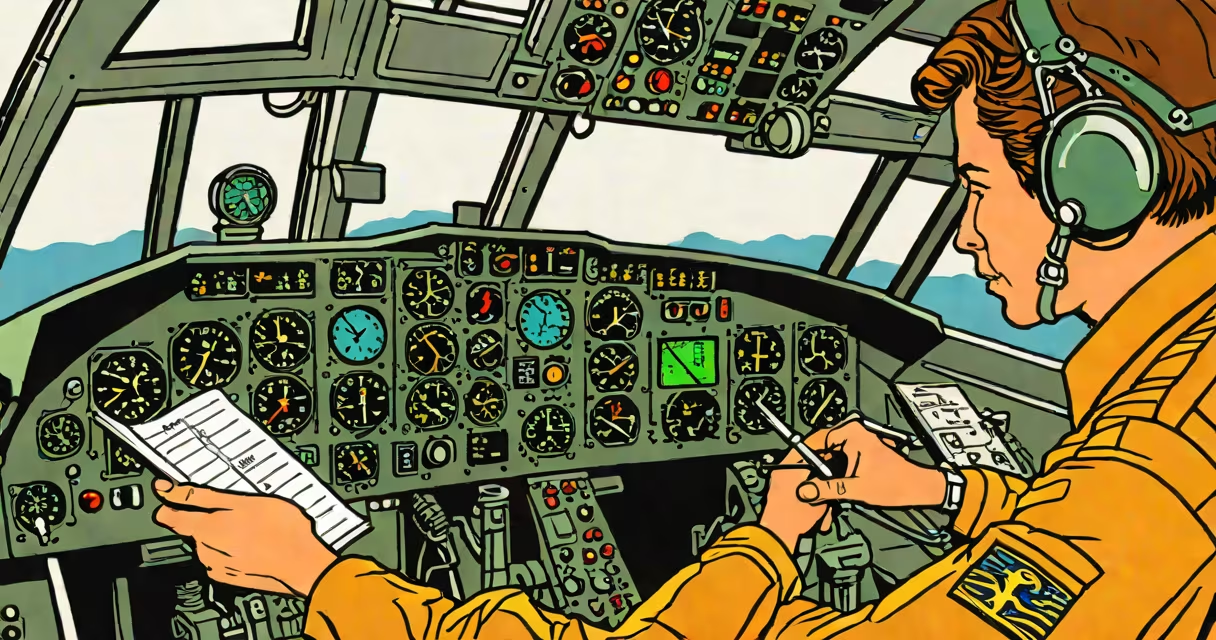
A pilot license course is a structured training program that teaches individuals to operate aircraft safely and legally under Federal Aviation Administration (FAA) regulations. The course includes ground instruction, flight practice, and written and practical exams required for certification.
The core purpose of a pilot license course is to build the knowledge and skills needed to make safe decisions in the air. Students learn navigation, weather interpretation, aircraft systems, emergency procedures, and airspace rules. Training follows FAA guidelines outlined in the Airplane Flying Handbook (FAA-H-8081-3) and the Flight Instructor Handbook.
Each course is tailored to a specific license level-private, commercial, or airline transport-and includes minimum hour requirements. For example, a private pilot license requires at least 40 hours of flight time, including 20 hours of dual instruction and 10 hours of solo flying. These numbers are mandated by FAA Part 61 and Part 141 regulations.
Training begins with ground school, where students study aviation theory through classroom sessions or online modules. Topics include aerodynamics, meteorology, federal aviation regulations, and aircraft performance. Most schools require passing a written exam before progressing to flight training.
Flight training occurs in a certified aircraft under the supervision of a flight instructor. Sessions follow a syllabus designed to meet FAA standards. Each lesson builds on the last-students start with basic maneuvers like takeoffs and landings, then progress to cross-country flights, night operations, and instrument flying.
After completing the required flight hours and ground instruction, students take a written exam administered by the FAA or an approved testing center. Passing this exam allows them to schedule a practical test, also known as a checkride, with an FAA-designated examiner.
Pilot license courses differ based on the target certification. The most common types are:
| License Type | Minimum Flight Hours | Typical Duration | Primary Use |
|---|---|---|---|
| Private Pilot License (PPL) | 40 hours | 3-6 months | Personal flying, recreational travel |
| Commercial Pilot License (CPL) | 250 hours | 6-18 months | Professional flying, flight instruction, charter services |
| Instrument Rating (IR) | 50 hours (additional) | 3-6 months | Flying in low visibility using instruments only |
| Multi-Engine Rating | 10 hours (additional) | 1-2 months | Operating aircraft with more than one engine |
Part 141 schools offer a more structured, curriculum-based approach with fixed schedules and fewer hours required for certain ratings. Part 61 schools allow more flexibility but typically require more flight time. For example, a Part 141 CPL program may require 250 hours, while a Part 61 program often requires 250 hours but allows more variation in training pace.
Pilot license courses are offered by accredited flight schools, community colleges with aviation programs, and independent instructors. Schools must be approved by the FAA under Part 141 or Part 61. Approval ensures curricula meet national safety and competency standards.
Students pursue these courses for personal enjoyment, career advancement, or professional employment. Over 1.4 million people held active pilot certificates in the U.S. in 2023, according to the FAA's 2023 Aviation Workforce Report. Many go on to work for airlines, cargo companies, or government agencies.
One overlooked detail: the difference between a "course" and a "program." A course is a single subject-like weather or navigation-while a program is the full sequence leading to a license. Confusing the two leads to incomplete training. For example, enrolling in a "basic flight course" doesn't grant a license; it's just one component of a larger program.
Many assume that a pilot license course guarantees employment. That's false. While training qualifies you to apply, hiring depends on demand, experience, and additional certifications. Airlines often require 1,500 hours of flight time for entry-level positions, far beyond the 40 hours needed for a private license.
Another myth is that all courses are the same. They're not. A Part 141 school offers more oversight and faster progression. A Part 61 school gives more freedom but demands greater self-discipline. One student I trained with completed his PPL in nine weeks through a Part 141 program, while another took 18 months in a flexible Part 61 setup.
Some believe that simulator time counts equally toward flight hours. It does not. Only actual flight time in a certified aircraft counts toward FAA hour requirements. Simulators are useful for practice, but they don't replace real-world experience.
Consider a student named Jordan who starts a private pilot license course at a Part 141 flight school in Florida. The course spans four months and includes:
Every pilot license course follows this pattern: theory → practice → evaluation. The structure ensures consistent safety outcomes across the nation.