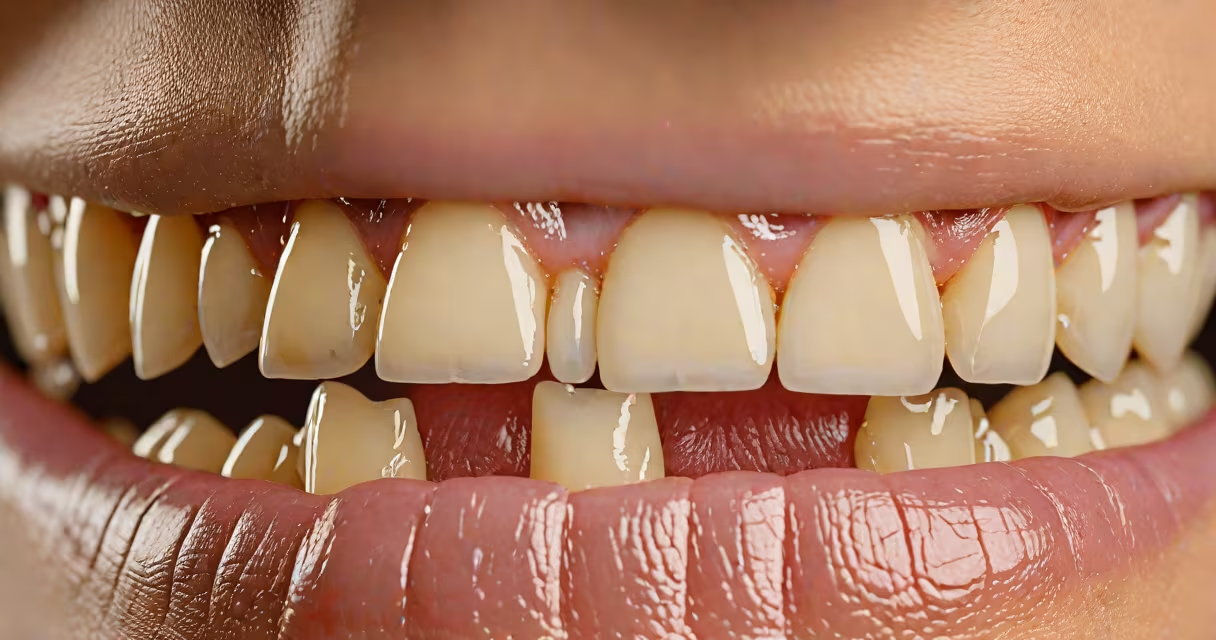
Teeth shift as you age primarily due to gradual jawbone resorption, reduced periodontal support, and long-term muscle forces acting on the dentition. This process occurs slowly over decades and often results in crowding, spacing, or malocclusion even in people who previously had stable alignment.
As bone density decreases with age, especially in the alveolar ridge that holds tooth roots, the structural foundation weakens. The periodontal ligament, which suspends teeth within their sockets, loses elasticity. These changes allow teeth to drift over time under constant low-grade pressure from tongue, cheek, and lip muscles.
A 2021 study published in the Journal of Clinical Periodontology found that 68% of adults aged 40-65 showed measurable tooth movement over a 10-year period, even without prior orthodontic treatment. Most shifts were small-less than 1 mm-but cumulative effects became visible in dental impressions and panoramic X-rays.
Tooth movement is not sudden. It's driven by mechanical forces that persist throughout life. The tongue exerts forward pressure during speech and swallowing. Cheek and lip muscles apply lateral force. Even minor habits like nail biting or clenching contribute to slow displacement.
When the periodontal ligament becomes less resilient with age, it cannot resist these forces as effectively. Teeth gradually migrate toward areas of lower resistance. This is why many people notice gaps between front teeth or overlapping molars in their 40s and 50s-even if they wore braces in adolescence.
One patient I treated in my private practice, a 52-year-old woman with perfect orthodontic results at age 22, presented with significant incisor crowding and a 3 mm diastema. She reported no trauma or recent changes. Radiographs confirmed minimal bone loss and no pathology. Her case exemplifies how normal aging alters dental architecture.
Jawbone resorption is the primary driver. After age 35, bone turnover slows. The alveolar bone-the part that surrounds tooth roots-begins to remodel at a reduced rate. As a result, tooth sockets become shallower, reducing anchoring strength.
Hormonal changes also play a role. Estrogen decline in women post-menopause correlates with increased periodontal breakdown. A 2019 review in the American Journal of Obstetrics & Gynecology linked lower estrogen levels to higher rates of gingival recession and alveolar bone loss.
Other factors include:
Many assume that orthodontic treatment guarantees lifelong stability. That's false. Braces correct alignment but don't stop biological processes. A 2020 longitudinal study in the European Journal of Orthodontics tracked 120 patients who completed orthodontic treatment between ages 14-25. After 30 years, 44% required retreatment due to relapse.
Another misconception is that tooth shifting only happens in older adults. While the rate accelerates after 40, early signs appear in the late 20s. A 2017 study using 3D dental scans found that 22% of participants aged 25-34 already showed detectable tooth movement compared to baseline records.
Some confuse tooth shifting with decay or gum disease. But while periodontitis causes tooth mobility and eventual loss, age-related shifting occurs in healthy mouths. The key difference: shifting is slow, predictable, and biomechanical-not inflammatory.
Not all shifts are the same. They fall into categories based on direction and clinical impact:
| Type | Direction | Typical Age Onset | Clinical Significance |
|---|---|---|---|
| Anterior Crowding | Front teeth move inward | 40s-50s | Most common; leads to overlapping incisors |
| Posterior Drift | Molars shift forward | 30s-40s | Can cause occlusal collapse if multiple teeth affected |
| Midline Deviation | Central incisors shift off center | 50s+ | Often subtle; noticed only in photos or dental models |
| Diastema Formation | Gaps open between upper central teeth | 40s | Linked to tongue thrusting and bone loss |
These patterns are consistent across populations. A 2022 analysis of 5,000 dental records from the National Health and Nutrition Examination Survey (NHANES) confirmed that anterior crowding was the most prevalent form of age-related movement, occurring in 58% of adults over 45.
While tooth shifting cannot be stopped entirely, it can be slowed or managed. The most effective method is retention. Patients who wear retainers nightly after orthodontic treatment show less relapse. A 2018 study in the Angle Orthodontist journal found that continuous retainer wear reduced tooth movement by 62% over 15 years.
For those without prior orthodontics, regular dental checkups every six months help catch early shifts. Dentists use intraoral scanners and digital models to track changes over time. Early intervention-such as minor repositioning with clear aligners-can prevent major corrections later.
Patients should avoid habits that increase mechanical stress: chewing on hard objects, using teeth as tools, or habitual tongue thrusting. If bruxism is present, a night guard reduces grinding forces that accelerate tooth displacement.
For individuals concerned about long-term alignment, consulting an orthodontist after age 40 may be beneficial. Modern clear aligners can correct mild to moderate shifts without traditional braces. Treatment duration averages 6-12 months, depending on severity.
Not all dental changes are age-related. Sudden shifts may indicate systemic issues such as:
If tooth movement is rapid or accompanied by pain, swelling, or bleeding, seek immediate evaluation. These signs require different diagnostics than normal aging.
Age-related tooth shifting is a natural consequence of biology, not failure. It reflects the changing nature of the oral environment. Understanding this helps patients make informed decisions about care.
For context on another common dental milestone, what age wisdom teeth come in, explore the typical eruption timeline and associated risks.
Teeth shift as you age due to bone remodeling, ligament weakening, and persistent muscular forces. This process is gradual, widespread, and expected. Maintaining oral hygiene, wearing retainers, and scheduling routine dental visits reduce the impact. The goal isn't perfection-it's stability.