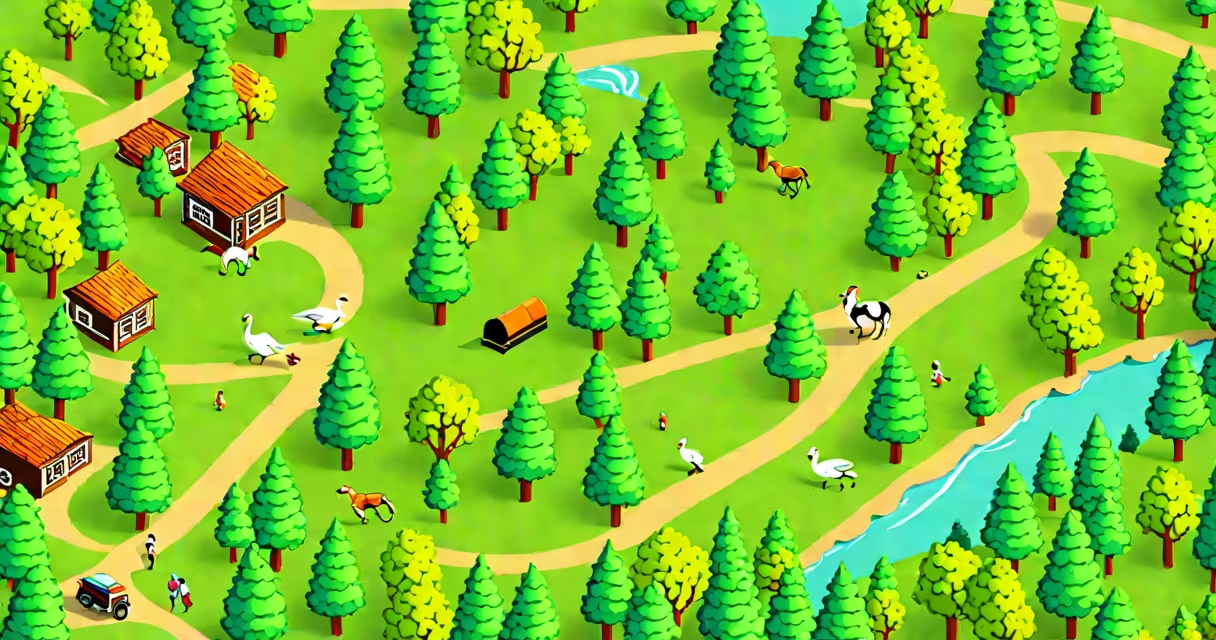
Swan Trail Farms is a 600-acre working farm and protected natural area in the Blue Ridge Mountains of western North Carolina that combines sustainable agriculture, native habitat preservation, and public access to walking and running trails. The property hosts seasonal events, educational workshops, and multi-day immersive experiences centered on ecological stewardship and rural resilience.
The land was originally part of a 19th-century homestead and later served as a small dairy operation. Since 2014, it has operated under a conservation easement held by the North Carolina Land Trust, restricting development while allowing low-impact recreational use. Trails are maintained by volunteer stewards and staff, with routes designed to minimize soil erosion and protect native plant species.
Access to the trails is free during daylight hours, though guided runs and educational programs require registration. The site is not a commercial park or private resort-it functions as a community-supported conservation initiative. Visitors may encounter wild turkeys, black bears, and migratory birds along the network of footpaths.
Swan Trail Farms operates on a model of shared stewardship. Volunteers maintain trails twice monthly using hand tools and native plant restoration techniques. Each year, the farm conducts a baseline biodiversity survey with support from Western Carolina University's environmental science department. Data from these surveys inform trail rerouting decisions and help track changes in local ecosystems.
Trail access is controlled via a reservation system during peak seasons (March-November). Users check in at a kiosk near the main gate, which logs entry times and tracks usage patterns. GPS data collected from participants who opt in helps identify high-wear zones and prioritize maintenance efforts. No electronic devices are permitted on designated wildlife corridors.
During spring and fall, the farm hosts "Root & Run" weekends-combined hiking and farming workshops. Participants learn about crop rotation, composting, and pollinator habitats while completing a 6-mile loop trail. These events are capped at 30 attendees to limit environmental impact. All food served is sourced from within a 50-mile radius.
The trail network consists of three primary loops: the Willow Creek Loop (2.4 miles), the Ridge Line Trail (3.8 miles), and the Hidden Hollow Path (1.1 miles). Each route is marked with wooden signs featuring pictograms and elevation profiles. Signs are made from reclaimed timber and treated with non-toxic sealant.
Trail surfaces vary: 60% compacted gravel, 30% packed earth, and 10% boardwalk sections over wetland areas. Boardwalks are constructed from recycled plastic lumber and anchored with steel rods driven into bedrock. No new wood is harvested for trail infrastructure.
| Trail Name | Length | Difficulty | Features |
|---|---|---|---|
| Willow Creek Loop | 2.4 miles | Easy | Stream crossing, wildflower meadow |
| Ridge Line Trail | 3.8 miles | Intermediate | Cliffside overlook, old stone wall |
| Hidden Hollow Path | 1.1 miles | Hard | Rock scramble, shaded tunnel |
Trails are closed during periods of heavy rain or after snowmelt due to increased risk of landslides. Closure notices are posted on the farm's website and social media channels at least 24 hours in advance.
Swan Trail Farms serves as a regional hub for outdoor education and conservation engagement. Local schools bring students for field trips focused on watershed health and soil microbiology. High school biology classes have used the site to collect water samples from the creek and analyze pH levels and macroinvertebrate diversity.
Recreational users include long-distance runners training for mountain races such as the Western North Carolina Trail Marathon. A 2023 study by Appalachian State University found that 78% of runners who completed the Ridge Line Trail reported improved mental focus and reduced perceived exertion compared to urban trail runs.
Nonprofit groups like the Southern Appalachian Wilderness Stewards use the property for weekend cleanups. In 2022, volunteers removed over 1,200 pounds of discarded fishing line and plastic debris from the drainage basins near the upper trailhead.
Swan Trail Farms is not a commercial trail running event venue. While it supports endurance athletes, it does not host timed races or offer prize money. Events are strictly educational or community-based.
It is also not a tourist destination with gift shops or food trucks. The farm does not sell produce on-site. All agricultural output-including heirloom squash, heritage beans, and pasture-raised eggs-is distributed through a local CSA (Community Supported Agriculture) program based in Asheville.
A common error is assuming the trails are open year-round. They close between December 1 and February 15 annually to protect nesting ground birds, including the eastern whip-poor-will and the cerulean warbler. These closures are enforced by signage and monitored via trail cameras.
In May 2023, I ran the Willow Creek Loop during a morning session led by a certified wilderness first responder. The temperature was 52°F, and the air carried the scent of damp moss and pine resin. After finishing, I sat on a weathered log near the creek and watched a red fox cross the opposite bank. The silence wasn't empty-it was full of subtle movement. That moment stayed with me because it wasn't staged. The environment spoke on its own.
Unlike many "nature trails" branded by fitness apps or tourism boards, Swan Trail Farms is not mapped or promoted through algorithmic discovery. Its presence is known primarily through word-of-mouth, local newsletters, and partnerships with environmental nonprofits. This limits visitor volume and maintains ecological integrity.
For comparison, a similar-sized trail network in Pisgah National Forest sees over 12,000 visitors per month. Swan Trail Farms averages fewer than 150 per week during peak season. This difference reflects intentional design-not oversight.