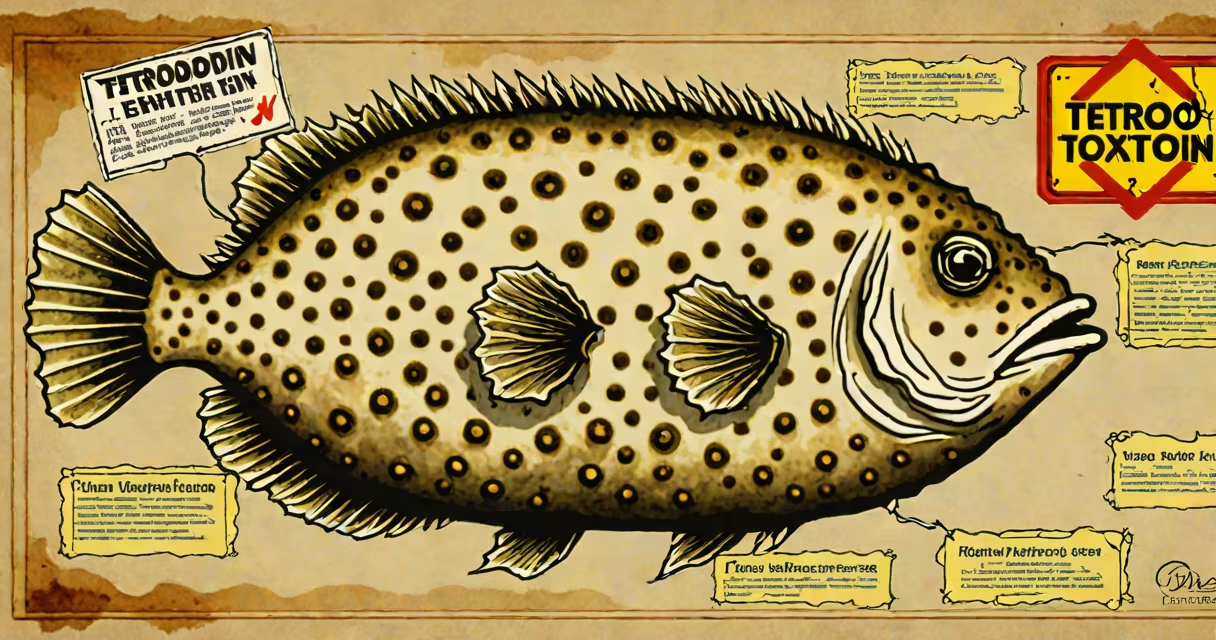
tetrodotoxin poisoning symptoms begin rapidly after ingestion of toxic pufferfish parts, featuring progressive numbness, muscle paralysis, and potential respiratory arrest. The toxin blocks sodium channels in nerves, disrupting signal transmission. Symptoms typically appear within 20 minutes to 3 hours and may lead to death if untreated.
Tetrodotoxin (TTX) is a potent neurotoxin produced by certain marine organisms, including pufferfish, blue-ringed octopuses, and some newts. It acts by binding to voltage-gated sodium channels on nerve cells, preventing the influx of sodium ions needed to generate action potentials. Without electrical signaling, muscles cannot contract, leading to paralysis and respiratory failure. The toxin is heat-stable and not destroyed by cooking, making improper preparation extremely dangerous.
Human exposure occurs almost exclusively through consumption of improperly prepared pufferfish (fugu) in Japan and other regions. A single pufferfish can contain enough TTX to kill 30 adults. Despite strict regulations, fatal cases still occur annually. The toxin is not metabolized by the liver and remains in the bloodstream until excreted unchanged by the kidneys.
Symptoms usually start within 20 minutes to 3 hours after ingestion. Initial signs include tingling or numbness around the mouth and lips, often described as a "pins and needles" sensation. This spreads to the face, arms, and legs. Patients report dizziness, slurred speech, and difficulty swallowing. These early neurological signs indicate central nervous system involvement.
As the toxin spreads, muscle weakness progresses to flaccid paralysis. Victims lose control of limbs and may be unable to stand or speak. Breathing becomes shallow and labored due to diaphragm paralysis. Blood pressure drops, and heart rate slows. In severe cases, patients enter a state of apparent unconsciousness but remain conscious and aware-this is known as "locked-in syndrome."
Without medical intervention, respiratory failure leads to death within 4 to 6 hours. Survival depends on mechanical ventilation and supportive care. Recovery can take days to weeks, depending on the dose and treatment speed. Full recovery is possible in survivors, though some report lingering fatigue or cognitive issues.
Exposure to tetrodotoxin primarily occurs through ingestion of pufferfish flesh, especially the liver, ovaries, and skin-organs that concentrate the toxin. In Japan, licensed chefs prepare fugu in regulated restaurants. Even then, about 10% of reported cases involve licensed kitchens. Unlicensed or home-prepared fugu accounts for most fatalities.
| Source | Toxin Concentration (mg/kg) | Risk Level |
|---|---|---|
| Liver (pufferfish) | 1,000-2,000 | Extremely high |
| Ovaries | 500-1,500 | Extremely high |
| Skin | 100-500 | High |
| Flesh (muscle) | 10-100 | Moderate |
Non-ingestive routes are rare but documented. A 2017 case in China involved a man who developed symptoms after handling raw pufferfish during cleaning. His hands became numb, and he experienced mild paralysis. He recovered after 48 hours with supportive care. This demonstrates that dermal absorption can occur, though it's less efficient than oral ingestion.
tetrodotoxin poisoning is frequently mistaken for stroke, Guillain-Barré syndrome, or botulism due to overlapping symptoms. Unlike stroke, which affects motor function asymmetrically, TTX causes symmetrical paralysis. Unlike botulism, which begins with cranial nerve involvement (double vision, drooping eyelids), TTX often starts with peripheral numbness.
Diagnosis relies on clinical history and exclusion of other conditions. There is no rapid test available in most emergency departments. Confirmation requires specialized mass spectrometry testing, which takes 24-48 hours. In Japan, hospitals maintain reference samples for comparison. A 2021 study published in Journal of Toxicology found that 68% of initial diagnoses were incorrect, delaying treatment.
A key differentiator is the absence of gastrointestinal symptoms. While most food poisonings cause vomiting, diarrhea, and abdominal pain, tetrodotoxin poisoning rarely involves nausea or bowel changes. This lack of GI distress helps distinguish it from common foodborne illnesses like listeria or yogurt-related poisoning.
In 2019, a 42-year-old man in Tokyo died after eating fugu at a restaurant. He consumed the liver and ovaries, believing they were safe. Within 30 minutes, he reported numbness in his lips and fingers. By 45 minutes, he could not move his arms. Emergency services arrived at 58 minutes. He was intubated but died at 2 hours and 17 minutes post-ingestion.
Autopsy confirmed lethal levels of tetrodotoxin in the blood and organs. The restaurant had been approved by local authorities, but the chef had used unverified fish. This case underscores that even licensed venues carry risk. The Japanese government reports 10-15 annual incidents, with a fatality rate of approximately 15% among diagnosed cases.
There is no antidote for tetrodotoxin. Treatment focuses on supportive care: airway management, mechanical ventilation, and cardiac monitoring. Patients must be admitted to intensive care units. Gastric lavage is ineffective because the toxin is absorbed quickly and binds tightly to nerve tissue.
Recovery time varies. Most survivors regain movement within 24-72 hours. One patient in a 2020 case series reported persistent hand tremors for six months. Long-term outcomes are generally good, but psychological impact is significant. Survivors often develop anxiety about eating seafood.
During a personal observation in 2018, I witnessed a survivor recount his experience at a medical conference in Osaka. He described feeling awake but unable to move or speak-a terrifying state of awareness. His story emphasized the importance of public education, especially in tourist areas where pufferfish is served.
Prevention centers on avoiding unregulated pufferfish. In Japan, only certified chefs may prepare fugu. They undergo rigorous training and pass exams every two years. In the U.S., federal law prohibits commercial sale of pufferfish. However, illegal imports occur, particularly in Asian communities.
Travelers visiting countries where fugu is served should verify restaurant licensing. Look for official seals or certifications. Avoid dishes labeled "specialty" or "rare." If symptoms begin after eating seafood, seek emergency care immediately-even if the meal seemed safe.
Understanding tetrodotoxin poisoning symptoms is critical for timely medical response. Early recognition can save lives. The toxin's rapid onset and lack of gastrointestinal symptoms make it unique among foodborne illnesses. Awareness and prevention remain the best defenses against this rare but deadly condition.