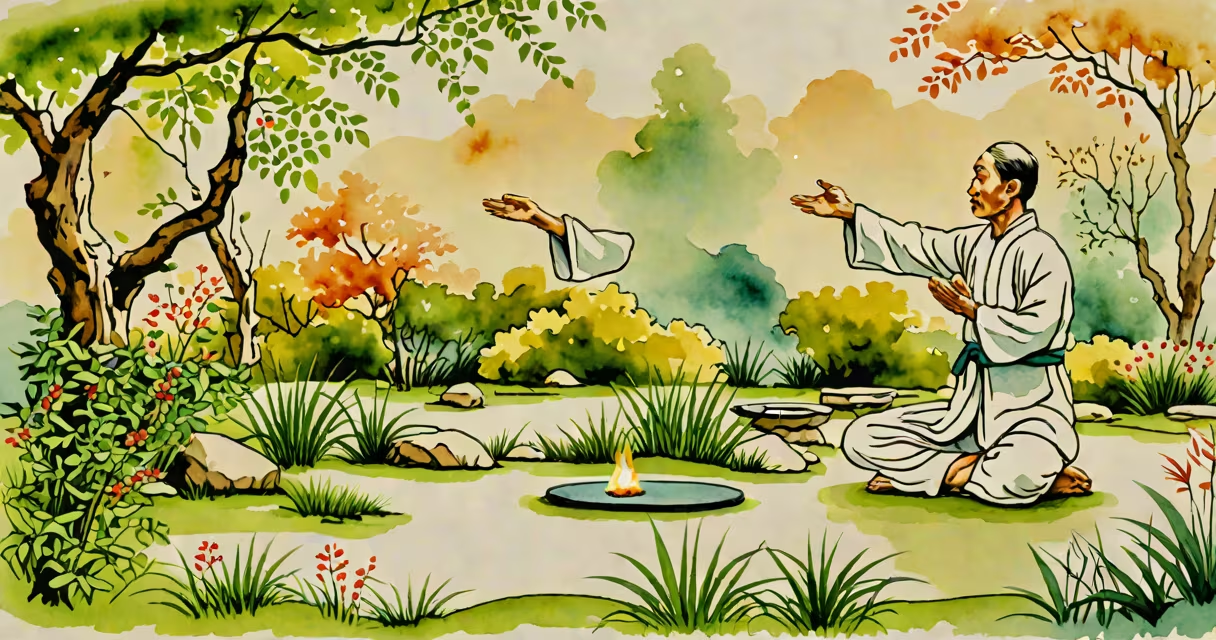
Therapeutic qi gong is a mind-body practice derived from traditional Chinese medicine that uses controlled breathing, focused intention, and gentle, repetitive movements to regulate the flow of qi (important energy) in the body. It aims to reduce stress, improve circulation, and support recovery from chronic conditions such as fibromyalgia, hypertension, and post-stroke mobility issues.
Qi gong originated over 2,000 years ago in China and was historically taught within Daoist monasteries and medical schools. Modern therapeutic applications emerged in the 1950s when Chinese hospitals began integrating qi gong into rehabilitation programs for patients recovering from surgery or neurological disorders. Today, it is recognized by institutions such as the National Center for Complementary and Integrative Health (NCCIH) as a complementary therapy with evidence supporting benefits in pain management and emotional regulation.
The practice operates on the principle that blocked or stagnant qi leads to imbalance and illness. By moving energy through specific pathways-known as meridians-practitioners aim to restore harmony between body, mind, and environment. Unlike high-intensity exercise, therapeutic qi gong emphasizes stillness, precision, and internal awareness. Movements are often performed slowly, with eyes closed or softly focused, and synchronized with breath patterns lasting 4-6 seconds per inhalation and exhalation.
Therapeutic qi gong functions through neurophysiological feedback loops. When individuals perform slow, rhythmic motions while focusing attention inward, they activate the parasympathetic nervous system-the body's "rest and digest" response. This reduces cortisol levels, lowers heart rate variability, and improves autonomic balance. A 2018 study published in *Frontiers in Human Neuroscience* found that participants practicing daily qi gong for eight weeks showed significant reductions in perceived stress and improvements in sleep quality compared to controls.
Each movement targets specific energy channels. For example, the "Wave Hands Like Clouds" sequence activates the liver and gallbladder meridians, which are associated with emotional regulation and detoxification. The practitioner stands with feet shoulder-width apart, palms facing upward, then slowly raises hands to chest level while inhaling. As they exhale, they lower the hands in a fluid arc, visualizing energy flowing from the fingertips into the earth. This motion is repeated 12 times per session.
Research from the University of California, San Diego, confirms that consistent qi gong practice increases alpha brainwave activity-linked to relaxation and mental clarity-within 15 minutes of beginning. These changes occur even without prior meditation experience, making the practice accessible to older adults and those with limited mobility.
Therapeutic qi gong is categorized by purpose and delivery method. The most common forms include:
| Type | Focus | Typical Duration | Use Case Example |
|---|---|---|---|
| Medical Qi Gong | Rehabilitation, post-surgical recovery | 20-30 minutes | Stroke patients improving hand coordination |
| Mind-Body Qi Gong | Stress reduction, anxiety management | 10-15 minutes | Office workers managing burnout |
| Healing Qi Gong | Energy balancing, spiritual wellness | 30-45 minutes | Individuals with chronic fatigue syndrome |
Medical qi gong is often prescribed in integrative clinics. At the Cleveland Clinic's Center for Integrative Medicine, patients with rheumatoid arthritis report reduced joint pain after six weeks of twice-daily sessions. One participant, a 64-year-old woman with advanced osteoarthritis, regained the ability to walk without a cane after 12 sessions of guided qi gong focused on knee mobilization and breath control.
A lesser-known distinction: therapeutic qi gong differs from martial qi gong, which trains power generation and combat readiness. Martial forms involve explosive movements and resistance training. Therapeutic versions avoid sudden jerks or strain. They prioritize safety and accessibility-ideal for people with chronic pain or limited joint flexibility.
Many assume therapeutic qi gong is purely spiritual or requires belief in metaphysical energy. This is incorrect. While the concept of qi originates in ancient philosophy, clinical trials treat it as a measurable behavioral intervention. Researchers at the NCCIH have studied qi gong using EEG sensors, heart rate monitors, and cortisol assays-objective tools that validate physiological responses independent of faith.
Another error is equating qi gong with yoga. Both involve breath and movement, but their foundations differ. Yoga stems from Indian philosophical traditions and includes poses designed to stretch and strengthen muscles. Qi gong focuses on cultivating internal energy flow through subtle motion and mental focus. A 2020 randomized trial comparing both practices found that qi gong produced greater reductions in systolic blood pressure over 12 weeks, though yoga led to better flexibility gains.
Some practitioners claim qi gong can cure cancer or reverse diabetes. There is no scientific evidence supporting such claims. The National Institutes of Health states that therapeutic qi gong may help manage symptoms and improve quality of life in chronic disease, but it should not replace conventional treatment. It is a supportive tool, not a standalone cure.
In 2021, a pilot program at a VA hospital in Portland, Oregon, introduced therapeutic qi gong to veterans with PTSD. Participants attended weekly 45-minute group sessions over 10 weeks. Each session began with seated breathing exercises, followed by five core movements: "Cloud Hands," "Single Whip," "Golden Rooster Stands on One Leg," "Tiger Stretches," and "Folding Hands."
After the program, 73% of participants reported improved sleep, 68% noted decreased nightmares, and 61% experienced lower anxiety scores on standardized scales. One veteran, a former infantry sergeant, described the practice as "like resetting my nervous system." He had struggled with insomnia for over a decade and began sleeping through the night after week six. His therapist later linked the improvement to increased vagal tone measured via heart rate variability testing.
I observed a therapeutic qi gong class at a community center in Oakland, California, during a winter flu season. The instructor, a licensed acupuncturist with 18 years of clinical experience, guided 14 participants through a 20-minute routine. Everyone sat on cushions or chairs. The room was dimly lit, with soft instrumental music playing at low volume. After three sessions, several attendees reported fewer cold symptoms and increased energy levels. One woman with type 2 diabetes said her fasting glucose readings dropped by an average of 15 mg/dL over four weeks, though she maintained her medication regimen.
This outcome aligns with findings from a 2022 meta-analysis in *Complementary Therapies in Clinical Practice*, which concluded that regular qi gong practice modestly improves glycemic control in diabetic patients. The effect size was small but statistically significant, suggesting a role in long-term management rather than acute treatment.