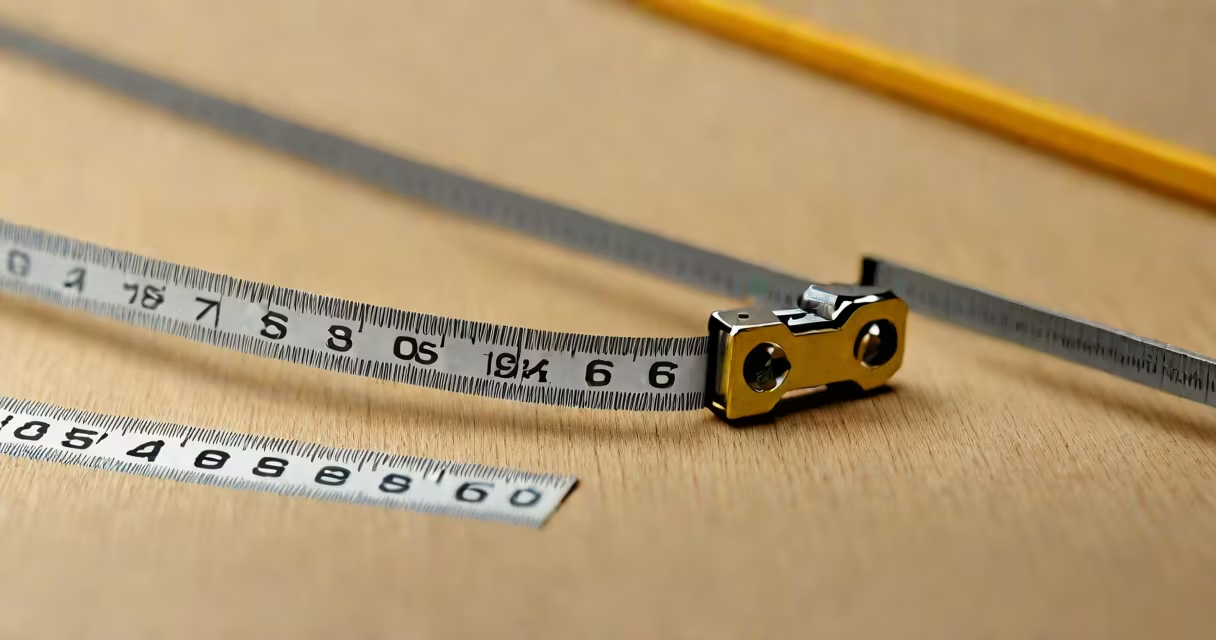
Tape measures are flexible, retractable rulers used to measure linear distances with precision. They consist of a thin, durable blade marked with units-usually inches and centimeters-retracted into a compact housing. The tool enables accurate measurement of length, width, height, and depth across construction, manufacturing, home improvement, and fashion.
The standard tape measure features a locking mechanism to hold the blade at a set length. Most models extend between 6 and 25 feet, with common sizes including 12 ft, 16 ft, and 25 ft. The blade is typically made of steel or fiberglass, with a reinforced tip for better grip on surfaces. A hook at the end adjusts slightly to compensate for material thickness during measurements.
For example, a carpenter installing kitchen cabinets uses a 16-foot tape measure to verify cabinet spacing. When the tape is pulled taut, the hook shifts by 1/16 inch-this adjustment ensures accuracy when measuring from edge to edge. Without it, repeated measurements would accumulate small errors.
A tape measure operates through a spring-loaded spool inside a protective casing. When the user pulls the blade out, a ratchet locks it in place. Releasing the button allows the spring to rewind the blade automatically. The hook at the end moves slightly-typically 0.125 inches-to account for the thickness of the metal when measuring from a surface's edge.
This feature prevents cumulative error. For instance, measuring from the edge of a wall to a doorway requires the hook to be flush against the wall. If the hook were rigid and didn't move, the measurement would be off by the thickness of the hook itself. The adjustable hook helps whether measuring from the outside or inside of a frame, the reading remains consistent.
Modern tape measures often include additional features such as magnetic tips for holding onto metal surfaces, laser guides for alignment, and dual-unit markings (inches and millimeters). Some industrial models have a 360-degree swivel head for precise angular alignment.
Tape measures fall into several categories based on use and design. The most common types are:
| Type | Length Range | Typical Use Cases | Key Features |
|---|---|---|---|
| Standard Construction Tape | 12 ft - 25 ft | Carpentry, framing, roofing | Magnetic tip, durable steel blade, 1/16" hook |
| Shorter Measuring Tapes | 6 ft - 10 ft | Diy projects, tailoring, interior design | Compact size, easy to carry, plastic or metal casing |
| Flexible Measuring Tapes | 3 ft - 10 ft | Curved surfaces, upholstery, clothing fitting | Fabric or nylon webbing, stretch-resistant, no rigid blade |
| Steel Folding Rules | 2 ft - 6 ft | Woodworking, fine carpentry | Rigid, foldable metal segments, precise graduations |
Construction workers rely on 25-foot steel tapes for long-distance layout tasks. A roofer measuring roof pitch uses a 16-foot model to mark rafters at consistent intervals. Tailors use 6-foot flexible tapes to take body measurements-these bend around curves without stretching.
One non-obvious fact: the smallest increment on most tape measures is 1/16 inch. This level of detail matters when aligning joints in trim work. A 1/16-inch gap between baseboards can make a room look uneven. Precision ensures clean finishes and professional results.
Many assume tape measures are interchangeable across tasks. This is false. Using a 6-foot flexible tape to measure a floor joist span leads to inaccurate results. The blade lacks rigidity and sags under tension, causing readings to be too high.
Another misconception is that all tape measures are equally accurate. According to the National Institute of Standards and Technology (NIST), commercially available tape measures must meet ANSI/ASME B46.1 standards. These require tolerance within ±1/32 inch over 10 feet. A $5 discount-store tape may deviate by half an inch over 10 feet-enough to misalign a wall stud.
I once used a worn 12-foot tape on a bathroom renovation. The blade had stretched over time, and the 6-foot mark was actually 6 feet 1/4 inch. I discovered the error when the vanity didn't fit. Replacing it with a calibrated 16-foot model corrected the issue. Calibration checks are critical for recurring projects.
Tape measures are foundational in fields requiring dimensional control. In construction, they ensure studs are spaced 16 inches on center. In HVAC installation, duct lengths are measured precisely to avoid airflow issues. In fashion, designers use them to draft patterns that fit body shapes.
Even in science, tape measures serve practical roles. Biologists studying animal movement track stride length using a 10-foot tape. Archaeologists measure artifact placement in excavation grids with 25-foot models. The tool's simplicity makes it universally applicable.
For instance, a homeowner building a bookshelf uses a 6-foot tape to confirm shelf spacing. They measure from the floor to the desired height, then mark the location on the wall. The tape's clear markings prevent miscalculation. Without it, the shelves would be uneven or unlevel.
Understanding the correct application of tape measures prevents costly mistakes. A 16-foot model is ideal for framing walls. A 6-foot flexible tape suits sewing. Choosing the right tool avoids wasted materials and rework.
Tape measures are indispensable tools for anyone who needs to quantify space. Their design balances portability, durability, and accuracy. Whether measuring a doorframe or a quilt pattern, the right tape measure delivers consistent results.