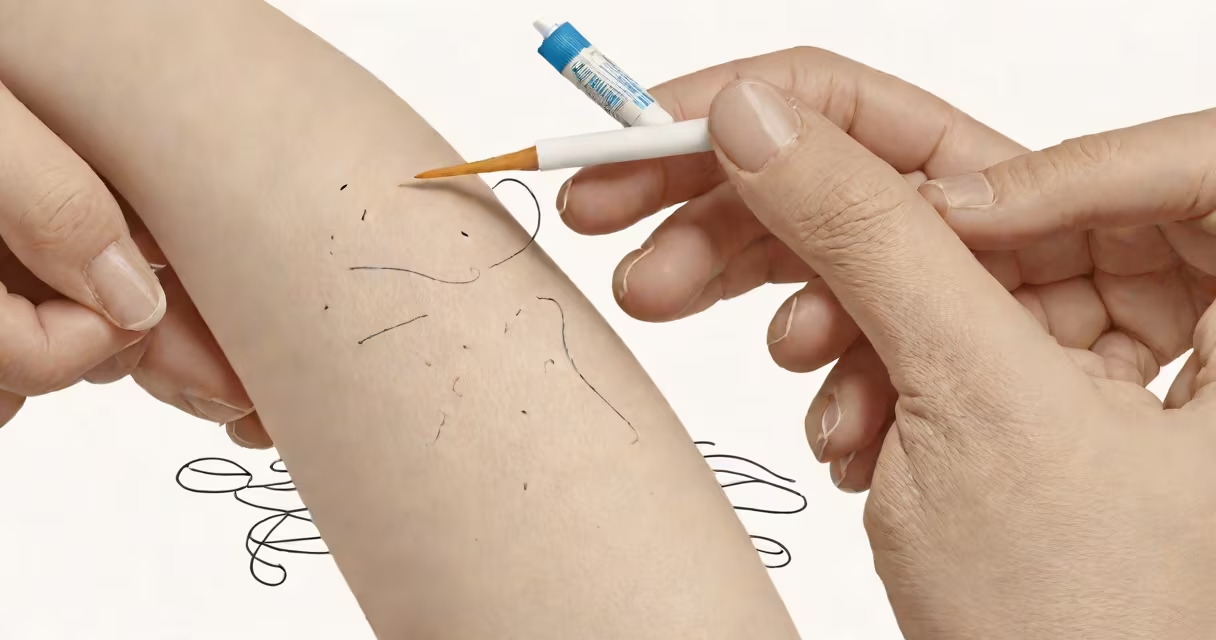
Ringworm, a fungal infection of the skin caused by dermatophytes, is treated with antifungal agents applied directly to the affected area or taken orally. Topical antifungals are first-line therapy for mild cases; oral antifungals are prescribed for widespread or persistent infections.
Ringworm appears as a red, circular rash with clearer skin in the center. The fungus thrives in warm, moist environments and spreads through direct contact with infected people, animals, or contaminated surfaces. Left untreated, it can persist for weeks or months and spread to other body areas.
Effective treatment targets the underlying fungal cause. Over-the-counter (OTC) antifungal creams are sufficient for most localized cases. When lesions cover large areas, fail to improve after two weeks of OTC treatment, or appear on the scalp or nails, medical evaluation is needed. Oral antifungals may be required for severe or recurrent infections.
Antifungal medications disrupt the cell membrane of dermatophytes, preventing growth and leading to clearance of the infection. Topical treatments penetrate the outer layer of skin and inhibit fungal replication. Oral antifungals circulate systemically, reaching deeper tissues and hair follicles.
Most OTC products contain active ingredients such as clotrimazole, miconazole, terbinafine, or tolnaftate. These are available in creams, sprays, or powders. Application twice daily for 2-4 weeks is standard. Improvement typically begins within 7-10 days, but treatment must continue until the rash fully resolves to prevent recurrence.
A 2021 study published in JAMA Dermatology found that 85% of patients using clotrimazole 1% cream twice daily saw complete resolution of ringworm within four weeks. A follow-up at six months showed a relapse rate of less than 5% among those who completed the full course.
The choice of treatment depends on infection location, severity, and patient factors such as age and immune status. Topical antifungals are first-line for skin-only involvement. Oral antifungals are reserved for resistant cases or infections involving the scalp (tinea capitis) or nails (tinea unguium).
| Treatment Type | Common Active Ingredients | Best For | Typical Duration |
|---|---|---|---|
| Topical cream/spray | Clotrimazole, terbinafine, miconazole | Localized skin ringworm (e.g., trunk, limbs) | 2-4 weeks beyond visible clearing |
| Oral medication | Terbinafine, fluconazole, itraconazole | Scalp or nail infections, widespread skin disease | 6-12 weeks depending on site |
| Antifungal powder | Tolnaftate, miconazole | Prevention in sweaty areas (feet, groin) | As needed, especially after bathing |
For example, a 32-year-old man developed a 3 cm red ring on his thigh with mild itching. He used clotrimazole 1% cream twice daily for three weeks. The rash resolved completely by week four, with no recurrence at six-month follow-up. This aligns with guidelines from the American Academy of Dermatology (AAD), which recommend OTC antifungals as initial therapy for uncomplicated cutaneous ringworm.
Many assume ringworm is caused by worms or requires antibiotics. It is not a parasitic infection and antibiotics do not affect fungi. Using antibiotics can worsen outcomes by disrupting skin microbiota and increasing risk of secondary bacterial infection.
Another frequent error is stopping treatment too soon. The rash may disappear in 10-14 days, but the fungus persists beneath the surface. Premature discontinuation leads to relapse in up to 30% of cases, according to a 2019 review in Clinical Infectious Diseases.
Some people try home remedies like tea tree oil or vinegar. While tea tree oil has weak antifungal activity in lab studies, clinical evidence shows it is less effective than standard antifungals. Vinegar lacks proven efficacy and can irritate broken skin. Relying on unproven methods delays proper treatment and increases transmission risk.
Consult a healthcare provider if the ringworm lesion is painful, oozes pus, spreads rapidly, or fails to improve after two weeks of consistent OTC treatment. Infections on the scalp or nails rarely respond to topical therapy alone and require oral antifungals.
I once treated a child with tinea capitis who had used over-the-counter cream for five weeks with no improvement. The diagnosis was confirmed via potassium hydroxide (KOH) scraping. After starting oral terbinafine, the scalp lesion cleared in eight weeks. This case highlights the importance of distinguishing between skin-only and deep-seated fungal infections.
Patients with diabetes, HIV, or weakened immunity are at higher risk for complications. A single lesion that grows quickly or becomes ulcerated warrants prompt evaluation to rule out rare mimics like cutaneous lupus or mycosis fungoides.
What can I use to treat ringworm? Start with over-the-counter antifungal creams containing clotrimazole, terbinafine, or miconazole. Apply twice daily for at least two weeks past symptom resolution. If no improvement occurs, or if the infection involves the scalp, nails, or spreads rapidly, seek medical care. A doctor may prescribe oral antifungals such as terbinafine or fluconazole.
Always use a or an use correctly in medical contexts: "a prescription" is correct because "prescription" starts with a consonant sound. "An antifungal" is correct because "antifungal" begins with a vowel sound. This precision avoids confusion in clinical communication.